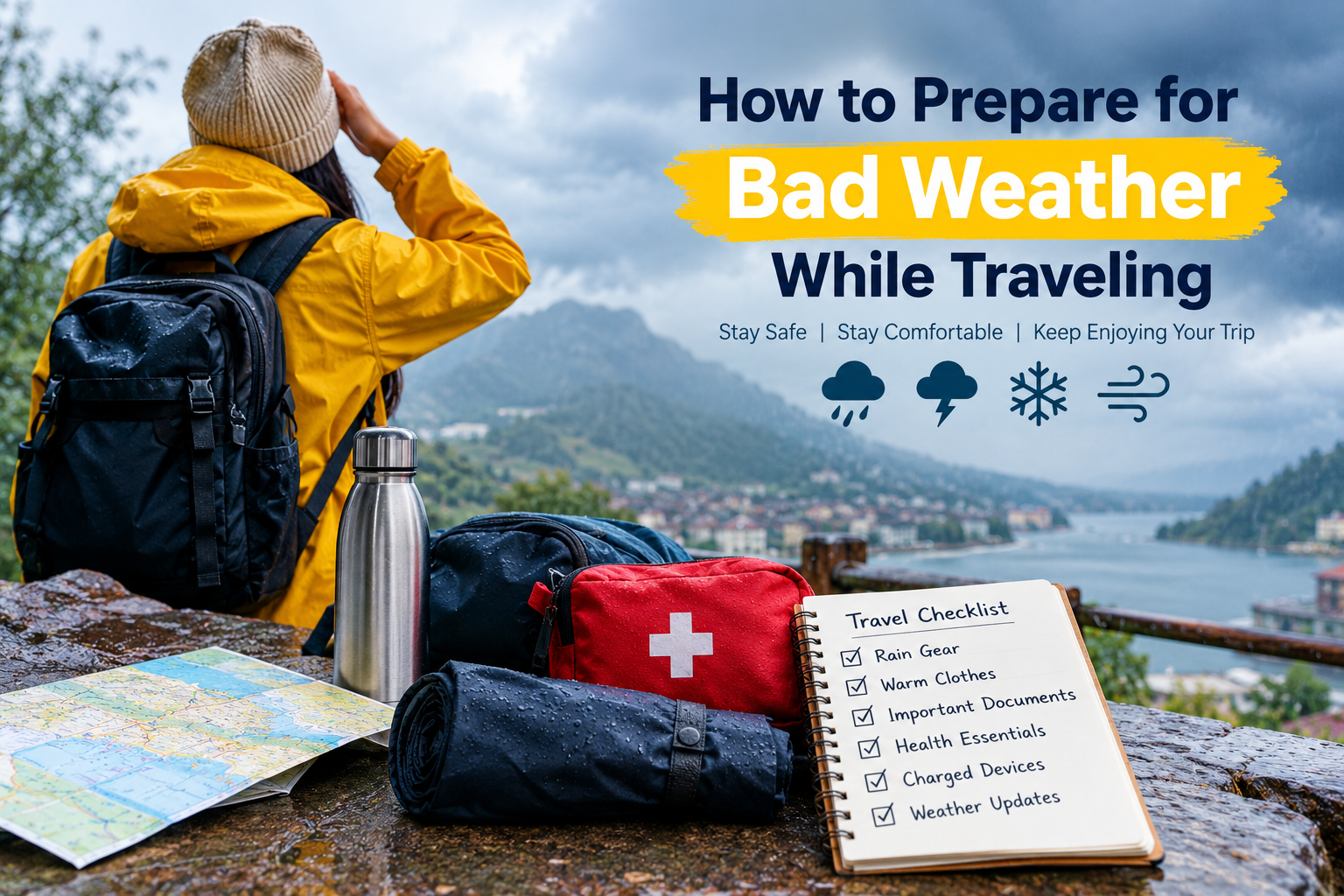
Traveling is one of my favorite ways to experience new places, meet different people, and create memories. However, weather can change quickly, and bad weather can turn a simple travel plan into a stressful experience if you are not prepared. Rain, strong winds, extreme heat, snow, thunderstorms, and even unexpected cold weather can affect transportation, outdoor activities, and your overall comfort.
In my experience, good preparation does not mean carrying everything with you. It means knowing what kind of weather you may face and packing the right things before leaving. A little planning can make a big difference when traveling.
In this guide, I will share practical tips on how to prepare for bad weather while traveling, what to pack, how to protect important belongings, and what to do when weather conditions become difficult.
Check the Weather Before Your Trip
The first step in preparing for bad weather while traveling is checking the forecast before you leave. I recommend checking the weather several days before your trip and then checking it again on the day of departure.
Look at more than just the temperature. Check the chances of rain, storms, strong winds, snow, humidity, and unusually hot or cold conditions. Weather forecasts are not always perfect, but they can give you a useful idea of what to expect.
If you are traveling to an area where weather changes quickly, check the forecast regularly during your trip. Mountain regions, coastal areas, and places with tropical climates can experience sudden changes.
Pack Clothing for Changing Conditions
One mistake I have seen many travelers make is packing only for the expected weather. If the forecast says it will be sunny, they may leave their rain jacket at home. However, weather can change unexpectedly.
I prefer packing clothing that can work in different conditions. Lightweight layers are especially useful because you can add or remove them depending on the temperature.
For rainy destinations, carry a lightweight waterproof jacket. For cold destinations, pack warm layers, gloves, a hat, and comfortable socks. If you are visiting a hot destination, breathable clothing can help you stay comfortable.
The goal is not to pack your entire wardrobe. Instead, choose practical clothing that gives you flexibility.
Carry a Compact Rain Jacket or Umbrella
A small umbrella or waterproof jacket can be extremely useful. Even if rain is not expected, carrying one can save you from an uncomfortable situation.
Personally, I prefer a lightweight rain jacket when I know I will be walking a lot. It keeps my hands free and can also provide some protection from wind.
An umbrella is another convenient option, especially when exploring cities. Choose a compact model that does not take up much space in your bag.
Protect Your Electronics
Bad weather can be particularly dangerous for electronic devices. Rain and moisture can damage phones, cameras, chargers, and other equipment.
I recommend keeping electronics inside waterproof bags or protective pouches. You can also use resealable waterproof bags for smaller items such as charging cables, power banks, and headphones.
If you are carrying an expensive camera or other equipment, consider using a proper waterproof cover. Do not assume that a normal backpack will provide enough protection during heavy rain.
Keep Important Documents Dry
Your passport, identification documents, tickets, hotel information, and other important papers should be protected from water.
I usually recommend keeping important documents inside a waterproof document pouch. If you carry printed reservations or travel information, place those papers in a separate protective bag.
It is also useful to keep secure digital copies of important documents. This gives you another way to access essential information if the original documents become damaged.
Prepare Your Travel Bag
Your travel bag should be prepared for the weather you may encounter. If rain is possible, use a waterproof backpack cover or place important items inside waterproof bags.
Organize your bag so that essential items are easy to reach. Your rain jacket, umbrella, phone, power bank, and documents should not be buried underneath everything else.
I also recommend keeping one extra set of basic clothing in a protected part of your luggage. If your clothes become wet, having something dry to change into can make you much more comfortable.
Carry a Small Emergency Kit
A small travel emergency kit can be useful when weather creates unexpected problems. It does not need to be large.
Depending on your destination, your kit can include basic first aid supplies, necessary personal medications, tissues, hand sanitizer, a flashlight, extra batteries, and emergency contact information.
If you are traveling somewhere remote, you may need additional supplies. Consider the destination and activities rather than carrying unnecessary items.
Prepare for Heavy Rain
Heavy rain can affect roads, public transportation, walking routes, and outdoor attractions. If heavy rain is expected, consider changing your plans before leaving your accommodation.
Indoor attractions such as museums, galleries, shopping areas, libraries, and cultural centers can be good alternatives when outdoor activities are difficult.
Wear suitable footwear as well. Shoes that become uncomfortable or slippery when wet can make walking difficult. Waterproof or water resistant footwear may be useful depending on your destination.
Be Careful During Thunderstorms
Thunderstorms require extra caution, especially when traveling outdoors. If you hear thunder or see lightning, move indoors when possible.
Avoid staying in exposed areas such as open fields, hilltops, or other isolated locations during severe thunderstorms. Follow local safety instructions and pay attention to official weather alerts.
If you are driving, reduce your speed and increase your following distance when roads become wet. Heavy rain can reduce visibility and make roads more difficult to navigate.
Prepare for Extreme Heat
Bad weather does not always mean rain or storms. Extreme heat can also create serious travel problems.
If you are visiting a very hot destination, carry drinking water and wear lightweight clothing. A hat and sunglasses can also make outdoor activities more comfortable.
Try to plan long walks and outdoor sightseeing during cooler parts of the day. During very hot conditions, taking breaks in shaded or air conditioned locations can help you stay comfortable.
I believe travelers often underestimate how tiring extreme heat can be. A normal walking plan may feel completely different when temperatures are unusually high.
Prepare for Cold and Snow
Cold weather requires a different approach. If you are traveling to a snowy or very cold destination, proper clothing is essential.
Wear multiple layers instead of relying on one extremely heavy piece of clothing. Warm socks, gloves, a hat, and suitable footwear can make a major difference.
If you plan to drive in snowy conditions, check road conditions before starting your journey. In some destinations, roads may close because of heavy snowfall or dangerous conditions.
Never assume that a route will remain open simply because it was open the previous day.
Check Transportation Updates
Bad weather can cause flight delays, cancellations, road closures, train disruptions, and changes to public transportation.
Before leaving your hotel or accommodation, check transportation updates if severe weather is expected. If you have a flight, arrive with enough time to deal with unexpected delays.
I also recommend keeping important booking information easily accessible on your phone. If plans change, you can quickly check your reservation details and contact the relevant company.
Have a Backup Travel Plan
One of the best ways to prepare for bad weather while traveling is to have a backup plan.
If your main activity is an outdoor attraction, think about what you can do if rain or storms arrive. Having two or three alternative activities can prevent you from wasting an entire day.
You should also consider backup transportation. If you planned to walk, know which buses, trains, taxis, or other transportation options are available.
A backup plan does not mean expecting your trip to go badly. It simply gives you more flexibility.
Stay Informed During the Trip
Weather preparation should continue after you arrive at your destination. Check local weather updates, especially when you are planning outdoor activities.
Pay attention to official warnings and instructions from local authorities. If a particular area is closed because of dangerous weather, do not ignore the warning simply because you already planned to visit it.
Local information can sometimes be more useful than a general weather forecast because conditions can vary considerably within the same region.
Protect Your Health and Comfort
Bad weather can affect how your body feels. Rain and cold can leave you uncomfortable, while heat can make you tired more quickly.
Stay hydrated, eat properly, and take enough breaks. If you become very cold, wet, overheated, or exhausted, stop your activity and find a safe place to recover.
Comfort is an important part of travel. There is no benefit in continuing an activity simply because it was included in your original itinerary.
Do Not Let Weather Ruin Your Whole Trip
Weather is something travelers cannot control. What we can control is how we respond to it.
If rain changes your outdoor plans, use the opportunity to explore an indoor attraction. If the temperature becomes uncomfortable, slow down and adjust your schedule. Sometimes an unexpected change can even lead to a memorable experience.
I have found that flexible travelers usually enjoy their trips more because they do not become overly attached to one exact schedule.
Final Thoughts
Learning how to prepare for bad weather while traveling can make your journey safer, easier, and more comfortable. Checking the forecast, packing suitable clothing, protecting your electronics and documents, carrying basic emergency supplies, and keeping a backup plan are all simple steps that can help.
The most important thing is to respect the weather. A beautiful travel destination is not worth taking unnecessary risks during dangerous conditions.
For me, good travel preparation is about being ready without overpacking or worrying too much. When I know what weather I might face and have a simple plan for dealing with it, I can relax and enjoy the journey much more.