Traveling becomes much easier when your bags are organized and secure. From my experience, a messy travel bag can create unnecessary stress, especially when you are trying to find your passport, phone charger, clothes, or other important items at the airport or hotel. On the other hand, a well organized travel bag saves time and also helps protect your belongings.
I believe keeping travel bags organized is not only about making everything look neat. It is also about knowing where your important items are and making sure valuable belongings are protected throughout the journey. Whether you are going on a short weekend trip, a family vacation, or a longer international journey, a few simple habits can make a big difference.
In this article, I will share practical travel bag organization tips that I personally find useful. These ideas can help you pack smarter, find things quickly, and keep your travel bags more secure.
Choose the Right Travel Bag
The first step to keeping your travel bags organized is choosing a bag that matches your trip. A large suitcase may be useful for a long vacation, while a small carry on bag can be enough for a short trip.
I always recommend thinking about what you actually need before choosing a bag. A bag with several compartments can make organization much easier. Separate sections allow you to keep clothing, electronics, documents, toiletries, and other belongings in different places.
For day trips, I prefer a backpack with secure pockets. It allows me to keep important items close to me while leaving my hands free.
Make a Packing List
One of the simplest ways to keep a travel bag organized is to create a packing list before you start packing. Without a list, it is easy to pack too much or forget something important.
I like to divide my packing list into categories. For example, I can have separate sections for clothes, toiletries, electronics, travel documents, and personal items.
A packing list also makes unpacking easier. When I return home, I can check the same list and make sure nothing has been left behind in the hotel or transportation.
Use Packing Cubes
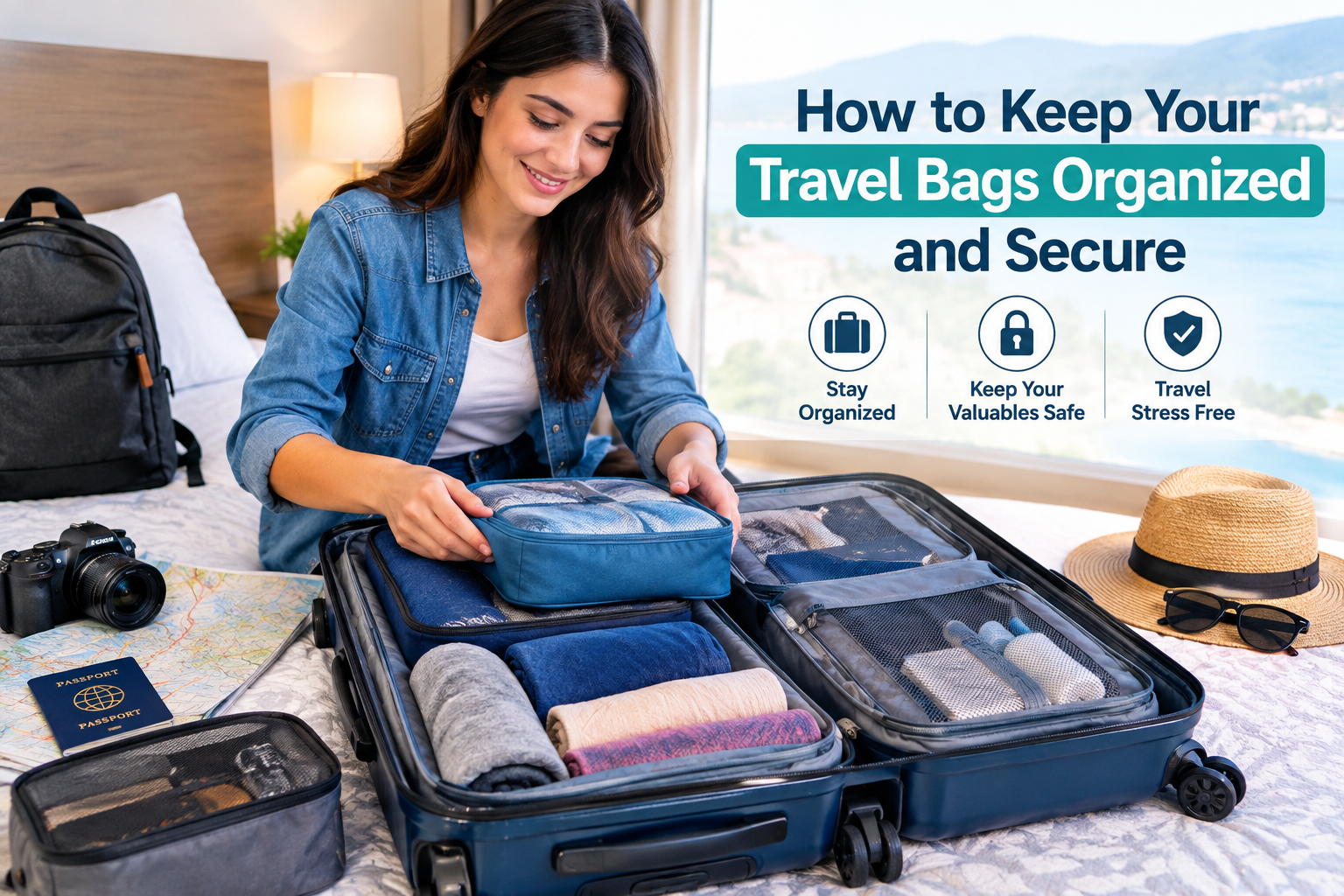
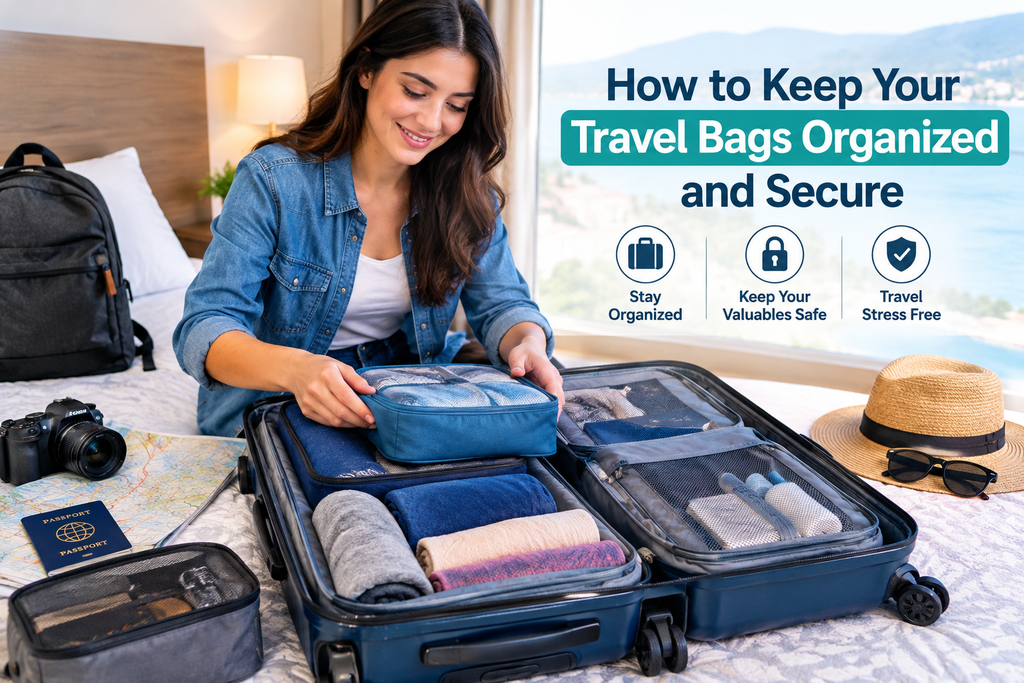
Packing cubes are one of my favorite tools for travel bag organization. They help divide a suitcase into smaller sections and prevent clothes from becoming mixed together.
For example, I can use one packing cube for shirts, another for trousers, and another for undergarments. This makes it much easier to find specific clothing without opening the entire suitcase.
Packing cubes can also help save space because clothing can be folded or rolled neatly inside them. They are especially useful when traveling with limited luggage space.
Keep Important Documents Separate
Travel documents deserve special attention. Your passport, identification documents, tickets, hotel information, and other important papers should have a dedicated and easily accessible place.
I prefer keeping these documents in a secure travel wallet or a separate compartment inside my carry on bag. I avoid placing my passport deep inside a checked suitcase because I may need it during the journey.
It is also useful to keep digital copies of important documents in a secure location. This can provide an additional backup if an original document is lost.
Keep Valuable Items Close
Valuable items such as cash, credit cards, phones, cameras, and important electronics should not be placed carelessly in checked luggage.
When I travel, I prefer keeping important valuables in my carry on bag or personal bag. During crowded situations, I make sure the bag is positioned where I can see it and control it.
A small bag with secure compartments can be helpful because it reduces the chance of accidentally leaving valuable items somewhere.
Organize Your Electronics
Chargers, cables, power banks, headphones, adapters, and other electronic accessories can quickly turn into a tangled mess.
I recommend using a small electronics organizer. It gives each cable and accessory its own place.
Before leaving home, I also check whether I actually need every electronic item. Carrying unnecessary cables and devices only takes up valuable space.
I usually keep frequently needed electronics somewhere that I can reach easily. This is particularly helpful during long journeys when I may need to charge my phone.
Use Separate Toiletry Bags
Toiletries should also have their own organization system. Shampoo, toothpaste, skincare products, and other personal care items can leak and damage clothing if they are packed without protection.
I prefer using a separate toiletry bag that can contain small leaks. Keeping liquids together also makes it easier to find them when needed.
For air travel, I check the current airline and airport requirements for carrying liquids before packing. Rules can vary depending on the airport and destination.
Do Not Overpack Your Travel Bag
Overpacking is one of the biggest reasons travel bags become difficult to manage. A bag that is too full can be difficult to close, carry, and organize.
Before packing, I ask myself whether I will realistically use each item during the trip. This simple question can remove many unnecessary things.
I also consider the weather, length of the trip, planned activities, and access to laundry. Packing according to the actual trip rather than packing for every possible situation usually saves space.
Give Everything Its Own Place
A simple organization rule I follow is to give every important item a specific place inside the bag.
For example, my passport can always go into one secure pocket, my charger can stay in my electronics organizer, and medicines or personal items can have their own small pouch.
The benefit is that I do not have to search through everything whenever I need something. After using an item, I try to put it back in the same place.
This habit becomes especially valuable during busy travel days.
Protect Your Travel Bag
Keeping a bag secure is just as important as keeping it organized. I always check the zippers, handles, wheels, straps, and other parts of my luggage before traveling.
For checked luggage, I make sure the bag is properly closed and identifiable. A luggage tag with appropriate contact information can help identify the bag if it gets separated from me.
I also recommend choosing a bag that is easy to recognize. A unique luggage strap or simple luggage tag can make it easier to identify your suitcase among similar bags.
Keep Your Bag Close in Crowded Places
Crowded airports, markets, public transportation areas, and tourist attractions require extra attention.
When I am in a crowded place, I keep my backpack or personal bag in a position where I can monitor it. I avoid leaving it unattended, even for a short time.
If I am sitting somewhere, I make sure the bag is not placed where I could easily forget it. Being aware of your belongings is one of the simplest travel security habits.
Avoid Showing Expensive Items
Another useful travel security habit is keeping expensive items discreet. Constantly displaying expensive electronics, jewelry, or large amounts of cash can attract unwanted attention.
I prefer carrying only what I need for the day. Extra valuables can remain secured at the accommodation when appropriate.
This approach also makes traveling more comfortable because I am not constantly worrying about several expensive belongings.
Check Your Bag Before Leaving a Place
One habit that has helped me avoid losing things is performing a quick bag check before leaving any location.
Before leaving a hotel room, restaurant, airport lounge, taxi, train, or other place, I quickly check my phone, wallet, passport, charger, and other important belongings.
It only takes a few seconds, but this simple routine can prevent many problems.
Keep a Small Essential Kit
I also find it useful to have a small travel essentials pouch. It can contain items such as tissues, basic personal care products, charging cables, a pen, and other small necessities.
Having these items together means I do not need to search through my main suitcase every time I need something.
For longer journeys, I can keep this pouch inside my personal bag so that the essentials remain accessible.
Do a Final Security Check Before Traveling
Before leaving home, I recommend doing one final travel bag security check.
I check that all important documents are packed, valuable items are secure, electronics are charged, and every compartment is properly closed. I also check the weight of my luggage if I am traveling by air.
Once everything is confirmed, I feel much more relaxed because I know exactly what I have packed and where it is located.
Final Thoughts
Keeping your travel bags organized and secure does not require complicated equipment or expensive accessories. In my view, the most important thing is developing a simple packing system and following it consistently.
Choosing the right travel bag, using packing cubes, separating important documents, protecting valuables, organizing electronics, and avoiding overpacking can make traveling much easier. At the same time, staying aware of your belongings in crowded places and checking your bag before leaving somewhere can help reduce the chance of losing important items.
The main goal of travel bag organization is to make your journey more comfortable and less stressful. When everything has its own place, you spend less time searching through your luggage and more time enjoying your trip.
For me, good travel preparation starts before leaving home. A little organization at the beginning can save a lot of frustration later. With these simple travel bag organization tips, you can keep your belongings easier to find while also taking practical steps to keep them secure throughout your journey.