Planning a vacation is something I always look forward to, but I also know that travel can become expensive very quickly if I do not plan carefully. Flights, hotels, food, transportation, activities, and small daily purchases can all add up. The good news is that an affordable vacation does not mean having a bad experience. In my opinion, the best way to enjoy a trip without spending too much money is to make a realistic plan before leaving home.
When I plan a budget friendly vacation, I focus on getting the best value instead of simply choosing the cheapest option. A little research can help me save money while still enjoying comfortable accommodation, good food, interesting activities, and memorable experiences. In this guide, I will explain how I plan an affordable vacation from start to finish.
Set a Realistic Vacation Budget
The first thing I do is decide exactly how much I can afford to spend on the entire trip. This gives me a clear financial limit and helps me make better decisions throughout the planning process.
I consider my available travel money, expected income, regular expenses, and emergency savings before setting a vacation budget. I never want a vacation to create financial stress after I return home.
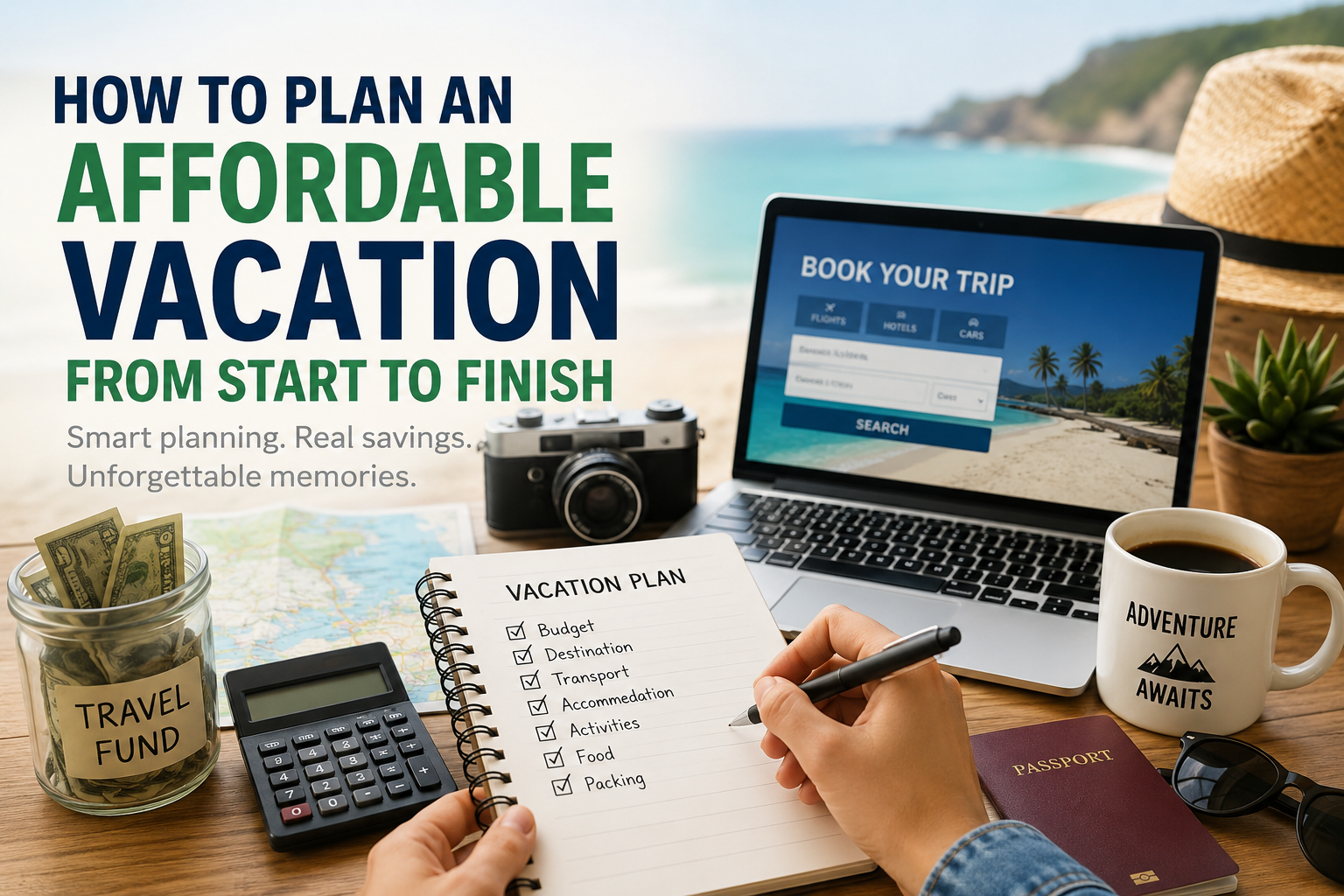
I divide my budget into different categories such as transportation, accommodation, food, activities, shopping, travel insurance, and emergency expenses. This makes it easier to understand where my money will go.
For example, if I have a total vacation budget of $1,000, I may decide to spend around $300 on transportation, $250 on accommodation, $200 on food, $150 on activities, and keep $100 for unexpected expenses. The exact amounts will depend on the destination and length of the trip.
Choose an Affordable Destination
The destination can make a huge difference to the total cost of a vacation. Some popular destinations are expensive because hotels, restaurants, transportation, and attractions have higher prices.
When I am trying to save money, I compare several destinations before making a final decision. Sometimes a destination that is slightly less popular can offer a much better travel experience for the same amount of money.
I also consider the local cost of living. A destination with affordable accommodation and inexpensive food can help my budget last much longer.
Another useful approach is to choose a destination closer to home. Traveling a shorter distance can reduce transportation costs and give me more money to spend on experiences.
Travel During the Right Season
Traveling during peak season can significantly increase the cost of a vacation. Flights and hotels are often more expensive when many people are visiting the same destination.
I prefer to look at shoulder seasons or less busy periods when possible. During these times, I may find better hotel prices and cheaper transportation while still enjoying pleasant weather.
Before booking, I check the weather, local events, holidays, and tourist seasons. This helps me choose a time when prices are reasonable and the destination is not overcrowded.
Being flexible with travel dates is one of the simplest ways to plan an affordable vacation.
Compare Transportation Costs
Transportation is often one of the biggest parts of a travel budget. I never book the first flight, train, or bus option I find. Instead, I compare different choices.
Sometimes flying is convenient, but traveling by train or bus can be cheaper. In other situations, a budget airline may offer a good price. I also check the complete cost rather than looking only at the advertised ticket price.
Extra baggage fees, seat charges, airport transportation, and other costs can change the final price. I always try to understand the total amount before booking.
If I am traveling by car, I calculate fuel, tolls, parking, and other expected costs. This gives me a more accurate idea of what transportation will actually cost.
Find Affordable Accommodation
Accommodation is another major part of a vacation budget. I compare hotels, guesthouses, hostels, vacation rentals, and other suitable options before making a reservation.
I do not always choose the cheapest room. Instead, I look at the location, reviews, facilities, and total price. A cheap hotel far away from everything may cost more after paying for transportation every day.
Sometimes a simple hotel in a convenient location is a better choice than a luxury property outside the main area.
I also look for useful facilities such as free breakfast, WiFi, kitchen access, laundry facilities, and free parking. These small benefits can reduce other travel expenses.
Plan Your Daily Food Budget
Food can quietly consume a large part of a travel budget. When I am on vacation, I enjoy trying local food, but I also avoid spending money on expensive meals every day.
Before traveling, I research affordable restaurants, local markets, food streets, cafes, and grocery stores. Eating where local residents eat can often provide better value than choosing restaurants in heavily touristy areas.
If my accommodation includes breakfast, I take advantage of it. I may also purchase simple snacks and drinks from a local grocery store instead of buying everything from tourist areas.
I still leave room in my budget for a few special meals because food is an important part of the travel experience.
Research Free and Affordable Activities
A vacation does not have to be filled with expensive attractions. Many destinations offer free or low cost activities that can be just as enjoyable.
I research public parks, beaches, walking areas, local markets, museums with free entry days, historical neighborhoods, viewpoints, cultural events, and public spaces.
Before paying for an attraction, I check whether there are discounts, combination tickets, free hours, or online offers.
I also avoid filling every day with paid activities. Some of my favorite travel memories can come from simply walking around a new city, taking photographs, visiting a local market, or enjoying the scenery.
Create a Simple Travel Itinerary
I like having a basic itinerary because it helps me manage both time and money. However, I avoid creating a schedule that is too strict.
I group activities based on location. If several attractions are close to each other, I visit them on the same day. This reduces transportation costs and saves time.
I also leave some free time in my schedule. Trying to visit too many places in one day can make a vacation stressful and may lead to unnecessary spending.
A simple itinerary gives me direction while still allowing me to enjoy the trip naturally.
Look for Travel Discounts
Before booking anything, I search for available discounts. Airlines, hotels, attractions, transportation services, and travel websites may offer special prices at different times.
I compare prices across several reliable booking platforms and check the official website of the hotel or attraction as well.
I also look for student, family, senior, group, or membership discounts when they apply. Even a small discount can make a difference when several expenses are combined.
The important thing is to compare the final price and understand the booking conditions before making a payment.
Avoid Unnecessary Travel Spending
One of the easiest ways to stay within a travel budget is to control unnecessary spending.
When I travel, I try not to buy something simply because I am in a new place. Souvenirs, snacks, expensive coffee, random shopping, and convenience purchases can quickly increase the total cost.
I set a separate shopping budget before the trip. Once that amount is used, I avoid additional purchases unless something is genuinely important.
I also carry a reusable water bottle when practical and use public transportation when it is safe and convenient.
Keep an Emergency Fund
Even when I plan everything carefully, unexpected expenses can happen. A delayed flight, transportation problem, medical expense, lost item, or sudden change in plans can affect my budget.
That is why I always keep some money separate from my main vacation spending amount.
I treat this emergency fund as money that I hope I will not need. Having it available gives me peace of mind and prevents an unexpected expense from ruining the trip.
Track Your Spending During the Vacation
Creating a budget is only useful if I actually follow it. During the trip, I keep track of my daily spending.
I check how much I spend on food, transportation, activities, shopping, and other expenses. This helps me understand whether I am staying within my planned budget.
If I spend more than expected one day, I can reduce my spending the next day. This simple habit helps prevent small overspending from becoming a major problem.
A notes app, spreadsheet, or budgeting app can make tracking expenses very easy.
Plan for the Journey Home
When planning an affordable vacation, I never forget the cost of getting home. It is easy to focus on reaching the destination and forget about return transportation.
I calculate the complete round trip cost before booking. I also make sure that I have enough money for transportation to the airport, station, or bus terminal.
Planning the return journey in advance helps me avoid expensive last minute decisions.
Final Thoughts
In my experience, planning an affordable vacation is mostly about making smart choices before the trip begins. I do not need to avoid travel or sacrifice every enjoyable experience to save money. I simply need to understand where my money is going and decide what matters most to me.
I start by setting a realistic vacation budget, choosing an affordable destination, comparing transportation, finding suitable accommodation, planning food expenses, and researching affordable activities. I also keep an emergency fund and track my spending throughout the trip.
The goal of an affordable vacation is not to spend as little as possible. The goal is to get the most value from the money I have available. With careful research and a flexible attitude, I can enjoy a memorable vacation without returning home with unnecessary financial stress.
A good travel plan gives me the freedom to enjoy the journey while knowing that I am staying within my limits. That is why I believe affordable travel starts long before the suitcase is packed. It starts with a realistic plan, thoughtful decisions, and a clear understanding of what I truly want from the trip.