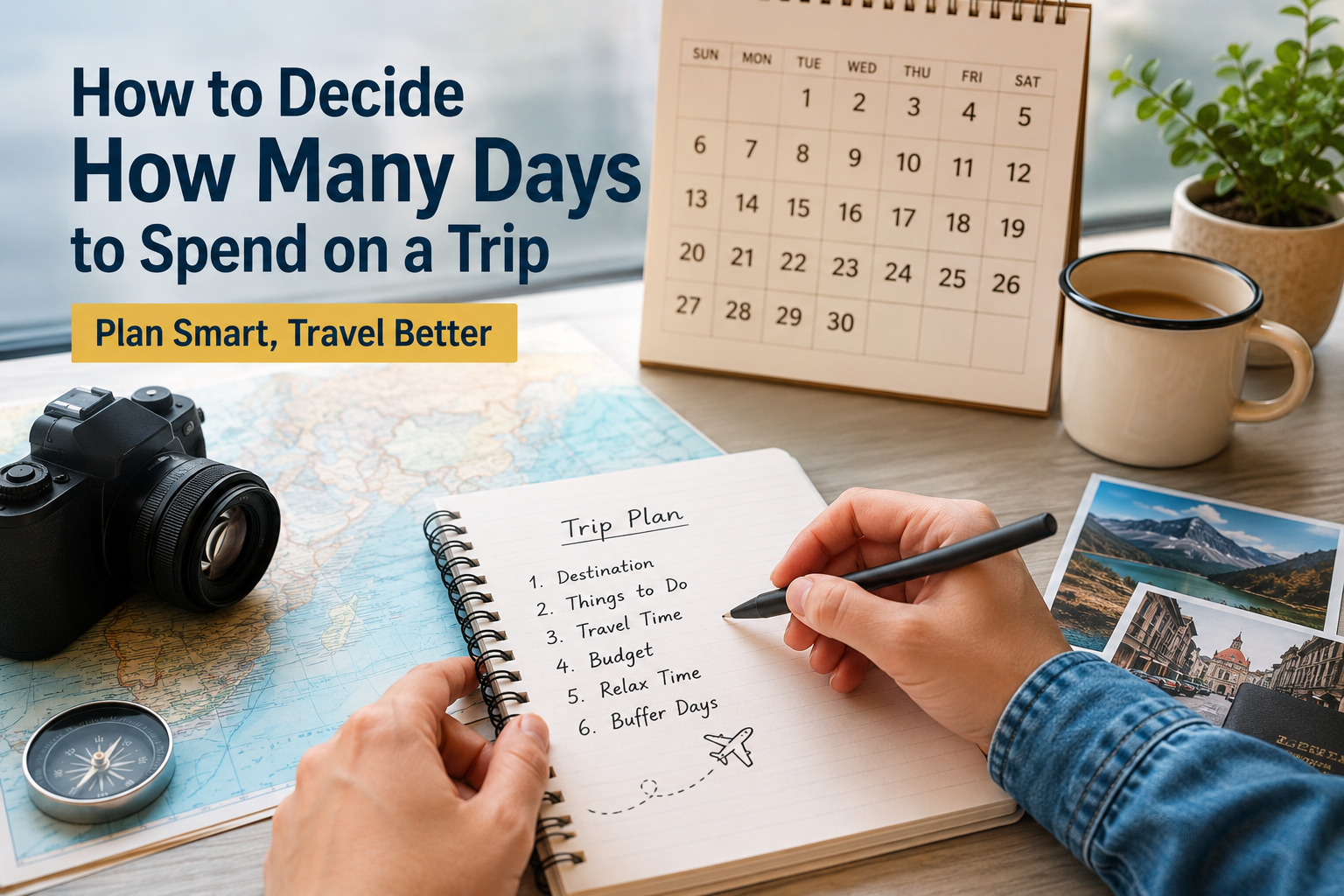
When I plan a trip, one of the first questions that comes to my mind is how many days I should actually spend at the destination. Choosing the right trip duration can make a big difference in how enjoyable the journey becomes. A trip that is too short can feel rushed, while a trip that is too long can become expensive or repetitive.
In my experience, there is no single perfect number of days for every destination. The right travel duration depends on the place, your budget, travel style, available activities, transportation, and the amount of time you have. In this guide, I will explain how I decide how many days to spend on a trip and how you can make the same decision for your next adventure.
Start With the Purpose of Your Trip
The first thing I consider is the main purpose of the trip. Every journey has a different reason behind it. Sometimes I want to explore a new city and visit famous attractions. Other times, I simply want to relax and enjoy a peaceful environment.
If your main goal is sightseeing, you may need more days because you will want enough time to explore different places without rushing. If relaxation is your main goal, even a shorter trip can be satisfying if you choose a comfortable destination.
For example, a weekend might be enough for a quick city break, but a beach holiday may feel better with five to seven days. A longer cultural trip could require a week or more.
Research What the Destination Offers
Before deciding how many days to spend on a trip, I always look at what there is to do at the destination. I make a simple list of attractions, activities, neighborhoods, natural areas, museums, restaurants, and other places that interest me.
This gives me a better idea of how much time I actually need.
If a destination has only a few major attractions, spending many days there may not be necessary. However, if there are many interesting places nearby, a longer stay can be worthwhile.
I also check whether activities require a full day. Some attractions may take only a few hours, while others involve long travel times or guided tours. Understanding this before booking helps me create a realistic travel schedule.
Consider Your Travel Time
One mistake I often see people make is counting only the days they will spend at the destination. Travel time also matters.
If you have to spend an entire day traveling to reach your destination, that day may not give you much time for sightseeing. The same applies to the return journey.
For example, if you have five days available but two days are mostly spent traveling, you may have only three useful days at the destination.
This is why I recommend calculating the complete journey. Think about flights, trains, buses, driving time, airport transfers, and possible delays. Once you understand your actual travel time, it becomes easier to choose the right trip duration.
Think About Your Budget
Your budget is another important factor when deciding how many days to spend on a trip. Longer trips usually mean higher costs for accommodation, food, transportation, and activities.
I normally calculate my approximate daily travel expenses before deciding the length of a trip. This helps me understand whether I can comfortably afford a longer stay.
For example, if my estimated daily budget is $80 and I plan to stay for five days, I already know that the basic daily expenses could reach around $400, excluding major transportation costs.
A longer trip is not always better if it creates financial stress. I would rather take a shorter trip that I can enjoy comfortably than stay longer while constantly worrying about money.
Avoid Making the Schedule Too Busy
When planning a trip, it can be tempting to include everything. I have learned that trying to visit too many places in a short period can make a holiday exhausting.
Instead of planning every hour, I prefer leaving some free time in my schedule. This gives me the chance to explore at a comfortable pace, stop at an interesting café, take photographs, or simply rest.
If you have ten activities planned for three days, you may spend the entire trip looking at your watch. A good travel experience should give you time to enjoy the destination rather than simply checking attractions off a list.
Think About Your Travel Style
Everyone has a different travel style, so the ideal number of days can vary from person to person.
Some travelers enjoy fast trips where they visit several places in a short period. Others prefer staying in one location and experiencing it slowly.
If you enjoy museums, local food, photography, shopping, walking tours, and cultural experiences, you may want extra days. If you prefer seeing only the major highlights, you may need less time.
Personally, I think understanding your own travel style is more useful than following a fixed rule about how long a trip should be.
Consider the Size of the Destination
The size of the destination can also influence your travel duration. A small town may be easy to explore in one or two days, while a large city could require several days.
If you are visiting a large country or region, you should also consider the distance between different locations. Traveling between cities can consume valuable time.
For a trip involving multiple destinations, I usually avoid changing locations every day. Moving from one hotel to another takes time and energy. Staying two or three nights in one place can make the journey feel more comfortable.
Add Time for Unexpected Situations
I believe every good travel plan should have some flexibility. Flights can be delayed, transportation can take longer than expected, and weather can change your plans.
That is why I like keeping at least some extra time when possible. These extra hours or days can be useful if something unexpected happens.
A flexible schedule also makes travel less stressful. If you miss one activity, you do not have to worry that the entire itinerary has been ruined.
Think About the Season
The time of year can affect how many days you should spend on a trip. Some destinations are best explored during certain seasons, while others may have unpredictable weather.
For example, outdoor destinations may require more flexibility if rain is common. You may need an additional day so you can move activities around when the weather changes.
During peak travel seasons, attractions can also be crowded. You might need more time to visit popular places because of queues and busy transportation.
Checking the typical weather and seasonal conditions before planning your trip can help you choose a more realistic duration.
Use the Two Day Rule for Short Trips
For a simple city break, I often find that two full days can be a useful starting point. This can work well for destinations with several major attractions located relatively close together.
With two full days, you can usually explore the main highlights while still having some time for food and relaxation.
However, this is only a starting point. If the destination has many attractions or requires long transportation times, you may need three or four days.
Consider a Three to Five Day Trip
For many destinations, three to five days can provide a good balance. You have enough time to explore important attractions without needing to take a very long vacation.
A three day trip can work well for a short city visit. Four or five days can give you more time to explore neighborhoods, try local food, take day trips, and enjoy slower mornings.
When I am unsure about the ideal duration, this range is often a practical place to start.
Longer Trips Need Better Planning
If you are planning a trip of one week or more, I recommend dividing the destination into smaller areas. Instead of trying to see everything at once, decide which places are most important to you.
For a seven day trip, you might spend several days exploring the main destination and use one or two days for nearby locations.
Longer trips also require more attention to accommodation, transportation, laundry, food costs, and rest. Planning these details can make a long journey much easier.
Ask Yourself Five Simple Questions
When I am unsure about the length of a trip, I ask myself five questions:
How many places do I really want to visit?
How much time will transportation take?
What is my daily travel budget?
How much time do I want for relaxation?
What would make the trip feel comfortable instead of rushed?
The answers usually make the decision much easier.
Do Not Plan Based Only on Other Travelers
Travel blogs and social media can give you useful ideas, but I do not think you should copy another person’s itinerary exactly.
Someone else might explore a city in two days because they prefer a fast travel style. You might enjoy spending four days there because you like walking around and discovering local places.
Use other travelers’ experiences as inspiration, but build your own schedule around your interests, budget, and energy level.
Create a Flexible Daily Plan
Once you decide how many days to spend on a trip, create a simple daily plan. I recommend choosing one or two major activities for each day and leaving space around them.
For example, you could dedicate your first day to exploring the central area, your second day to major attractions, and your third day to a nearby location or a relaxed day.
This approach gives you structure without making the entire trip feel like a strict timetable.
Final Thoughts
Deciding how many days to spend on a trip is not about finding one perfect number. It is about finding the right balance between exploration, relaxation, budget, travel time, and personal interests.
Before booking, I recommend researching the destination, listing the activities you genuinely want to experience, calculating travel time, checking your budget, and leaving some room for unexpected situations.
For a short city break, two or three days may be enough. For a larger destination, four to seven days can provide a better experience. Longer vacations can be excellent when you have enough time and a realistic plan.
The most important thing is to choose a trip duration that allows you to enjoy the journey instead of rushing through it. A well planned trip is not necessarily the longest one. It is the one that gives you enough time to experience the places you care about while still feeling comfortable and relaxed.