
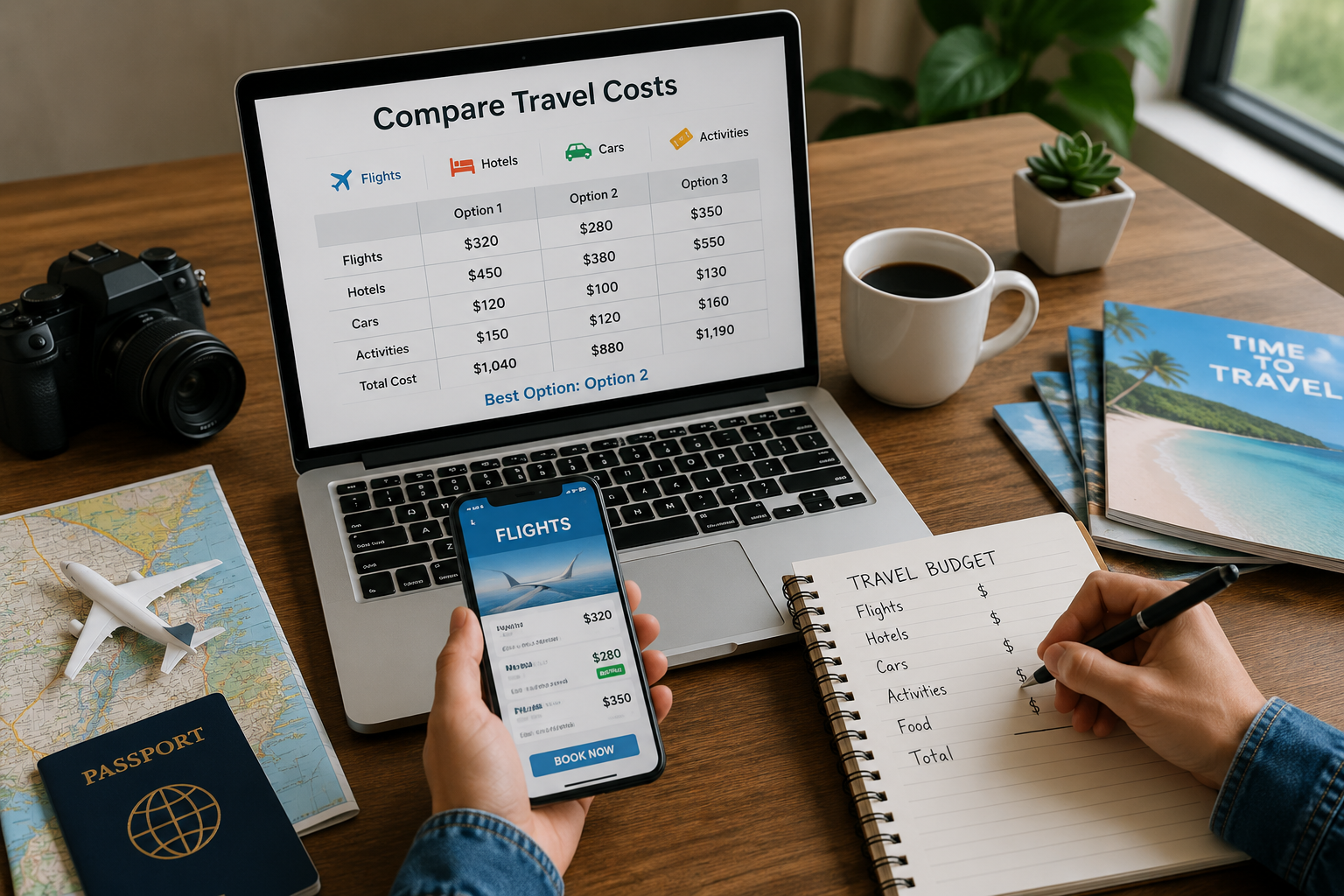
Planning a trip is exciting, but I have learned that booking the first flight or hotel I find is not always the best idea. Travel prices can vary a lot depending on the destination, travel dates, transportation, accommodation, food, and activities. A trip that looks affordable at first can become expensive when all the extra costs are added together.
That is why I always believe in comparing travel costs before booking a trip. A little research can help me understand where my money is going and whether I am getting good value. It also helps me avoid unexpected expenses during the journey.
In this guide, I will explain how I compare travel costs before booking a trip and how you can use the same approach to plan a more affordable vacation.
Start With Your Total Travel Budget
Before comparing individual prices, I first decide how much I can comfortably spend on the entire trip. Having a total travel budget gives me a clear limit and makes the planning process easier.
For example, if I have a budget of $1,500 for a seven day trip, I do not look at a $1,400 hotel and assume the trip is affordable. I need to consider transportation, meals, local travel, activities, travel insurance, and other expenses.
I usually divide my travel budget into several categories such as flights, accommodation, transportation, food, activities, shopping, and emergency expenses.
This approach gives me a realistic picture of the actual cost of the trip rather than focusing on one attractive price.
Compare Flight Prices Carefully
Flights are often one of the biggest travel expenses, so I spend time comparing different options before making a booking.
I compare prices from different airlines and also look at different departure times. Sometimes a flight that leaves early in the morning is cheaper than an evening flight. However, I also consider whether I will need to pay for transportation to the airport or an additional hotel night.
I never look only at the basic ticket price. Some airlines charge extra for checked baggage, seat selection, meals, and other services. A cheaper flight can become more expensive after these charges are included.
I also compare nearby airports when possible. Flying from or arriving at another airport can sometimes reduce the ticket price, but I calculate transportation costs before deciding.
The cheapest flight is not always the cheapest travel option. I want to compare the complete cost.
Compare Different Travel Dates
Travel dates can make a major difference to the total cost of a trip. I always check several possible dates before booking whenever my schedule allows it.
Popular travel periods often have higher prices because more people are traveling. Holidays, weekends, festivals, and major events can increase flight and hotel prices.
If I have flexible dates, I check prices for several days before and after my preferred dates. Sometimes moving a trip by one or two days can save a meaningful amount of money.
I also compare the total cost of different trip lengths. A longer trip is not automatically much more expensive if accommodation and transportation are reasonably priced, while a short trip can sometimes cost more per day.
Compare Hotel and Accommodation Costs
Accommodation is another important part of my travel budget. When comparing hotels, I look beyond the nightly room price.
A hotel might advertise a low rate but charge additional fees for parking, breakfast, internet, resort services, or other facilities. I always try to understand the final price before making a decision.
I also compare hotels in different neighborhoods. Staying in the center of a city may be convenient, but hotels farther away can sometimes be significantly cheaper.
However, I calculate transportation costs before choosing a cheaper hotel. If I save $30 on accommodation but spend $20 every day on transportation, the cheaper hotel may not actually save me money.
For me, the best hotel is not necessarily the cheapest hotel. It is the one that offers a good balance between price, location, comfort, and included services.
Calculate Local Transportation Costs
Local transportation is easy to overlook when planning a trip. I always estimate how much I am likely to spend on buses, trains, taxis, rideshare services, rental cars, or other transportation.
If I am visiting a city with reliable public transportation, I check ticket prices and available travel passes. A daily or weekly transportation pass can sometimes be more affordable than buying individual tickets.
For road trips, I calculate fuel costs, parking fees, toll charges, and rental car expenses. I also check whether the rental company has additional charges.
This helps me compare different travel options more accurately. A hotel near public transportation might be more valuable than a cheaper hotel in an isolated location.
Compare Food Expenses
Food can become a surprisingly large part of a travel budget. Before booking a trip, I research typical food prices at my destination.
I usually create a rough daily food budget. For example, I might estimate the cost of breakfast, lunch, dinner, snacks, and drinks.
I also check whether my hotel includes breakfast. If breakfast is included, I can reduce my daily food budget.
I do not believe that travelers need to eat at expensive restaurants every day. Local markets, affordable restaurants, supermarkets, and simple cafes can help control food expenses while still allowing me to enjoy local cuisine.
When comparing destinations, I consider food costs as part of the overall travel cost rather than treating them as a small extra expense.
Compare Activities and Attractions
Another important step is comparing the cost of activities. Some destinations have many free attractions, parks, museums, walking areas, beaches, and cultural sites. Others may have expensive tours and admission fees.
Before booking, I make a list of the activities I genuinely want to experience. Then I check their individual prices.
I also look for free days, discounted tickets, city passes, and combination tickets when they are available.
I do not recommend filling every day with expensive activities. Some of my favorite travel experiences can come from simply exploring a neighborhood, visiting a public park, walking around a historic area, or enjoying the local atmosphere.
A realistic activity budget helps prevent overspending during the trip.
Check Travel Insurance and Other Extra Costs
Travel insurance is another cost that should be considered before booking. Depending on the destination and type of trip, insurance may provide useful protection for certain unexpected situations.
I also think about other possible expenses such as visa fees, airport transfers, baggage charges, currency conversion fees, mobile data, tips, and travel documents.
These expenses may seem small individually, but they can add up quickly.
When comparing travel costs, I try to include as many realistic expenses as possible. This gives me a more accurate estimate of what the trip will actually cost.
Compare the Full Cost Instead of One Price
One of the biggest mistakes I see when people plan trips is comparing only one part of the cost.
For example, Destination A may have cheaper flights but expensive hotels. Destination B may have slightly more expensive flights but much cheaper accommodation and food.
If I only compare airfare, Destination A looks better. If I compare the complete trip, Destination B may actually be more affordable.
That is why I calculate the estimated total cost for each destination.
A simple comparison might include:
Flight cost
Hotel cost
Local transportation
Food
Activities
Travel insurance
Visa and documentation expenses
Extra fees
Emergency budget
This method makes it much easier to identify the better value.
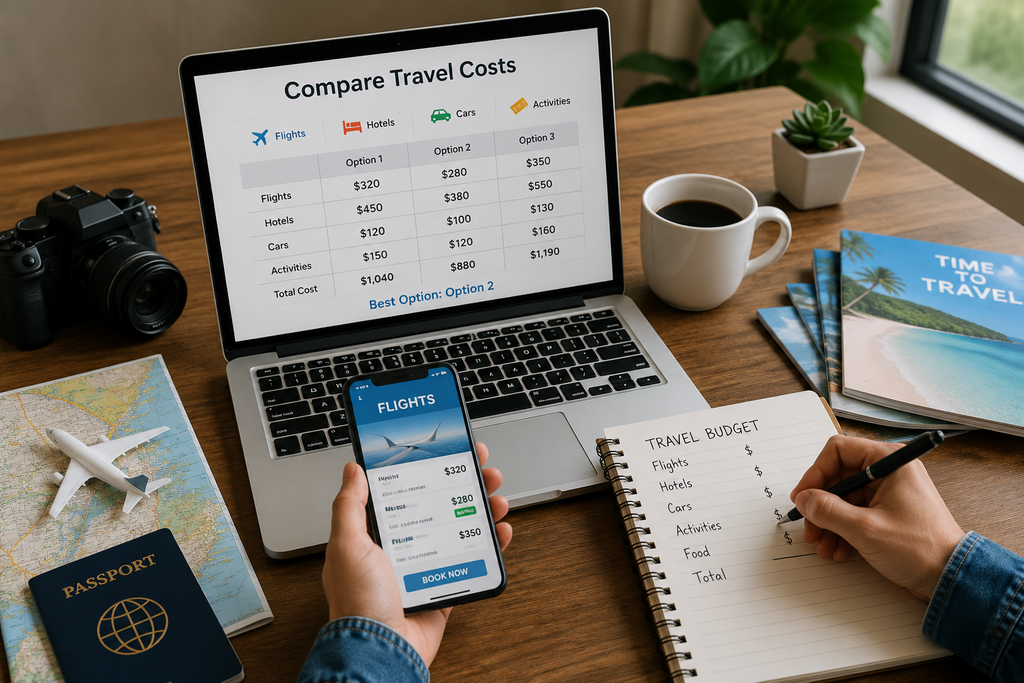
Use a Simple Travel Cost Comparison Table
I find that writing the numbers down makes travel planning much easier. I can create a simple table for each destination and enter the estimated costs.
For example, I might compare three destinations and calculate the expected cost for a seven day trip.
The table does not need to be complicated. The goal is simply to see where my money will go.
I also include a small emergency amount because unexpected expenses can happen during any trip. Having a little extra money available gives me more confidence.
Consider Value, Not Just Price
Price is important, but it should not be the only factor when comparing travel costs.
A slightly more expensive hotel might be located close to major attractions, saving transportation time and money. A more expensive flight might have better baggage rules or a more convenient schedule.
I always ask myself what I am getting for the extra money.
Sometimes spending a little more can provide better comfort, convenience, and overall value. The goal is not to make the trip as cheap as possible. The goal is to make the trip affordable while still enjoying the experience.
Check Prices Again Before Booking
Travel prices can change, so I do not always assume that the first price I see will remain available.
Before completing a booking, I check the final price again and review all booking details. I make sure the dates, baggage options, cancellation rules, taxes, and additional fees are correct.
I also compare the final price with the alternatives I previously researched.
This final check can help me avoid making a decision based on outdated information or an incomplete price.
Keep an Emergency Travel Budget
I always recommend keeping some money aside for unexpected expenses. Even when I plan everything carefully, travel does not always go exactly as expected.
A delayed flight, unexpected transportation expense, change in plans, or additional accommodation night can affect the budget.
An emergency fund gives me flexibility and reduces financial stress.
I prefer to have a realistic budget with some extra money available rather than spending my entire budget before the trip even begins.
Final Thoughts
Comparing travel costs before booking a trip is one of the simplest ways to make smarter travel decisions. I have found that looking at the complete cost gives me a much better understanding of what I can actually afford.
Instead of choosing the cheapest flight or hotel immediately, I compare transportation, accommodation, food, activities, extra fees, and other expenses. I also consider convenience and value because the lowest price does not always provide the best experience.
The most important thing is to create a realistic travel budget and compare different options before making a final decision. With a little research and careful planning, it becomes easier to find affordable travel options without sacrificing the experiences that make a trip memorable.
A good travel budget is not about avoiding every expense. It is about knowing where your money is going and making choices that match your priorities. When I compare travel costs before booking, I feel more prepared, more confident, and better able to enjoy the journey without constantly worrying about money.