Traveling to a new place is one of my favorite experiences because it gives me the chance to see different cultures, try new foods, meet interesting people, and create memories that stay with me for years. At the same time, I believe every traveler should think about personal safety before exploring a crowded destination. One common problem in busy tourist areas is pickpocketing.
Pickpockets usually look for easy opportunities rather than people who are paying attention. Crowded streets, public transportation, markets, festivals, tourist attractions, and busy shopping areas can make it easier for someone to take a wallet, phone, or other valuable item without being noticed.
The good news is that avoiding pickpockets does not require complicated security equipment. In my experience, simple habits, awareness, and careful planning can make a big difference. In this article, I will share practical tips on how to avoid pickpockets in busy tourist areas and enjoy your trip with greater peace of mind.
Understand Where Pickpockets Usually Operate
The first step in protecting yourself is understanding where pickpockets are more likely to find opportunities. They often prefer places where people are distracted and movement is difficult.
Popular tourist attractions can become crowded when many visitors stop to take photographs. Public buses, trains, subway stations, markets, shopping streets, and large events can also create situations where people stand very close together.
I do not think travelers should become afraid of crowded places. They are often some of the most enjoyable parts of a trip. However, I believe it is important to become more alert when entering a crowded area.
Instead of focusing only on your destination, take a moment to notice the people around you and keep your important belongings secure.
Keep Your Phone Secure
A smartphone is one of the most useful things we carry while traveling. We use it for maps, tickets, photographs, translations, banking, communication, and many other tasks. Unfortunately, this also makes a phone an attractive target for thieves.
One habit I recommend is avoiding the habit of walking through crowded areas while holding your phone loosely in your hand. If you are checking directions, step into a safer location where you can look at your map without standing in the middle of a crowd.
When you finish using your phone, put it somewhere secure rather than keeping it in an open jacket pocket.
I also recommend using a strong screen lock and keeping important accounts protected. If your phone is lost or stolen, these precautions can help reduce the potential damage.
Choose Your Pockets Carefully
Where you keep your belongings can make a major difference.
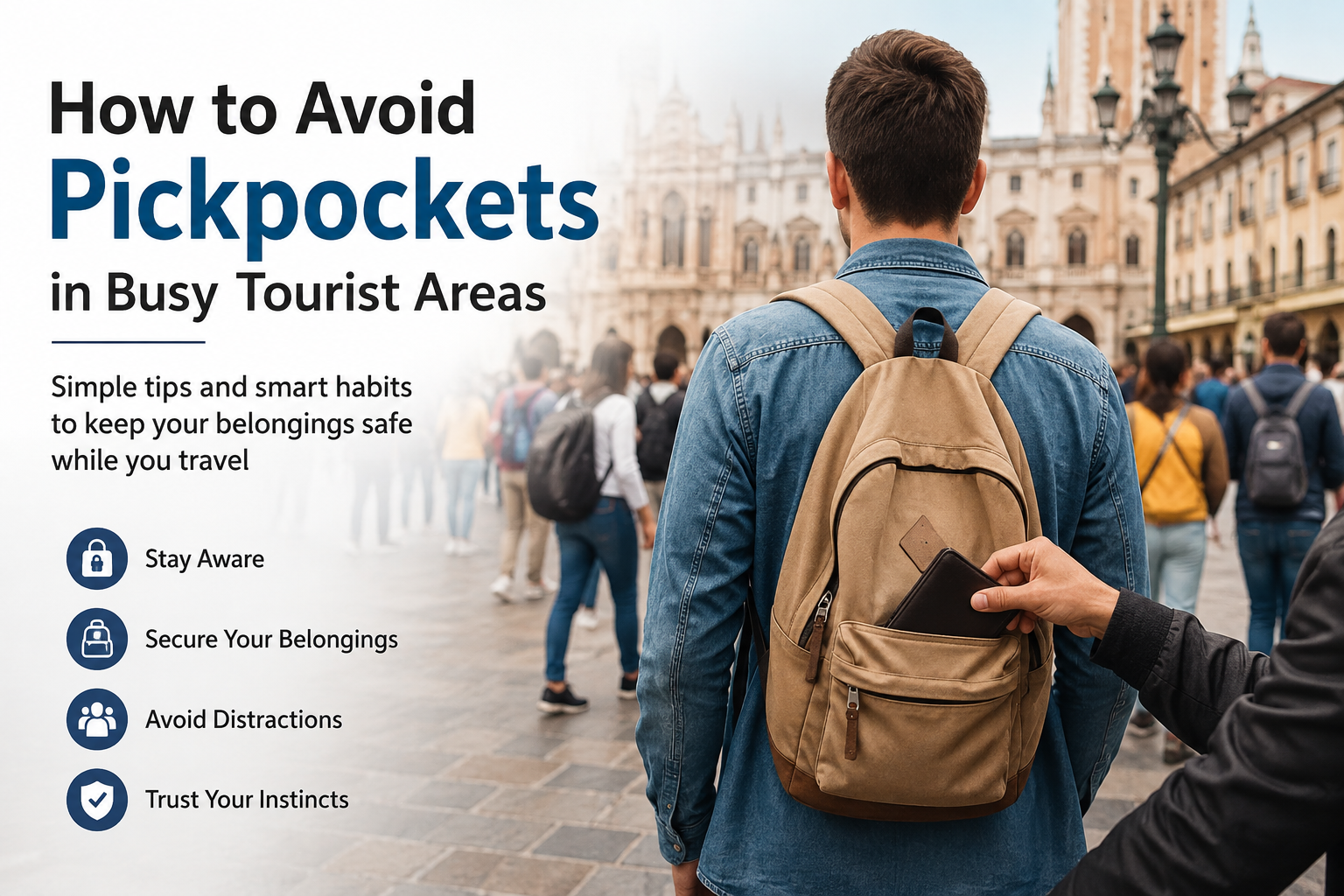
An open back pocket is generally not a good place for your wallet or phone when you are walking through a crowded tourist area. It can be difficult to notice when someone reaches into it.
I prefer keeping important items in a secure front pocket or another location that is difficult for someone else to access without my knowledge. If your clothing has zippered pockets, they can provide an additional layer of protection.
The main idea is simple. Your most valuable belongings should not be sitting somewhere that another person can easily reach.
Use Your Bag Wisely
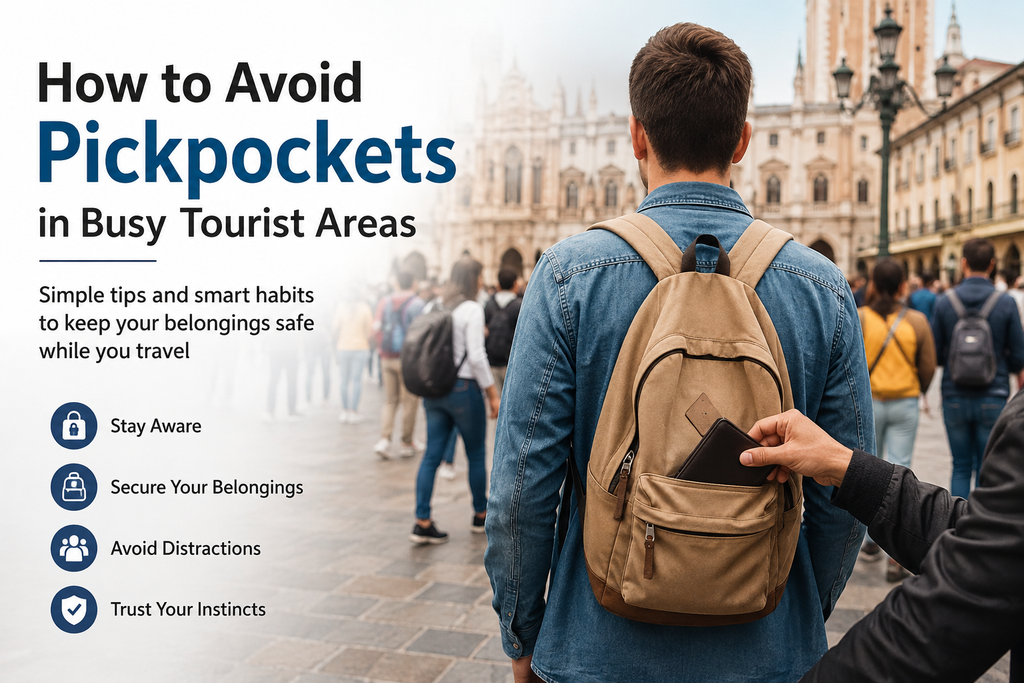
A backpack is convenient when traveling because it allows you to carry water, a camera, documents, and other items. However, in extremely crowded places, a backpack worn on your back can be difficult to monitor.
When I am in a very busy area, I pay extra attention to my bag. In some situations, I prefer carrying it in front of me so I can see the zippers and keep control of my belongings.
Make sure all compartments are properly closed before entering a crowded place. Avoid leaving expensive items in easily accessible outside pockets.
You do not need to carry your entire collection of valuables while sightseeing. Take only what you actually need for the activity.
Avoid Showing Expensive Items
Another useful way to avoid pickpockets is to avoid unnecessarily attracting attention to your valuables.
This does not mean you cannot enjoy your favorite watch, camera, or phone while traveling. It simply means you should be sensible about how you use and display expensive items.
For example, constantly counting large amounts of cash in public or leaving expensive electronics openly visible can make you more noticeable.
I usually recommend carrying only the amount of cash needed for the day and keeping the rest of my important belongings stored securely.
Being discreet is often better than trying to look prepared for every possible situation.
Stay Alert When Someone Distracts You
One of the most important pickpocket prevention tips is to be careful when strangers suddenly create a distraction.
A person may ask an unusual question, bump into you, spill something, point toward something nearby, or create another situation that takes your attention away from your belongings. Most interactions with strangers are completely harmless, so there is no reason to assume everyone has bad intentions.
However, if something feels unusually distracting or confusing, I believe it is smart to immediately check your important belongings.
If someone bumps into you in a crowded place, do not panic. Simply move to a safer position and make sure your phone, wallet, passport, and bag are still secure.
Be Careful on Public Transportation
Public transportation is an excellent way to explore a city, but crowded buses and trains require extra awareness.
When boarding or leaving a crowded vehicle, keep your bag close to your body. Pay particular attention when people are pushing from different directions because these moments can make it difficult to notice what is happening around you.
I also avoid placing valuable items in external bag pockets when using crowded transportation.
If you are sitting down, keep your belongings within your reach rather than leaving a bag unattended beside you.
A few seconds of awareness can prevent a major problem later.
Do Not Keep Everything in One Place
One mistake travelers sometimes make is putting all their important belongings together.
Imagine losing a wallet that contains all your cash, cards, identification, and other important documents. The situation could become much more difficult.
I prefer separating important items when possible. For example, I may keep some emergency cash in a secure location separate from my main wallet.
The same principle applies to travel documents. Keep copies of important information stored securely so you can access essential details if the original documents are lost.
The goal is to avoid turning one unfortunate incident into a complete travel disaster.
Be Careful Around Tourist Attractions
Famous landmarks attract large numbers of visitors every day. People are usually excited, taking photographs, looking at maps, and trying to find the best viewpoint.
This natural excitement can sometimes make travelers less aware of their surroundings.
Before taking a photograph, make sure your bag is secure. When stopping to admire a landmark, avoid leaving your belongings unattended.
If you are traveling with friends or family, it can also help to agree that one person watches the belongings while another takes photographs.
That simple habit allows everyone to enjoy the attraction without completely ignoring their surroundings.
Avoid Getting Too Distracted by Your Phone
Modern travel depends heavily on smartphones, but constantly looking at a screen can reduce your awareness.
When walking through an unfamiliar area, I prefer checking my route before moving rather than staring at the map throughout the entire journey.
If I need more time to understand directions, I stop somewhere appropriate and look at the map carefully.
This approach has another benefit. It helps me enjoy the destination instead of spending the entire trip looking at a screen.
Trust Your Instincts
Personal awareness is one of the best forms of travel safety.
If a particular situation feels uncomfortable, you do not have to ignore that feeling. Move toward a more public location, enter a reputable shop, stay close to other travelers, or change your route.
You do not need to accuse anyone or create a confrontation. Simply create some distance and continue your journey.
I believe trusting your instincts is especially useful when traveling somewhere unfamiliar because your natural awareness may notice unusual behavior before you can explain exactly why something feels wrong.
Keep Your Passport and Important Documents Safe
Your passport is usually much more difficult to replace than cash or a phone, so protecting it should be a priority.
When sightseeing, think carefully about whether you actually need to carry your passport with you. Follow the requirements of your destination and accommodation, but avoid carrying important documents unnecessarily when they can be stored securely.
Keep digital or physical copies of important travel information in a secure place. Having backup information can make the recovery process easier if something goes missing.
What to Do If You Think You Have Been Pickpocketed
Even careful travelers can experience theft. If you notice that something is missing, try to stay calm.
First, move somewhere safe and check your belongings carefully. Sometimes an item has simply been placed in a different pocket or compartment.
If your phone or payment card is missing, take steps to secure your accounts as quickly as possible. Contact your bank or card provider if necessary. If important identification has been stolen, contact the appropriate local authorities and your embassy or consular service when appropriate.
It is also useful to report the incident because official documentation may be required for insurance or replacement documents.
Final Thoughts
Learning how to avoid pickpockets in busy tourist areas is not about being afraid of people or avoiding crowded destinations. For me, travel safety is mainly about developing simple habits that become automatic.
Keep your phone and wallet secure. Use your bag carefully. Avoid showing unnecessary valuables. Stay alert on public transportation. Be careful when someone creates an unexpected distraction. Most importantly, pay attention to your surroundings.
The best part is that these habits do not take much effort. Once they become part of your normal travel routine, you can explore busy streets, markets, attractions, and public transportation with much greater confidence.
Travel should be about discovering new places and enjoying new experiences. A little preparation and awareness can help protect your belongings while allowing you to focus on what really matters, making great memories during your journey.
Primary Keyword: How to avoid pickpockets in busy tourist areas
Secondary Keywords: avoid pickpockets while traveling, pickpocket prevention tips, travel safety tips, protect belongings while traveling, tourist area safety, how to keep your wallet safe while traveling, how to protect your phone while traveling
SEO Meta Description: Learn how to avoid pickpockets in busy tourist areas with simple travel safety tips for protecting your phone, wallet, passport, and belongings.