
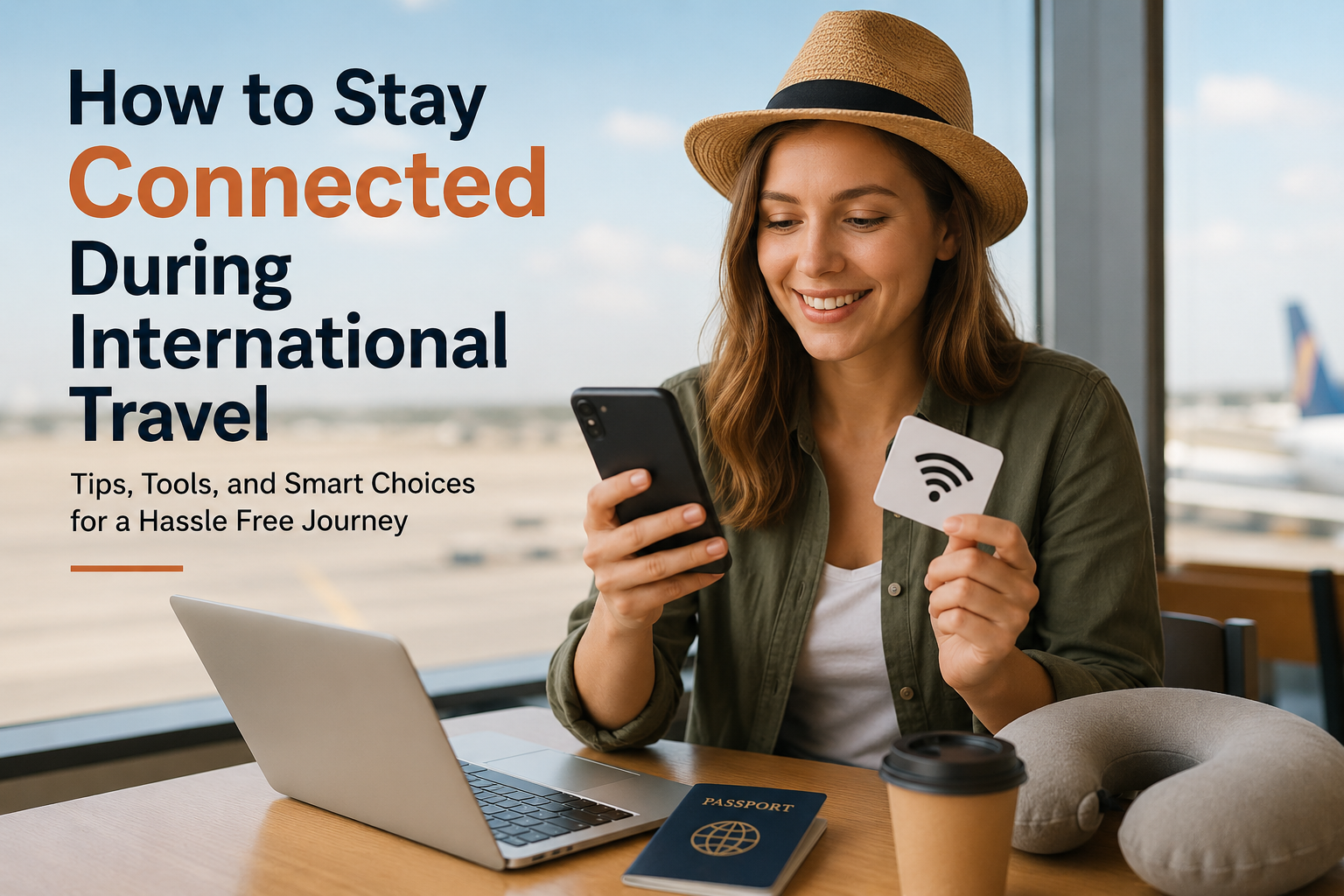
International travel can be exciting, but staying connected while visiting another country can sometimes be confusing. Your regular mobile plan may not work the same way abroad, WiFi may not always be available, and unexpected roaming charges can become a problem. From my experience and understanding, a little preparation before leaving home can make communication much easier during a trip.
Whether you need to contact family, use maps, check hotel information, work online, or simply stay updated, having reliable internet access is now an important part of modern travel. In this guide, I will share practical ways to stay connected during international travel without making things unnecessarily complicated.
Check Your Mobile Plan Before Traveling
The first thing I recommend is checking your current mobile plan before leaving your country. Many mobile providers offer international roaming packages that allow you to use your existing number abroad.
Do not assume that international roaming is automatically included in your plan. Some providers charge separately for calls, text messages, and mobile data. A few minutes of internet use can sometimes become surprisingly expensive if you do not have an international package.
Before your trip, contact your mobile provider or check your account online. Find out whether your destination is covered, how much data is included, and whether calls and text messages have separate charges.
If the package is affordable and provides enough data, it may be the easiest option because you can continue using your normal phone number.
Consider an International eSIM
One of the most convenient ways to stay connected during international travel is an eSIM. An eSIM is a digital SIM that can be activated on compatible phones without inserting a physical SIM card.
I find this option especially useful for travelers who want internet access as soon as they arrive. Depending on your phone and destination, you can purchase a suitable international data plan before traveling and activate it when needed.
Before buying an eSIM, make sure your smartphone supports eSIM technology and is not locked to a particular mobile network. Also check how much data the plan provides and how long it remains active.
For short trips, a small data package may be enough. For longer journeys, a larger package can make more sense.
Buy a Local SIM Card
Another useful option is purchasing a local SIM card after arriving at your destination. Local SIM cards can provide affordable data, calls, and text messages, depending on the country and provider.
This can be a good choice if you are staying for several weeks or traveling frequently within one country. Local plans may offer more data for less money than traditional international roaming.
The main thing to remember is that replacing your normal SIM card can affect your regular phone number. If you use your number for important accounts or verification messages, make sure you understand how changing SIM cards will affect you.
If your phone supports dual SIM functionality, you may be able to keep your primary SIM active while using a local SIM for mobile data.
Use Reliable WiFi When Available
WiFi remains one of the easiest ways to stay connected while traveling internationally. Hotels, airports, cafes, restaurants, libraries, and shopping centers often provide WiFi.
However, I would not depend entirely on public WiFi. A connection can be slow, unreliable, or unavailable when you need it most.
When you arrive at your hotel, connect to its WiFi and download anything important that you may need later. This could include maps, hotel information, translation tools, travel documents, and entertainment.
When using public WiFi, avoid accessing sensitive accounts unless you are confident that the connection is secure. Using mobile data can be a better option for important financial or personal activities.
Download Offline Maps
Staying connected is not only about having internet access. It is also about preparing for the moments when you do not have it.
One of the smartest things I recommend is downloading offline maps before exploring a new destination. Navigation can become difficult if your mobile data stops working or you suddenly enter an area with weak coverage.
Offline maps can help you find streets, neighborhoods, transportation routes, hotels, and other important locations without needing a constant internet connection.
I also recommend saving the address of your hotel somewhere on your phone and keeping a written copy as a backup. This simple step can be extremely helpful if your phone battery becomes low or your internet connection disappears.
Use Messaging Apps to Stay in Touch
Messaging apps can make international communication much easier. Apps that support internet messaging and calling allow travelers to communicate with friends, relatives, and colleagues without relying entirely on traditional international calls.
Before leaving home, make sure your important contacts are already saved on your phone. You can also create a small travel group with family members if you are traveling alone or with others.
I think this is particularly useful because one message can quickly let someone know where you are or confirm that everything is going well.
Remember that these apps usually require an internet connection, so having mobile data, WiFi, or another form of internet access is still important.
Carry a Portable Power Bank
A reliable internet connection is not very useful if your phone battery is dead.
During international travel, your smartphone may be working harder than usual because you are frequently using maps, cameras, translation apps, booking websites, and messaging services.
For this reason, I always consider a power bank an important travel accessory. It can provide extra battery power when you are away from your hotel or cannot find a convenient charging point.
Before traveling, charge your power bank fully and check the airline rules regarding batteries and power banks. It is also useful to carry the correct charging cable for your phone.
Keep Important Information Available Offline
Even if you have excellent internet access, it is smart to keep essential travel information offline.
Save your flight details, hotel address, reservation information, travel insurance information, emergency contacts, and important documents on your phone. If possible, keep copies in a secure location that you can access without internet.
I also recommend taking screenshots of important booking confirmations. This can save time when you are standing at an airport counter or hotel reception and your internet connection is slow.
Having offline information gives you a backup when technology does not cooperate.
Be Careful With International Roaming
International roaming can be convenient, but it is important to understand how it works.
Some travelers return home and discover unexpected charges because apps were using mobile data in the background. Automatic updates, cloud backups, video streaming, and social media can consume data quickly.
Before your trip, check your phone settings and consider turning off automatic updates and unnecessary background data usage.
You can also monitor your data usage during the trip. This gives you a better idea of how much data you are consuming and helps prevent unpleasant surprises.
Use Travel Apps Wisely
Modern travel apps can make international travel much easier. Maps, translation apps, airline apps, hotel apps, transportation apps, and currency tools can all help you manage your journey.
However, installing too many apps can also create confusion. I prefer to choose only the apps I genuinely need and prepare them before leaving.
Make sure important apps are updated while you still have reliable internet at home. If an app offers offline features, download the required information before your trip.
This small amount of preparation can save a lot of time later.
Keep Your Phone Secure
Staying connected also means protecting your phone and personal information.
Use a strong screen lock and keep your operating system updated. Avoid leaving your phone unattended in public places, especially in crowded tourist areas.
Be careful when connecting to unfamiliar WiFi networks. Some networks may imitate legitimate public WiFi. When possible, confirm the correct network name with the hotel, airport, restaurant, or other trusted location.
I also recommend enabling device tracking features. If your phone is lost or stolen, these tools may help you locate or secure it.
Have a Backup Communication Plan
Even the best travel preparation cannot guarantee that your phone and internet will always work.
That is why I believe every international traveler should have a backup communication plan.
Keep important phone numbers written down. Know the address and contact details of your accommodation. Learn how to contact your travel provider if your SIM or eSIM stops working.
If you are traveling with family or friends, agree on a meeting place in case someone loses internet access or their phone battery dies.
A backup plan may seem unnecessary when everything is working perfectly, but it can become extremely valuable during an unexpected situation.
Final Thoughts
Learning how to stay connected during international travel does not have to be complicated. The most important thing is to prepare before you leave.
Check your mobile plan, compare international roaming with an eSIM or local SIM card, download offline maps, save important travel information, use reliable WiFi, carry a power bank, and keep a backup communication plan.
From my point of view, the best travel setup is not necessarily the most expensive one. It is the one that gives you reliable communication without creating unnecessary costs or stress.
Technology can make international travel much easier, but it works best when you prepare for situations where it may not be available. With a little planning, you can enjoy your trip while staying connected to the people, information, and services that matter most.
Primary Keyword: How to Stay Connected During International Travel
Secondary Keywords: international travel connectivity, stay connected while traveling, international roaming, travel eSIM, local SIM card, travel WiFi, mobile data abroad, international travel tips, offline maps for travel, travel communication tips
SEO Meta Description: Learn how to stay connected during international travel with practical tips for roaming, eSIMs, local SIM cards, WiFi, offline maps, messaging apps, and travel safety.