Traveling to a new destination can be one of the most exciting experiences in life. I personally believe that a little research before a trip can make the entire journey easier, safer, and more enjoyable. When I know what to expect, I feel more confident about where I am going, what I should do, and how I should manage my time and money.
Learning how to research a destination before traveling does not mean spending weeks reading every article on the internet. It simply means collecting useful information that can help you make better travel decisions. From the best time to visit and places to stay to local transportation, food, culture, safety, and costs, destination research gives you a clearer picture of your trip.
In this article, I will share the practical steps I would follow when researching a destination before traveling.
Start With the Basic Information
The first thing I do when researching a destination is learn the basics. I look at where the destination is located, what it is known for, what language people speak, what currency is used, and what the general climate is like.
This basic information gives me a starting point. I also check the time zone because it can be important when planning flights, communicating with family, or booking activities.
I like to understand the overall character of a destination as well. Some places are famous for beaches, while others are known for history, nature, shopping, food, or nightlife. Knowing this helps me decide whether the destination actually matches my interests.
Research the Best Time to Visit
Choosing the right time to travel can have a major effect on the experience. Before booking anything, I research the weather, tourist seasons, local events, and busy periods.
For example, a destination may be beautiful during the summer but extremely crowded and expensive. Another destination may offer better prices during the quieter months.
I also check whether certain attractions operate seasonally. There is no point planning an entire trip around an activity if it is unavailable during the dates I am visiting.
Weather is another important factor. I look at average temperatures, rainfall, and seasonal conditions. This helps me decide what clothes to pack and what activities will be comfortable.
Find the Main Attractions
After understanding the destination, I make a list of the major attractions. I usually look at official tourism websites, travel guides, maps, and reliable travel blogs.
I do not try to visit every popular attraction. Instead, I identify the places that genuinely interest me.
For example, if I enjoy history, I may focus more on museums, historical buildings, and cultural sites. If I prefer nature, I may research parks, mountains, beaches, lakes, or hiking areas.
I also look beyond the most famous attractions. Sometimes smaller local places provide a more memorable experience than the locations everyone talks about online.
Research Where to Stay
Accommodation is another area where destination research can save time and money. Before choosing a hotel or guesthouse, I research different neighborhoods and their distance from the places I want to visit.
A cheap hotel may not actually be cheaper if it is far away from everything and requires expensive transportation every day.
I also read recent reviews instead of relying only on photographs. Reviews can reveal useful information about cleanliness, location, noise, staff, internet access, and other practical details.
When comparing accommodation, I look at the total cost rather than only the advertised nightly price. Taxes, service charges, breakfast, transportation, and other fees can change the final amount.
Learn About Local Transportation
I always recommend researching transportation before arriving at a new destination. Knowing how to move around can reduce stress, especially during the first few hours after arrival.
I research whether the destination has buses, trains, metro systems, taxis, ride sharing services, or other transportation options.
I also check how much transportation usually costs and how long it takes to travel between important areas.
Maps are particularly useful during this stage. Looking at a map helps me understand the layout of a city and choose accommodation in a convenient location.
If I plan to rent a vehicle, I also research local driving rules, parking conditions, road requirements, and rental policies.
Check the Cost of Traveling
A good travel plan should include a realistic budget. Before traveling, I research the average prices of accommodation, food, transportation, attractions, and everyday expenses.
I prefer to create separate budget categories. For example, I may have one amount for accommodation, another for food, another for transportation, and another for activities.
I also leave some money for unexpected expenses. Travel does not always go exactly according to plan, so having a small financial cushion can be helpful.
Researching prices in advance also prevents unpleasant surprises. I can decide whether a destination fits my budget before making non refundable bookings.
Understand Local Culture and Etiquette
One of the most important parts of destination research is learning about local culture. Every destination has its own customs, traditions, and social expectations.
I research appropriate clothing, greetings, table manners, photography rules, religious customs, and behavior that visitors should understand.
This does not mean I need to become an expert in the culture before traveling. A basic understanding is enough to show respect.
I believe that learning about local culture also makes a trip more interesting. When I understand why people do certain things, I can appreciate the destination instead of simply observing it.
Research Food and Local Dishes
Food is often one of my favorite parts of traveling. Before visiting a destination, I research popular local dishes and foods that I would like to try.
I also look at different types of restaurants and markets. Reviews can help me find places that are popular with both visitors and locals.
If someone has food allergies or specific dietary requirements, this research becomes even more important. Learning a few useful words related to food can also make communication easier.
I recommend keeping an open mind when trying local food. Some of the best travel memories can come from trying something completely different from what you normally eat.
Check Safety Information
Safety should always be part of destination research. I look for reliable and current information about the area before traveling.
I research common tourist scams, transportation concerns, areas that visitors may want to avoid, emergency services, and important local rules.
I also save important contact information before leaving. Depending on the destination, this may include local emergency services, accommodation details, and embassy or consular information.
The goal is not to become worried about everything. Good safety research simply helps me recognize potential problems and respond calmly if something unexpected happens.
Check Entry and Travel Requirements
For international travel, I consider entry requirements one of the most important research steps.
I check passport validity requirements, visa rules, travel documents, and any other requirements that apply to my nationality. I prefer official government or embassy sources for this information because travel requirements can change.
I also check airline baggage rules and airport procedures before the trip.
Doing this research early gives me enough time to arrange documents or solve problems before departure.
Read Recent Travel Experiences
Travel blogs, forums, videos, and reviews can provide useful practical information that official websites may not mention.
I like reading recent experiences because they can give me an idea about what the destination actually feels like. Travelers often share information about transportation, crowds, prices, restaurants, neighborhoods, and common mistakes.
However, I do not believe everything I read online. One person’s experience may not represent the entire destination.
I compare information from several sources before making an important decision. This helps me separate personal opinions from information that appears consistently across multiple sources.
Use Maps Before Your Trip
Maps are one of the simplest research tools available. Before traveling, I use a map to understand distances and identify important areas.
I mark my accommodation, airports, major attractions, restaurants, transportation stations, and other important locations.
This gives me a realistic idea of how much I can do in one day. A place may look close on a travel website but take much longer to reach because of traffic or public transportation.
I also save important locations for offline access whenever possible. This can be useful if mobile internet is unavailable.
Do Not Overplan Everything
Research is important, but I do not think every minute of a trip needs to be planned.
When I overplan, travel can start feeling like a schedule instead of an adventure. I prefer to research the important things and leave some free time.
I usually identify a few must visit places and then leave room for spontaneous experiences. A quiet cafe, local market, unexpected viewpoint, or interesting street can sometimes become the highlight of a trip.
Good destination research should give me freedom, not take it away.
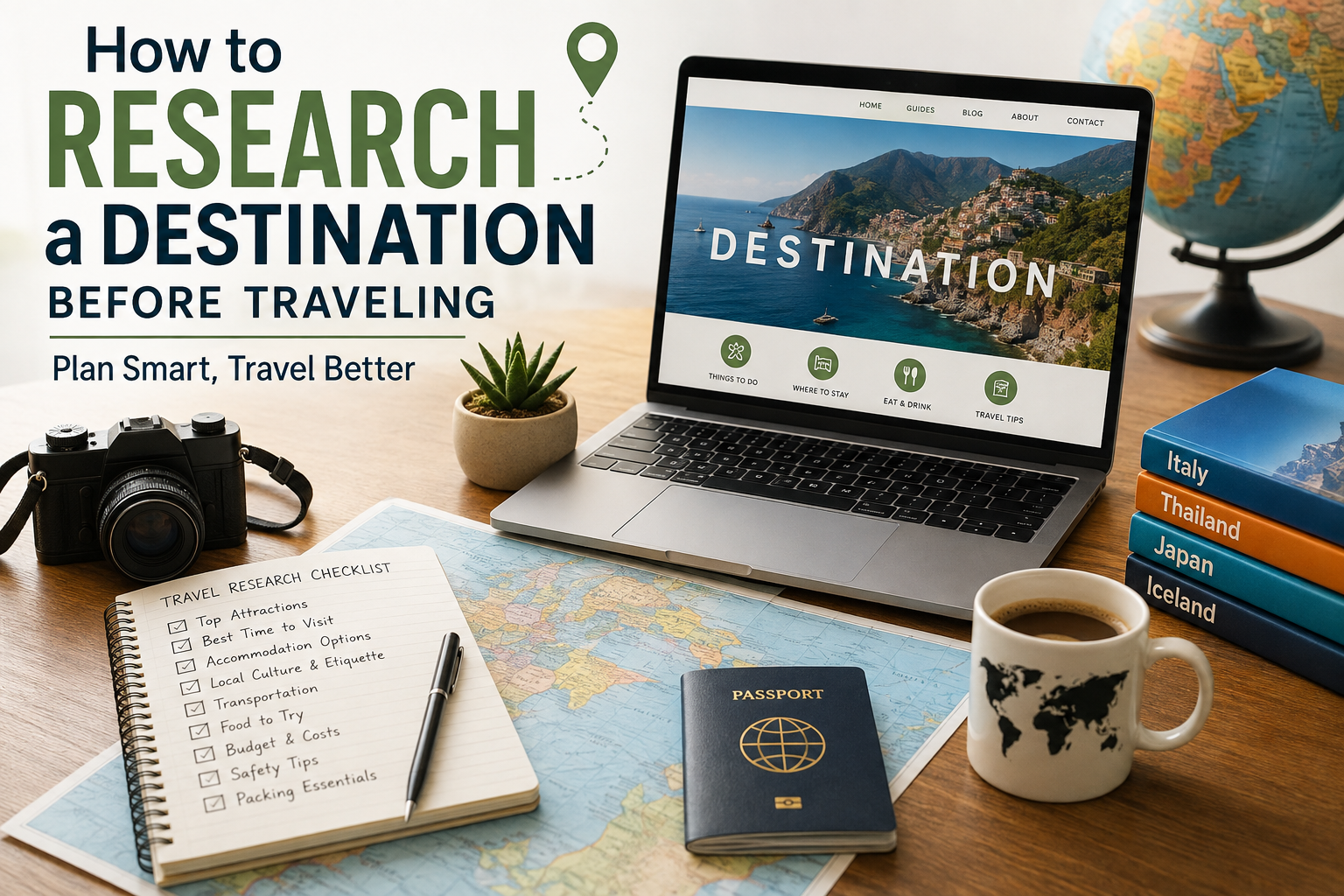
Create a Simple Travel Research Checklist
After collecting information, I organize it in one place. I keep important details such as accommodation information, transportation options, attractions, estimated costs, important documents, and emergency contacts together.
This makes the information easier to find when I need it.
I also separate information into categories instead of keeping dozens of random browser tabs open. A simple document or travel notes app can be enough.
Final Thoughts
Learning how to research a destination before traveling is one of the easiest ways to improve a trip. In my experience, good research helps reduce stress and gives me more confidence when I arrive somewhere new.
I focus on the basics first, including weather, attractions, accommodation, transportation, costs, culture, food, safety, and travel requirements. I then use recent traveler experiences and maps to understand the destination from a practical point of view.
At the same time, I try not to research so much that the trip loses its sense of adventure. The purpose of destination research is not to control every moment. It is to prepare myself well enough to enjoy the journey.
If you take some time to research a destination before traveling, you can make smarter decisions, avoid many common problems, manage your budget more effectively, and enjoy your trip with greater peace of mind. For me, that preparation is not a boring part of travel. It is the first step of the adventure.