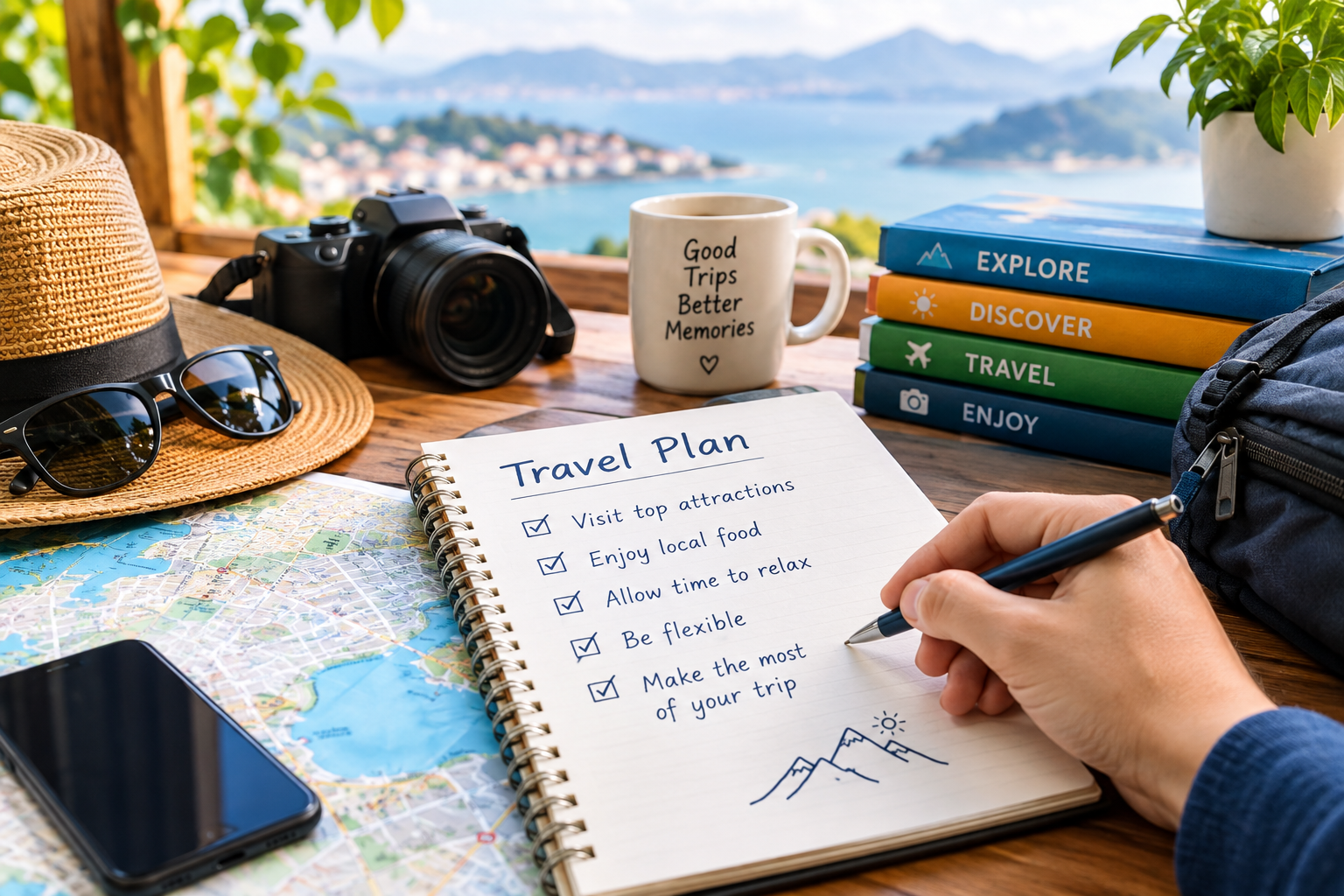
When I plan a trip, I always want to see and experience as much as possible. It is easy to make a long list of attractions, restaurants, activities, and places to visit. However, I have learned that putting too many things into one day can make a trip stressful instead of enjoyable. Good travel planning is not about filling every hour. It is about creating a balanced schedule that gives you enough time to explore, relax, eat, and enjoy unexpected moments.
In my opinion, the best travel itinerary is one that gives you direction without making you feel trapped by a strict timetable. If you want to learn how to plan travel activities without overbooking your day, the following ideas can help you create a more comfortable and enjoyable trip.
Start With Your Most Important Activities
The first thing I do when planning a travel day is identify the activities I really do not want to miss. Most destinations have many attractions, but not every attraction needs to be included in your daily schedule.
I usually choose two or three major activities that are most important to me. These become the foundation of the day. Everything else is optional.
For example, if I am visiting a city for the first time, I might choose one famous attraction in the morning and a special local experience in the afternoon. If there is extra time, I can explore another nearby place.
This approach makes travel activities easier to manage because I know what matters most. It also prevents me from spending the entire day rushing from one location to another.
Avoid Planning Every Minute
One of the biggest travel planning mistakes is creating an itinerary that leaves no free time. At first, a detailed schedule can look impressive, but real travel rarely goes exactly according to plan.
You may spend longer at a museum than expected. A restaurant may take more time to serve your meal. Traffic may be heavier than expected. You might discover a beautiful street or local market and decide to stay there longer.
For this reason, I prefer to leave open spaces between major activities. Instead of planning something for every hour, I give myself extra time to move around and enjoy the destination.
A flexible travel itinerary is usually much more enjoyable than a schedule that feels like a race.
Consider Travel Time Between Activities
When planning travel activities, it is important to think about distance. Two attractions may look close on a map, but getting between them can take much longer because of traffic, public transportation, parking, crowds, or walking.
I try to group activities that are located in the same area. This saves transportation time and reduces unnecessary movement.
For example, if several attractions are located in the same neighborhood, I can visit them on the same day. This allows me to walk between places instead of repeatedly traveling across the city.
This simple travel planning method can make your day feel much less crowded.
Plan Around Your Energy Level
Not every part of the day has the same energy level. I have found that my morning energy is usually different from my afternoon or evening energy.
For this reason, I like to place activities according to how demanding they are. If an activity requires a lot of walking, I prefer to do it earlier in the day when I have more energy. After lunch, I may choose something slower, such as visiting a museum, sitting at a café, or exploring a relaxed shopping area.
If your trip includes outdoor activities, sightseeing, and long walks, avoid putting all the physically demanding activities together.
A good vacation schedule should consider your energy, not just the opening hours of attractions.
Give Yourself Time to Eat
Food is an important part of travel, but people sometimes treat meals as something they need to fit between attractions.
I prefer to give meals enough time because local food can be one of the most memorable parts of a trip. Instead of planning breakfast, lunch, and dinner as quick stops, I leave enough time to sit comfortably and enjoy the experience.
It is also useful to remember that popular restaurants may have waiting times. If you schedule another activity immediately after a meal, a small delay can affect the entire itinerary.
Building some extra time around meals makes the whole travel day more comfortable.
Choose Quality Over Quantity
One of the most useful lessons I have learned about travel planning is that visiting more places does not always mean having a better trip.
It is possible to visit five attractions in one day and remember very little about any of them. On the other hand, spending several hours enjoying one interesting area can create a much stronger memory.
Instead of asking how many places I can visit, I prefer to ask which experiences are worth my time.
This mindset makes it easier to avoid overbooking. You can focus on meaningful experiences instead of trying to collect as many attractions as possible.
Use a Simple Priority System
When I have many activities on my list, I find it helpful to divide them into three groups.
The first group contains must do activities. These are the experiences I would be disappointed to miss.
The second group contains nice to do activities. I would enjoy them, but missing them would not ruin my trip.
The third group contains optional activities. These are things I can do if I have extra time.
This simple system makes travel planning much easier. If the day becomes busy, I can remove optional activities without feeling that I have ruined my plans.
Leave Space for Unexpected Experiences
Some of the best travel memories happen when there is no plan.
You might find a small café that looks interesting, meet friendly locals, discover a beautiful viewpoint, or walk into a market that was not on your original itinerary.
If every minute of your day is scheduled, you may not have the freedom to enjoy these moments.
That is why I always recommend leaving some unscheduled time. It gives you the opportunity to follow your curiosity.
In my opinion, flexibility is one of the most valuable parts of a good travel itinerary.
Avoid Too Many Reservations
Reservations can be useful, especially for popular attractions and restaurants. However, making too many reservations can make your trip feel restrictive.
If you book activities at 9 AM, 11 AM, 1 PM, 3 PM, and 6 PM, even a small delay can create a stressful situation.
I prefer to reserve only the things that genuinely require advance booking. For other activities, I leave some freedom.
This approach gives you a basic structure while still allowing your day to change naturally.
Plan One Main Activity Per Part of the Day
A simple way to prevent an overloaded schedule is to think of the day in sections.
For example, you could have one main activity in the morning, one after lunch, and one in the evening. Smaller activities can fit around these main experiences if time allows.
This method is much easier to manage than creating a long list of activities.
It also gives you something to look forward to throughout the day without making the itinerary feel crowded.
Check Opening Hours Before You Go
Although flexibility is important, basic research can prevent unnecessary problems.
Before leaving for an attraction, I recommend checking its opening hours, ticket requirements, location, and any special restrictions. Some places may close on certain days or require advance tickets.
This information helps you create a realistic travel schedule.
It is also a good idea to check the approximate travel time between locations. Even a simple map review can help you understand whether your plans are realistic.
Keep Your First Day Light
If you are traveling to a new destination, I recommend avoiding a very busy schedule on the first day.
Travel can be tiring because of flights, long drives, airport procedures, changing time zones, and carrying luggage. You may arrive expecting to explore for hours but discover that you need some rest.
I usually prefer a lighter first day with one or two easy activities. Once I become familiar with the destination and recover from the journey, I can enjoy a more active schedule on the following days.
Make Your Itinerary Flexible
A travel itinerary should be a guide, not a set of rules.
If you wake up tired, you should be able to change your plans. If the weather changes, you may need to move outdoor activities to another day. If you discover something more interesting, there should be enough space to enjoy it.
I believe flexibility makes travel more enjoyable because it removes the pressure to follow a perfect schedule.
You can still have a plan while accepting that some things will change.
Do Not Forget Rest
Rest is one of the most overlooked parts of travel planning. A vacation is supposed to give you a chance to enjoy yourself, not make you exhausted every night.
After several hours of walking and sightseeing, taking an hour to relax can make the rest of the day much better.
You can return to your hotel, sit at a café, enjoy a quiet park, or simply take some time away from crowded tourist areas.
Rest is not wasted travel time. It can actually help you enjoy your activities more.
Final Thoughts
Learning how to plan travel activities without overbooking your day is mainly about finding balance. You do not need to visit every attraction or fill every empty hour to have a great trip.
From my point of view, a good travel plan should include a few important activities, realistic travel times, proper meal breaks, enough rest, and some free time for unexpected experiences.
Start with the places you care about most, group nearby activities together, avoid excessive reservations, and give yourself room to change your plans. When you stop trying to make every minute productive, travel can become much more relaxing.
The goal of travel is not simply to complete an itinerary. It is to experience a destination, enjoy your time, and return home with good memories. A balanced travel schedule gives you the freedom to do exactly that.