
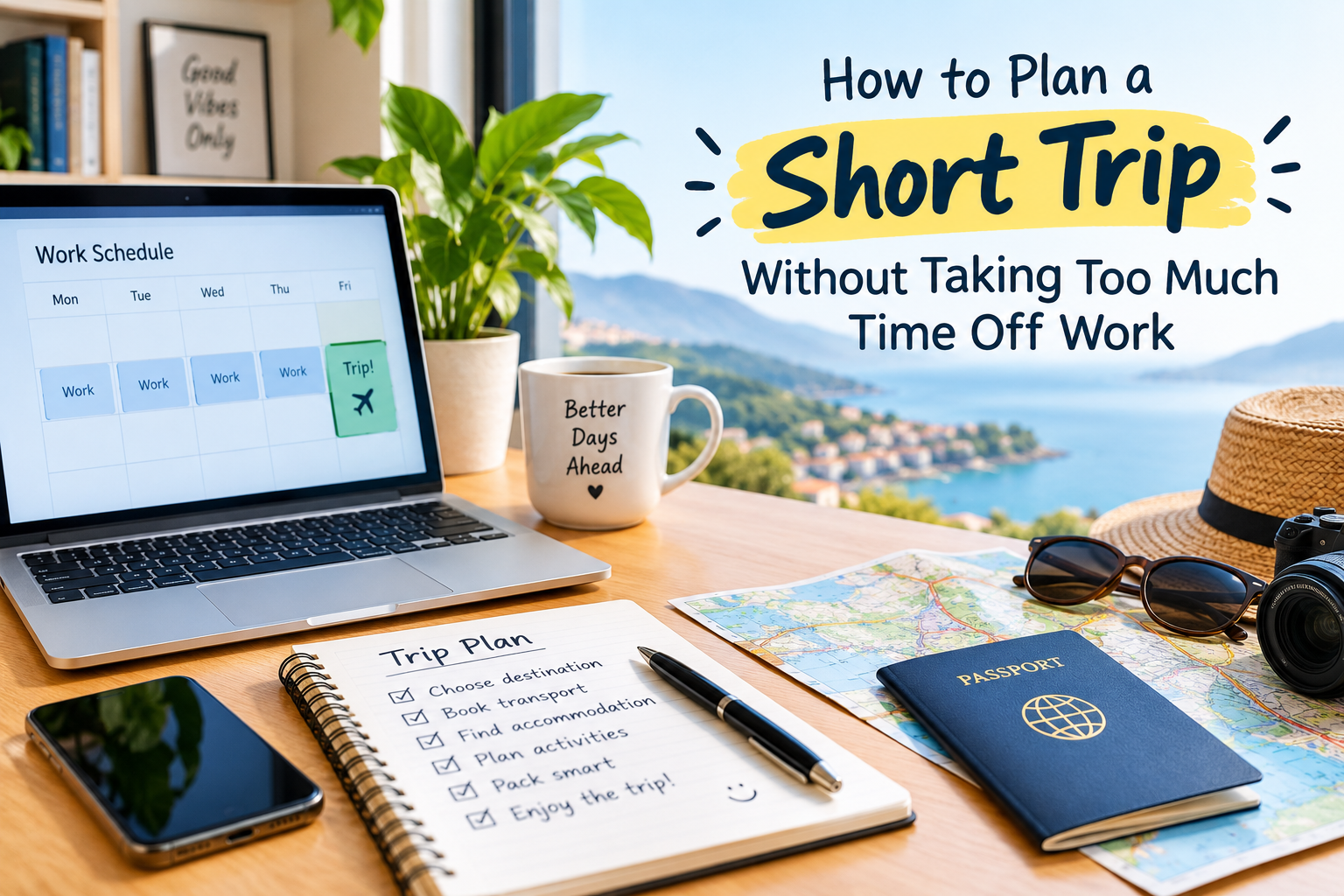
Taking a break from work does not always mean planning a long vacation. In my experience, a short trip can be just as refreshing as a week long holiday if it is planned properly. Many people avoid traveling because they think they need several days away from work, but that is not always true. With the right destination, timing, transportation, and schedule, you can enjoy a memorable trip while using only a small amount of your annual leave.
A short trip is especially useful for people who have busy jobs, limited vacation days, or important responsibilities at home. The key is to plan around your working schedule instead of trying to completely escape from it. In this article, I will share some practical ideas on how to plan a short trip without taking too much time off work.
Choose a Destination Close to Home
The first thing I consider when planning a short trip is the distance. If I only have a few days available, I do not want to spend most of that time traveling. A destination that is a few hours away can be much better than a famous location that requires a long journey.
Look for nearby cities, small towns, natural attractions, beaches, mountains, historical places, or countryside areas. Sometimes interesting places are much closer than we realize.
For a weekend trip, I usually prefer a destination that can be reached within a few hours. This gives me more time to enjoy the actual location instead of sitting in a car, bus, or airplane.
Use Weekends and Public Holidays Wisely
One of the easiest ways to plan a short trip without taking too much time off work is to combine weekends with public holidays. This can turn a normal two day weekend into a longer break without using many vacation days.
For example, if a public holiday falls on a Monday, you can leave after work on Friday and return Sunday evening or Monday afternoon. This can give you several days away while using little or no annual leave.
I think this is one of the smartest ways for working people to travel more often. Instead of waiting for a long vacation, you can make better use of the free days already available on your calendar.
Consider Leaving After Work
Another useful strategy is to start the trip after your workday ends. If your destination is nearby, you may be able to leave on Friday evening instead of Saturday morning.
This small change can make a big difference. By reaching your destination at night, you can wake up there the next morning and have a full day available for activities.
Before leaving, however, I recommend finishing important work tasks and making sure you are not rushing through your workday. The purpose of a short trip is to relax, not to create additional stress.
Pick One Main Destination
When I have limited time, I avoid trying to visit too many places during the same trip. Moving between several cities can make a short vacation exhausting.
Instead, choose one main destination and explore it properly. You can select a place with several attractions nearby so you do not have to spend hours traveling between locations.
For example, if you choose a city known for food, museums, parks, and historical attractions, you can enjoy different experiences without constantly packing and unpacking.
A simple travel plan often feels more enjoyable than a complicated itinerary.
Create a Simple Travel Schedule
Planning is important, but I believe a short trip should not be packed with activities from morning until night. Leave some free time in your schedule.
Before the trip, choose two or three things you really want to do. Then add other activities only if you have enough time and energy.
I like to divide a short trip into simple sections. One part of the day can be used for sightseeing, another for food, and another for relaxation. This gives the trip some structure without making it feel like another work schedule.
Book Transportation in Advance
Transportation can take up a large part of your available time. For that reason, I recommend checking travel times before booking anything.
Compare different options and choose the one that gives you the best balance between price and time. Sometimes paying slightly more for a faster journey can be worthwhile when you only have a weekend.
Also check the departure and arrival times carefully. A cheap ticket that arrives very late may not actually be the best choice for a short vacation.
Choose Convenient Accommodation
Your accommodation should make your trip easier, not harder. When I plan a short trip, I prefer staying somewhere close to the places I want to visit.
A hotel or guesthouse in a convenient location can save hours of transportation during the trip. You may pay a little more for a central location, but the extra convenience can be valuable.
Before booking, check the location, reviews, check in time, parking options, and important facilities. A comfortable and convenient place can make a short trip feel much more relaxing.
Pack Only What You Need
Packing light is another way to save time. For a short trip, you usually do not need a large suitcase.
I normally recommend taking comfortable clothes, basic toiletries, chargers, necessary documents, and anything else you genuinely need. Keeping your luggage simple makes transportation easier and reduces the time required to pack and unpack.
A small bag can also make it easier to move around during the trip.
Prepare for Work Before Leaving
If you want to take a short trip without using too much time off work, preparation before leaving is very important.
Try to complete urgent assignments before your trip. Inform relevant coworkers about your availability and organize anything that might require your attention while you are away.
If your workplace allows it, you can set an automatic email response explaining when you will return. This helps manage expectations and allows you to enjoy your time away with fewer interruptions.
I believe preparing properly before a trip makes it much easier to relax once you leave.
Do Not Overplan Every Minute
It is tempting to create a detailed schedule when you only have a short amount of time. However, overplanning can make a trip feel stressful.
I prefer creating a flexible itinerary with a few important activities. This allows me to change plans if the weather changes, a place is crowded, or I simply feel like resting.
Remember that the purpose of a vacation is not to complete a checklist. The goal is to enjoy a change of environment and return home feeling refreshed.
Consider a One Day Trip
If you cannot take any time off work, a one day trip can still be a great option. You can leave early in the morning and return in the evening.
This works especially well when there are interesting attractions within a reasonable driving distance. Parks, lakes, historical locations, food destinations, and small towns can all work well for a day trip.
A one day trip may seem simple, but sometimes a few hours away from your normal routine can provide exactly the break you need.
Travel During Less Busy Times
Crowds can make a short trip feel much longer. If possible, consider traveling during quieter periods.
Early morning departures can sometimes help you avoid traffic. Visiting popular attractions early can also give you a more peaceful experience.
If your work schedule is flexible, even shifting your travel by a few hours can make transportation easier.
Keep Your Budget Simple
A short trip does not need to be expensive. In my opinion, the best approach is to decide on a reasonable budget before making reservations.
Think about transportation, accommodation, food, activities, and emergency expenses. Once you have an approximate budget, you can choose options that fit your situation.
You can also save money by choosing local restaurants, free attractions, public parks, and affordable accommodation. Saving money can make frequent short trips more realistic.
Leave Enough Time to Return Home
One mistake I try to avoid is returning too late before a workday. If you have work Monday morning, arriving home very late Sunday night may leave you tired.
Whenever possible, return with enough time to unpack, prepare your clothes, organize your belongings, and get a good night’s sleep.
A successful short vacation should help you feel refreshed instead of making Monday morning harder.
Make the Most of Your Limited Time
When you have only a short amount of time, focus on experiences that matter to you. You do not need to see everything.
Choose activities based on your interests. If you enjoy nature, spend more time outdoors. If you enjoy food, explore local restaurants. If you like history, visit museums and historical locations.
For me, a successful short trip is not about the number of places I visit. It is about how enjoyable and relaxing the experience feels.
Final Thoughts
Learning how to plan a short trip without taking too much time off work is mostly about using your available time intelligently. You do not always need a long vacation to recharge.
Choose a nearby destination, use weekends and public holidays, consider traveling after work, pack light, book convenient transportation, and keep your itinerary simple. Most importantly, prepare your work responsibilities before leaving so you can enjoy your trip without unnecessary stress.
A short trip can give you a fresh perspective, a break from routine, and some quality time with yourself, friends, or family. With thoughtful planning, even two or three free days can become a memorable travel experience.
I believe the biggest lesson is simple. You do not have to wait for the perfect long vacation before you travel. Sometimes the best adventure is the one that fits naturally into your existing schedule.