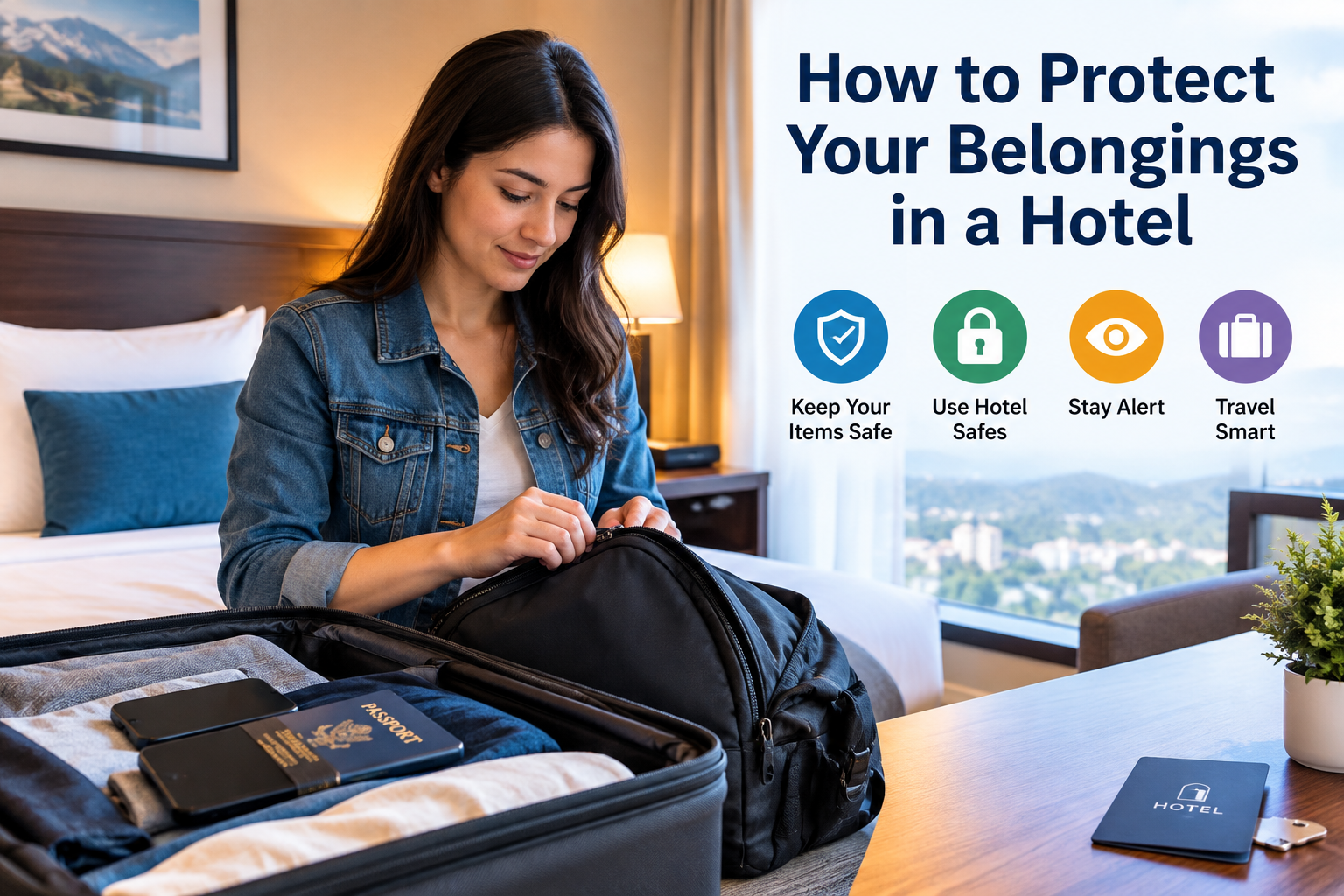
When I stay in a hotel, one of the things I always think about is how to protect my belongings. Traveling is supposed to be enjoyable, but losing a phone, passport, wallet, laptop, or other valuable item can quickly turn a good trip into a stressful experience. A hotel room may feel private and secure, but it is still important to take simple precautions.
In my experience, protecting your belongings in a hotel does not require complicated security equipment. Most of the time, it is about developing good habits, paying attention to your surroundings, and knowing where to keep your important items. Whether I am staying for one night or several weeks, I try to follow a few basic rules that help me feel more comfortable.
Choose a Secure Hotel
The first step in protecting your belongings is choosing a hotel carefully. Before making a reservation, I like to check reviews and look for comments about security, cleanliness, staff, and the surrounding area. A hotel with good security practices can give you extra peace of mind.
I also pay attention to whether the hotel has a secure entrance, front desk, room access controls, and appropriate security measures. While no hotel can guarantee that nothing will ever happen, a well managed property can reduce unnecessary risks.
The location matters too. If a hotel is in an area where you feel uncomfortable walking around at night, you may want to consider another option. Feeling safe outside the hotel is also an important part of a comfortable trip.
Keep Valuable Items Out of Sight
One of the simplest ways to protect your belongings in a hotel is to keep valuable items out of sight. I avoid leaving my phone, wallet, cash, jewelry, camera, or laptop in obvious places when I leave the room.
For example, I would not leave a laptop sitting openly on the bed or a wallet on a table near the door. Even when I am inside the room, I prefer to keep important items in a secure and organized location.
Keeping belongings out of sight does not mean hiding everything in strange places. It simply means avoiding unnecessary exposure and making it harder for someone to notice valuable items.
Use the Hotel Safe
If the hotel provides a room safe, I consider using it for important belongings. A hotel safe can be useful for passports, extra cash, important documents, jewelry, and other small valuables that I do not need throughout the day.
Before using the safe, I make sure I understand how it works. I also check that the door locks properly. If there is any problem with the safe, I contact the front desk rather than assuming everything is secure.
I also avoid placing extremely valuable items in a hotel room simply because a safe is available. The safest approach is still to avoid carrying unnecessary valuables when traveling.
Protect Your Passport and Travel Documents
A passport is one of the most important things I carry while traveling. Losing it can create much more trouble than losing an ordinary personal item. For this reason, I treat my passport and other travel documents differently from regular belongings.
When I do not need my passport, I keep it in a secure location. Depending on the hotel and circumstances, this may mean using the room safe or another secure place recommended by the hotel.
I also keep digital copies of important travel documents in a secure location. These copies are not a replacement for the original documents, but they can be useful if something goes wrong.
Do Not Leave Cash Everywhere
I try not to carry or leave large amounts of cash in my hotel room. Carrying only the amount I expect to need can reduce the potential loss if my wallet or bag goes missing.
If I have extra cash, I keep it secured rather than leaving it spread around the room. I also avoid showing large amounts of money in public because there is rarely a good reason to attract unnecessary attention.
Using cards or other secure payment methods when appropriate can also reduce the need to carry significant amounts of cash.
Lock Your Hotel Room
It sounds obvious, but remembering to lock the hotel room is one of the most important hotel security habits. Sometimes people become comfortable in their room and forget to check the door before leaving.
Whenever I leave my room, I make sure the door closes and locks properly. When I am inside, I use the available door security features, such as the deadbolt or security latch, when appropriate.
I also avoid opening the door immediately when someone knocks. I first check who is outside through the peephole or another available method. If I am unsure why someone is visiting, I can contact the front desk to confirm.
Be Careful With Room Numbers
I try not to announce my hotel room number loudly in public areas. If a staff member tells me the room number at the front desk, I prefer to keep it private.
I also avoid displaying my room key where strangers can easily see the room information. If I lose a room key or key card, I report it to the hotel immediately.
These are small habits, but they can help maintain privacy during a hotel stay.
Keep Electronics Secure
Phones, tablets, cameras, smartwatches, and laptops can be expensive and important while traveling. I try to keep my electronics together rather than leaving them scattered around the room.
When I leave the hotel, I take only the devices I actually need. If I leave a laptop or tablet in the room, I keep it stored securely rather than placing it somewhere obvious.
I also use passwords, screen locks, and device tracking features. These measures are useful because protecting a device is not only about preventing physical loss. Protecting the information stored on the device is equally important.
Avoid Leaving Belongings Near the Door
I personally avoid leaving bags, wallets, electronics, or other valuable items near the hotel room entrance. The door is one of the easiest places for someone to notice belongings if the room is accessed.
Instead, I keep my important items in a more secure and organized location. I also make sure bags are properly closed when I am not using them.
Keeping the room organized has another advantage. When everything has a specific place, it becomes easier to notice if something is missing.
Be Careful With Housekeeping Visits
Hotel housekeeping is a normal part of staying in a hotel, and there is no reason to be unnecessarily suspicious of hotel staff. However, I still prefer to secure my valuables before housekeeping enters the room.
If I have expensive electronics, important documents, or other valuable items, I put them away before leaving the room. This is simply a sensible habit that helps me keep track of my belongings.
If I do not need housekeeping service, I may also use the hotel’s available privacy option when appropriate.
Do Not Trust Strangers With Your Belongings
During a trip, it is common to meet other travelers and make new friends. While socializing can make travel more enjoyable, I avoid leaving my belongings with people I have just met.
For example, I would not give my passport, wallet, laptop, or hotel key to a stranger for safekeeping. If I need to store something valuable, I prefer using a secure option provided by the hotel.
Being friendly and being careful can exist together. I can enjoy conversations with other travelers without giving someone unnecessary access to my personal belongings.
Keep an Eye on Your Bags
Protecting belongings does not stop when I leave the hotel room. I pay attention to my bags in hotel lobbies, restaurants, transportation areas, and other public spaces.
I avoid leaving a backpack or suitcase unattended, even for a short time. When sitting in a busy area, I keep my bag where I can easily see it.
This is especially important when checking out. The lobby can become busy, and it is easy to become distracted while arranging transportation or handling luggage.
Make a Simple Packing List
One habit that has helped me is keeping a simple list of important belongings. Before leaving my hotel room, I mentally check my phone, wallet, passport, keys, charger, electronics, and other important items.
A packing list is particularly useful when checking out because it is easy to forget something in a drawer, bathroom, bedside table, or charging area.
Before leaving the hotel permanently, I like to take a final look around the room. I check the closet, drawers, bathroom, under the bed, and charging points. This simple final check can prevent unnecessary problems later.
Protect Your Personal Information
Belongings are not limited to physical objects. Personal information also needs protection. I avoid leaving documents containing personal information where they can easily be seen.
When using hotel WiFi, I also follow basic online security practices. I avoid entering sensitive information on suspicious websites and make sure my devices have appropriate security settings.
If I use a shared computer during a trip, I avoid saving passwords or personal information on it. Digital privacy is an important part of modern travel.
What to Do If Something Goes Missing
Even when I take precautions, belongings can sometimes become lost or misplaced. If I notice something missing from my hotel room, I first check all the places where I may have left it.
If I still cannot find the item, I contact the hotel front desk or management as soon as possible. I explain what happened clearly and provide useful details such as when I last saw the item.
For valuable or important belongings, I may also need to contact the appropriate authorities or my bank, card provider, or insurance company depending on the situation.
Acting quickly can make it easier to understand what happened and take the necessary steps.
Final Thoughts
For me, protecting belongings in a hotel is mostly about simple habits rather than complicated precautions. Choosing a reputable hotel, locking the room, using the hotel safe, keeping valuables out of sight, protecting travel documents, and checking my belongings regularly can make a big difference.
I also believe that travelers should avoid carrying unnecessary valuables. The fewer important things I take with me, the easier it is to keep track of everything.
A hotel should be a place where I can relax after a day of traveling. By taking a few sensible steps to protect my belongings, I can spend less time worrying about my possessions and more time enjoying the trip. Good hotel security starts with awareness, organization, and a few simple habits that become part of every journey.