When I travel to another country, I usually find public transportation one of the easiest and most affordable ways to explore a new place. Buses, trains, trams, subways, and local taxis can take me almost anywhere without the expense of renting a car. At the same time, using public transportation abroad requires a little more awareness because I may not know the local routes, language, payment system, or common travel habits.
In my experience, staying safe on public transportation is mostly about preparation and awareness. I do not believe that travelers need to be nervous every time they board a bus or train. Instead, I think it is better to understand the surroundings, protect personal belongings, and know where you are going.
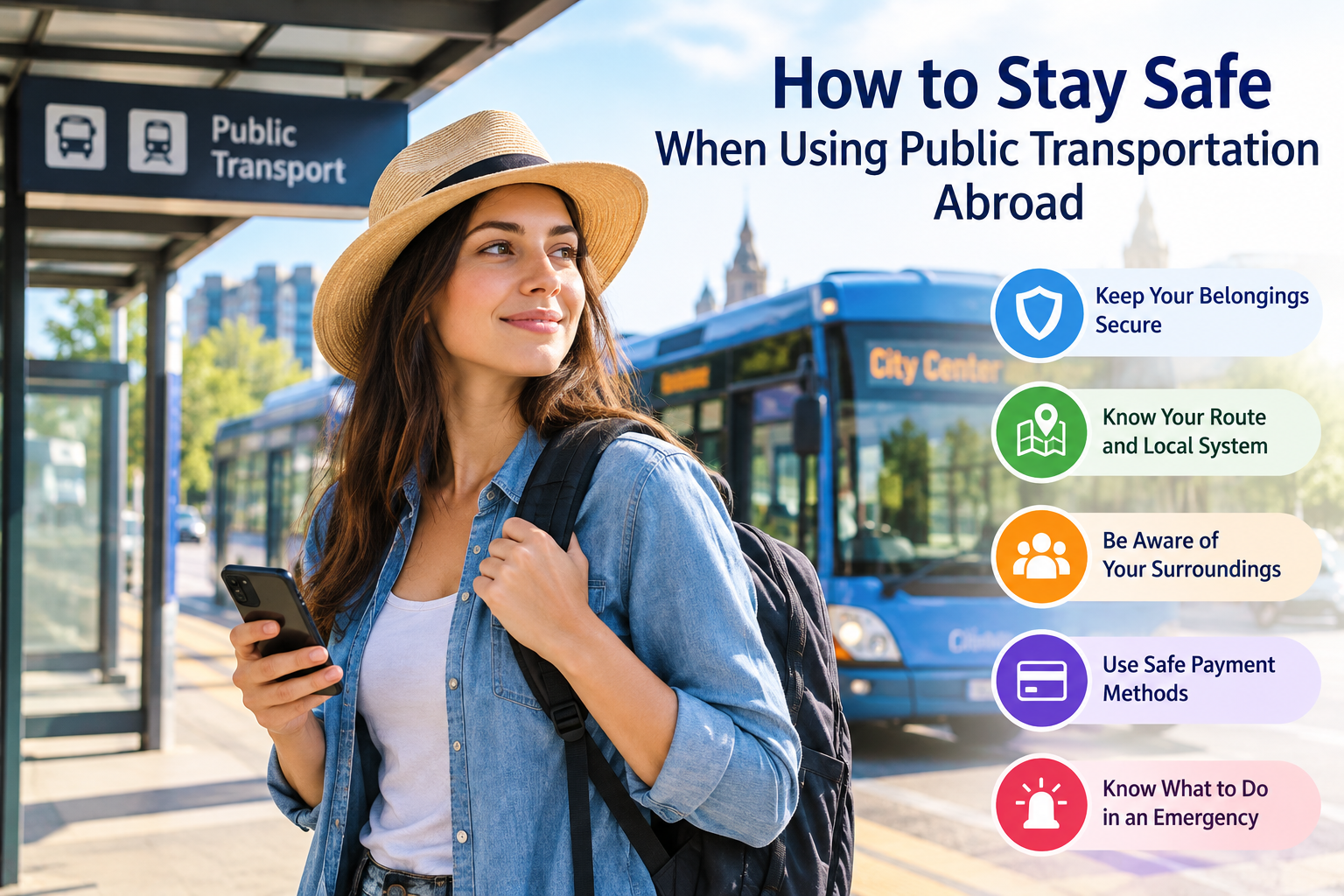
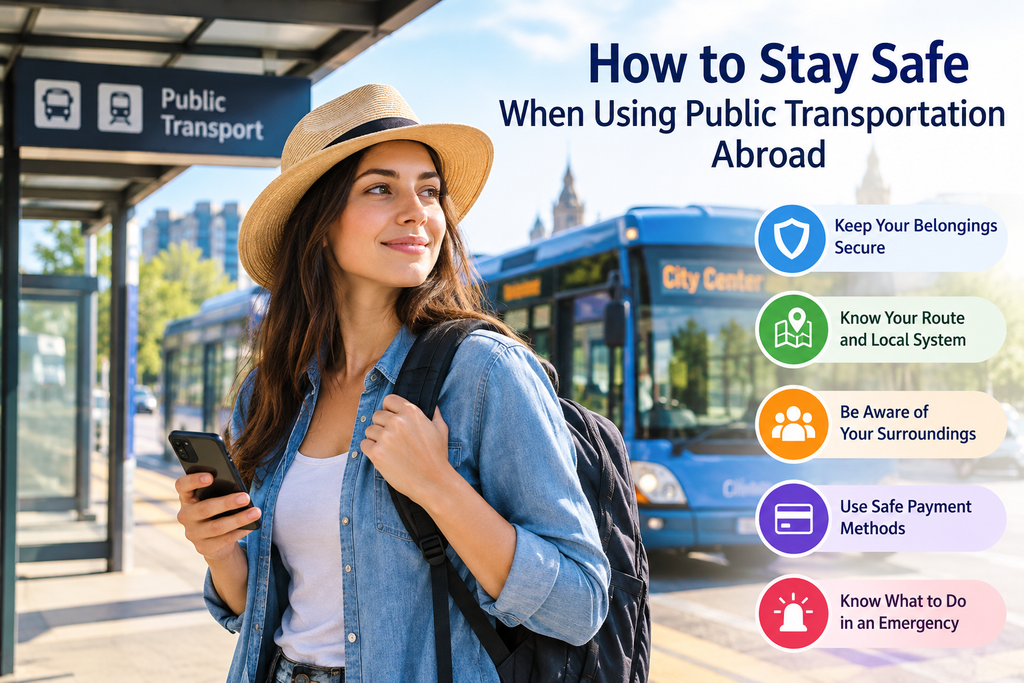
Here are some practical tips I follow to stay safe when using public transportation abroad.
Research Public Transportation Before Your Trip
One of the best ways to stay safe is to understand the transportation system before arriving. I like to check how buses, trains, trams, and subway systems work in my destination.
I usually research official transportation websites or reliable travel information to learn about ticket prices, routes, operating hours, and major stations. This helps me avoid looking confused when I arrive.
Knowing my route in advance also reduces the chance of getting on the wrong bus or train. If I need to change lines, I try to understand where the transfer will happen before starting the journey.
I also save important route information on my phone so that I can check it even when my internet connection is weak.
Keep Your Belongings Secure
Crowded transportation can create opportunities for thieves, especially in busy tourist areas. I always pay attention to my phone, wallet, passport, camera, and other valuable items.
When carrying a backpack, I prefer to keep it closed and positioned where I can easily see or feel it. In very crowded places, I may wear it in front of me instead of leaving it behind my back.
I avoid keeping my wallet or phone in an easily accessible back pocket. Important documents and extra cash should also be stored securely.
One simple habit that helps me is checking my belongings before leaving a bus, train, or station. A quick check can prevent the disappointment of discovering that something was left behind.
Avoid Showing Expensive Items
When traveling abroad, I try not to attract unnecessary attention to expensive belongings. Using a phone is normal, but I avoid repeatedly displaying large amounts of cash, expensive jewelry, or other valuable items.
This does not mean hiding everything I own. It simply means being sensible about what I show in crowded public areas.
I also avoid leaving my phone or wallet on a seat beside me. Keeping important items close to my body gives me better control over them.
Be Careful in Crowded Stations
Busy transportation stations can be confusing, especially during rush hour. Large crowds can make it difficult to notice what is happening around me.
When I am in a crowded station, I pay attention to my surroundings and keep my important belongings secure. I avoid becoming completely distracted by my phone while walking through busy areas.
I also try not to stop suddenly in the middle of a crowded walkway. If I need to check directions, I move to a safer area where I am not blocking other passengers.
Being aware of the people around me is one of the simplest public transportation safety tips for travelers.
Learn the Local Ticket System
Different countries use different ticketing systems. Some places use paper tickets, while others use rechargeable travel cards, mobile applications, contactless payments, or machines at stations.
Before using public transportation, I try to understand how tickets work. This prevents confusion and helps me avoid unofficial people who may offer unnecessary assistance.
I always use official ticket machines, transportation counters, or recognized applications whenever possible.
It is also important to understand whether a ticket needs to be validated before boarding. A traveler who does not understand the local system may accidentally receive a fine even when trying to do the right thing.
Do Not Accept Help From Strangers Too Quickly
Most people I meet while traveling are friendly and helpful. However, I still prefer to be careful when someone unexpectedly approaches me and offers assistance with tickets, luggage, or directions.
If I need help, I usually ask transportation staff or use an official information desk.
This does not mean travelers should distrust everyone. It simply means that official sources are generally a safer choice when dealing with transportation problems.
If someone insists on helping me with a ticket machine or asks for money without a clear reason, I politely decline and seek assistance from official staff.
Keep Your Phone Charged
A charged phone can be extremely useful when using public transportation abroad. I use my phone for maps, translation, transportation schedules, emergency contacts, and communication.
For this reason, I try to start my travel day with enough battery. When I expect to spend many hours outside, I carry a portable charger.
I also save important information offline whenever possible. This can include my hotel address, transportation details, emergency contacts, and maps.
Having this information available without an internet connection gives me more confidence if my mobile data stops working.
Be Careful When Using Your Phone
Phones are useful, but they can also distract travelers. I try not to stare continuously at my screen while walking through stations or boarding transportation.
If I need to check directions, I look at my phone briefly and then pay attention to my surroundings.
I also avoid leaving my phone near open windows or doors on buses and trains. Holding it securely is a simple habit that can reduce the risk of losing it.
Choose Your Waiting Area Wisely
When waiting for a bus or train, I prefer a well lit and populated area. If a station has several waiting areas, I usually choose one where other passengers and transportation staff are nearby.
At night, I pay more attention to my surroundings. If I feel uncomfortable in an isolated area, I move closer to other passengers or staff.
I also avoid wandering around unfamiliar stations without a clear reason. Knowing my destination and route before leaving the station makes the journey easier.
Keep Important Documents Safe
My passport and other important travel documents are among the things I protect most carefully. I avoid carrying them loosely in a backpack pocket that can be opened easily.
I keep digital copies of important documents in a secure location as an additional backup. However, I never rely only on digital copies because official requirements can vary by country.
I also avoid handing my passport to unknown people. If documentation is required for an official transportation or security process, I make sure I understand who is requesting it and why.
Watch Your Luggage
If I am traveling with larger luggage, I keep track of it throughout the journey. I avoid leaving bags unattended at stations or on vehicles.
On buses and trains, I follow the transportation system’s rules for storing luggage. If I place a bag in an overhead area, I remember where I put it.
Before getting off, I check my seat, the floor, the luggage area, and the overhead compartment.
This simple routine is especially useful when I am tired or traveling early in the morning.
Know Your Emergency Options
Before using public transportation abroad, I like to know how to contact emergency services in the country I am visiting.
I also learn where transportation staff or security personnel are usually located. If something goes wrong, knowing where to get help can save valuable time.
I keep my accommodation details accessible because I may need to explain where I am staying.
If I lose my wallet, phone, or passport, I contact the appropriate local authorities or my country’s embassy or consular service when necessary.
Trust Your Instincts
One of the most important travel safety lessons I have learned is to trust my instincts. If a situation feels uncomfortable or unusual, I do not feel obligated to remain there.
I can move to another carriage, change seats, approach staff, leave the station, or wait for another vehicle.
There is nothing wrong with changing a plan when something does not feel right. Being flexible can be an important part of staying safe while traveling.
Avoid Traveling When Extremely Tired
Fatigue can affect judgment and awareness. After a long flight or busy day of sightseeing, I may be more likely to forget belongings, miss stops, or misunderstand directions.
When possible, I plan my transportation around my energy level. If I am extremely tired late at night, I consider whether another transportation option would be more practical.
The goal is not to avoid public transportation after dark completely. It is to make sensible decisions based on the destination, transportation system, and situation.
Respect Local Rules
Every country has its own transportation rules and customs. I try to follow signs and instructions even when they are different from what I am used to at home.
I pay attention to rules about tickets, reserved seats, luggage, eating, smoking, and boarding areas.
Following local rules makes the journey smoother and helps me avoid unnecessary problems.
Final Thoughts
For me, public transportation is one of the best ways to experience a foreign country. It can be affordable, convenient, and a great way to see how local people move around their cities.
However, staying safe when using public transportation abroad requires preparation and common sense. I research my route, protect my belongings, keep my phone charged, stay aware of my surroundings, use official transportation services, and know how to get help if something goes wrong.
Travel safety does not mean being afraid of every situation. It means being prepared enough to enjoy the journey with confidence.
When I know where I am going and keep my important belongings secure, I can focus more on the experience itself. With a few simple habits, travelers can use buses, trains, trams, and other public transportation around the world while making their trips safer, easier, and more enjoyable.