When I travel, I always believe that preparation is one of the simplest ways to make a trip safer and more comfortable. Most people prepare their clothes, tickets, passport, hotel booking, and travel money, but emergency contacts are sometimes forgotten. In my opinion, keeping emergency contacts ready during a trip is just as important as carrying your travel documents.
An emergency can happen at any time. You may lose your phone, become sick, get separated from your travel companion, lose your luggage, or need help from local authorities. Having important phone numbers available can save valuable time when you need assistance.
In this article, I will share some practical travel safety tips that I personally find useful for keeping emergency contacts organized and easy to access while traveling.
Why Emergency Contacts Are Important During Travel
Emergency contacts are important because unfamiliar places can make unexpected situations more difficult to handle. When I am traveling, I do not want to waste time searching through old messages or emails to find an important phone number.
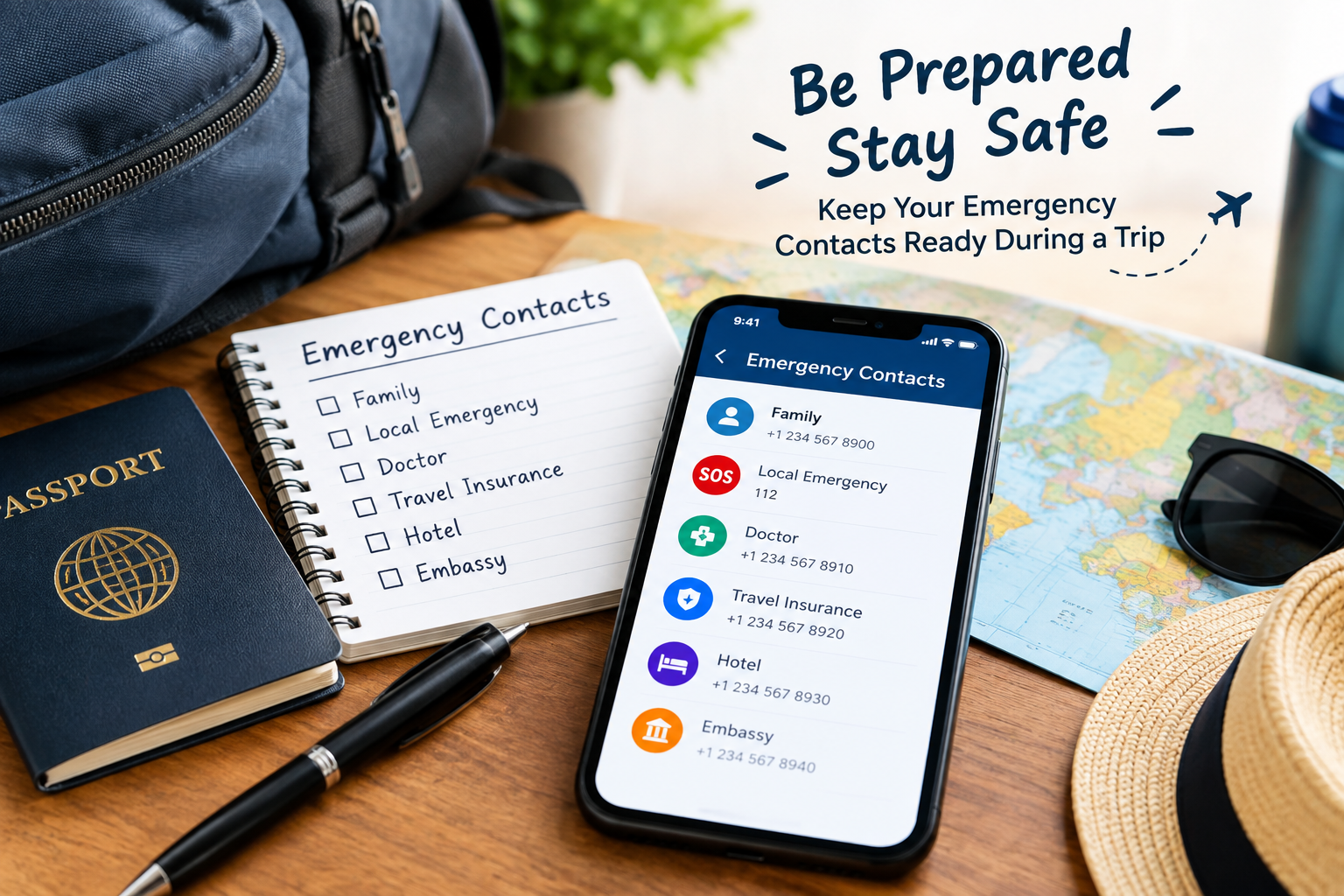
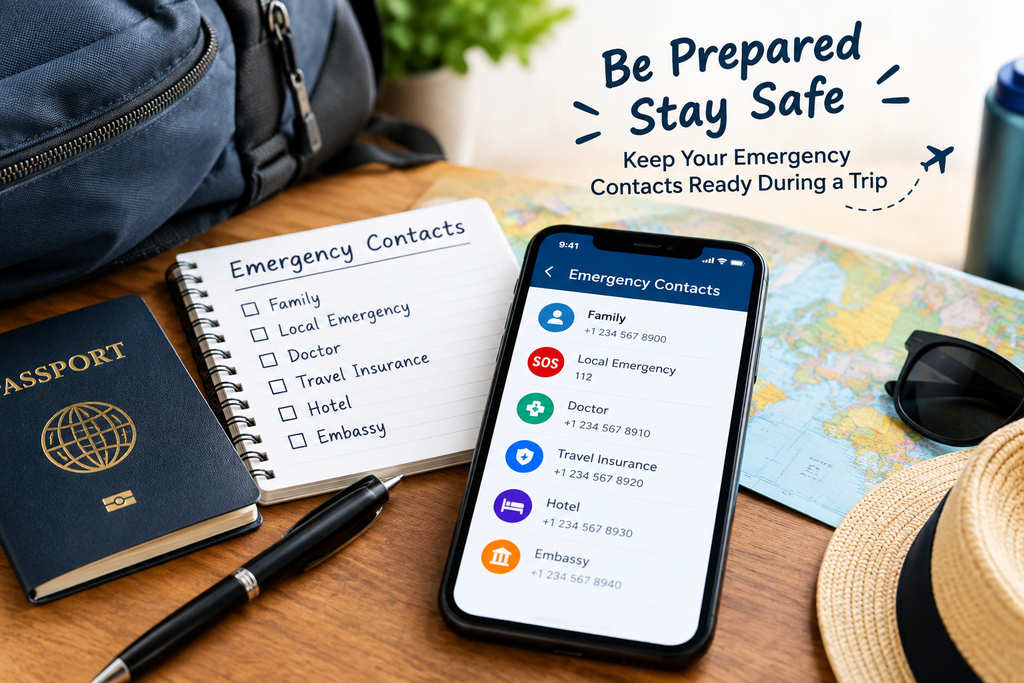
A good emergency contact list should contain more than just the phone number of a family member. It should include local emergency services, your hotel, travel insurance provider, embassy or consulate when relevant, and trusted people at home.
The main purpose is simple. If something goes wrong, you should be able to find the right contact quickly.
Create an Emergency Contact List Before Your Trip
I recommend preparing an emergency contact list before leaving home. This is much easier than trying to collect information after arriving at your destination.
Start with your close family members or trusted friends. Add at least one person who knows your travel plans and can help communicate with others if necessary.
Then add important travel related contacts such as your hotel, airline, travel insurance company, and local transportation provider if you have one.
For international travel, I also recommend finding the contact details of your country’s embassy or consulate in the destination country.
Keep the list short and organized. You do not need dozens of numbers. Focus on contacts that could actually help during an emergency.
Save Emergency Numbers on Your Phone
Your smartphone is probably the easiest place to keep emergency contacts. I usually recommend saving important numbers with clear names rather than relying only on memory.
For example, you can create contacts such as:
Family Emergency Contact
Hotel Reception
Travel Insurance
Local Emergency Services
Embassy or Consulate
Airline Support
Medical Assistance
Saving these contacts properly makes them easier to find when you are stressed or in a hurry.
It is also a good idea to check the phone numbers before traveling. A small typing mistake can become a serious problem when you need immediate assistance.
Keep a Backup Copy Offline
One of the most important travel safety tips I can share is to never depend completely on your phone.
Your phone could be lost, damaged, stolen, or have a dead battery. Internet access may also be unavailable in certain locations.
For this reason, I prefer keeping a backup copy of important emergency contacts somewhere offline. You can write the most important numbers in a small notebook or keep a printed emergency contact card inside your travel documents.
Another option is saving the information in an offline note on your phone. This means you can access it even when you do not have an internet connection.
Having both digital and physical copies gives you an extra layer of protection.
Add Local Emergency Services
Before visiting another country, I recommend learning about the local emergency services. Emergency numbers are not always the same in every country.
You should know which number to call for police assistance, medical emergencies, or fire services. If you are traveling internationally, check reliable official sources before your trip so that you have accurate information.
Do not assume that the emergency number you know at home will work everywhere.
I also find it helpful to save the emergency number under a simple contact name. This can make it easier to find when you are under pressure.
Save Your Hotel Contact Information
Your hotel or accommodation contact details can be surprisingly useful during a trip.
If you get lost, need directions, leave something behind, or experience a problem with your room, you may need to contact the property quickly.
I recommend saving the hotel’s phone number and address in your phone before going out for the day. Keep the address available offline as well.
If you are staying at an apartment, guesthouse, hostel, or vacation rental, save the appropriate contact information instead.
Knowing where you are staying and how to contact your accommodation can make an unfamiliar destination feel much easier to manage.
Keep Your Travel Insurance Contact Ready
If you have travel insurance, do not simply keep the policy somewhere in your email inbox. Save the insurance company’s emergency assistance number in your phone.
I also recommend keeping your policy number and basic insurance information accessible.
If you need medical treatment, lose important belongings, or experience another covered problem, contacting the insurance provider may be an important step.
Before your trip, check which number should be used for emergency assistance and whether the company provides international support.
Save Embassy or Consulate Details
For international travel, embassy and consulate information can be valuable in certain serious situations.
You may need assistance if you lose your passport, face a serious legal problem, or experience another major situation while abroad.
Before traveling, I recommend checking the official government information for your country and destination. Save the appropriate embassy or consulate phone number and address.
I would not rely on random travel websites for this information when an official government source is available.
Share Your Emergency Contacts With Someone You Trust
I believe emergency planning should not happen only on your phone.
Before leaving, share your basic travel plans with someone you trust. This person should know where you are going, where you are staying, and how to reach you.
You do not need to share every detail of your trip. The important thing is that someone at home knows your general itinerary and has a way to contact you.
You can also give them a copy of your important emergency contact list. This can be especially useful if your phone becomes unavailable.
Use Your Phone’s Emergency Features
Modern smartphones often include emergency features that can help during difficult situations. Depending on your device and location, these may include emergency calling, emergency contacts, medical information, or emergency location sharing.
Before your trip, I recommend checking the emergency settings on your phone and understanding how they work.
Make sure your emergency contacts are correctly entered and that you know how to access them from the lock screen if your phone supports this feature.
Do not wait until an emergency happens to learn how these functions work.
Keep Your Phone Charged
An emergency contact list is only useful if you can access it.
For this reason, keeping your phone charged should be part of your travel safety routine. I usually recommend carrying a reliable power bank when spending long hours away from your accommodation.
Before leaving your hotel, check your phone battery. If you know you will be away all day, charge your phone fully before heading out.
A charging cable and power bank can be small items, but they can become extremely valuable when you need to make an urgent call.
Write Important Numbers in an Easy Format
When creating an emergency contact list, keep it simple.
Instead of writing long descriptions, use clear names and phone numbers. You can also include the country code for international contacts.
For example:
Emergency Services: Local emergency number
Family Contact: Full international number
Hotel: Hotel reception number
Insurance: Emergency assistance number
Embassy: Official contact number
This simple format makes information easier to understand quickly.
Update Your Contacts Before Every Trip
Emergency contact information can change, so I recommend reviewing your list before every trip.
Check your hotel number, insurance information, embassy details, transportation contacts, and family contact numbers.
This takes only a few minutes but can prevent problems later.
I also recommend removing temporary contacts after a trip if they are no longer useful. Keeping your emergency list organized makes it easier to find important information.
Keep Your Emergency Information Private
While emergency contacts are important, you should also protect your personal information.
Do not post your private phone numbers publicly on social media. Avoid sharing sensitive travel documents or personal information with unknown people.
If you use a printed emergency card, keep it somewhere secure inside your luggage or wallet.
The goal is to make emergency information available when you need it without unnecessarily exposing your private details.
Make Emergency Preparation Part of Your Travel Routine
For me, the best travel preparation is simple preparation that becomes a habit.
Before every trip, I like to check my phone, documents, accommodation details, insurance information, and emergency contacts. I also make sure someone I trust knows my basic travel plans.
This process does not take much time. Once you make it part of your routine, it becomes an easy step before every journey.
The biggest benefit is peace of mind. You may never need your emergency contact list, but having it ready means you are better prepared if something unexpected happens.
Final Thoughts
Keeping emergency contacts ready during a trip is one of the easiest ways to improve your travel safety. You do not need complicated equipment or expensive services. A properly organized phone, an offline backup, and a few important numbers can make a major difference.
From my point of view, good travel preparation is about expecting the unexpected without allowing it to ruin the excitement of the journey. Save your important contacts, learn the local emergency numbers, keep your hotel and insurance information available, and share your basic plans with someone you trust.
A few minutes of preparation before leaving home can save a lot of stress later. Whether you are taking a short weekend trip or traveling internationally for several weeks, keeping emergency contacts ready should always be part of your travel checklist.