
Losing luggage while traveling is one of those situations that most people hope they never experience. I know how stressful it can feel when you arrive at your destination, wait near the baggage carousel, and realize that your suitcase is not coming. However, I believe that preparing for lost luggage before a trip can make the situation much easier to handle.
Lost luggage does not always mean that your belongings are gone forever. In many cases, delayed bags are located and delivered to the traveler later. The important thing is to stay prepared, keep important information accessible, and know what steps to take if your luggage does not arrive.
In this article, I will share my practical tips on how to prepare for lost luggage while traveling. These simple steps can help you protect your belongings, reduce stress, and continue enjoying your trip even when your checked baggage is delayed or missing.
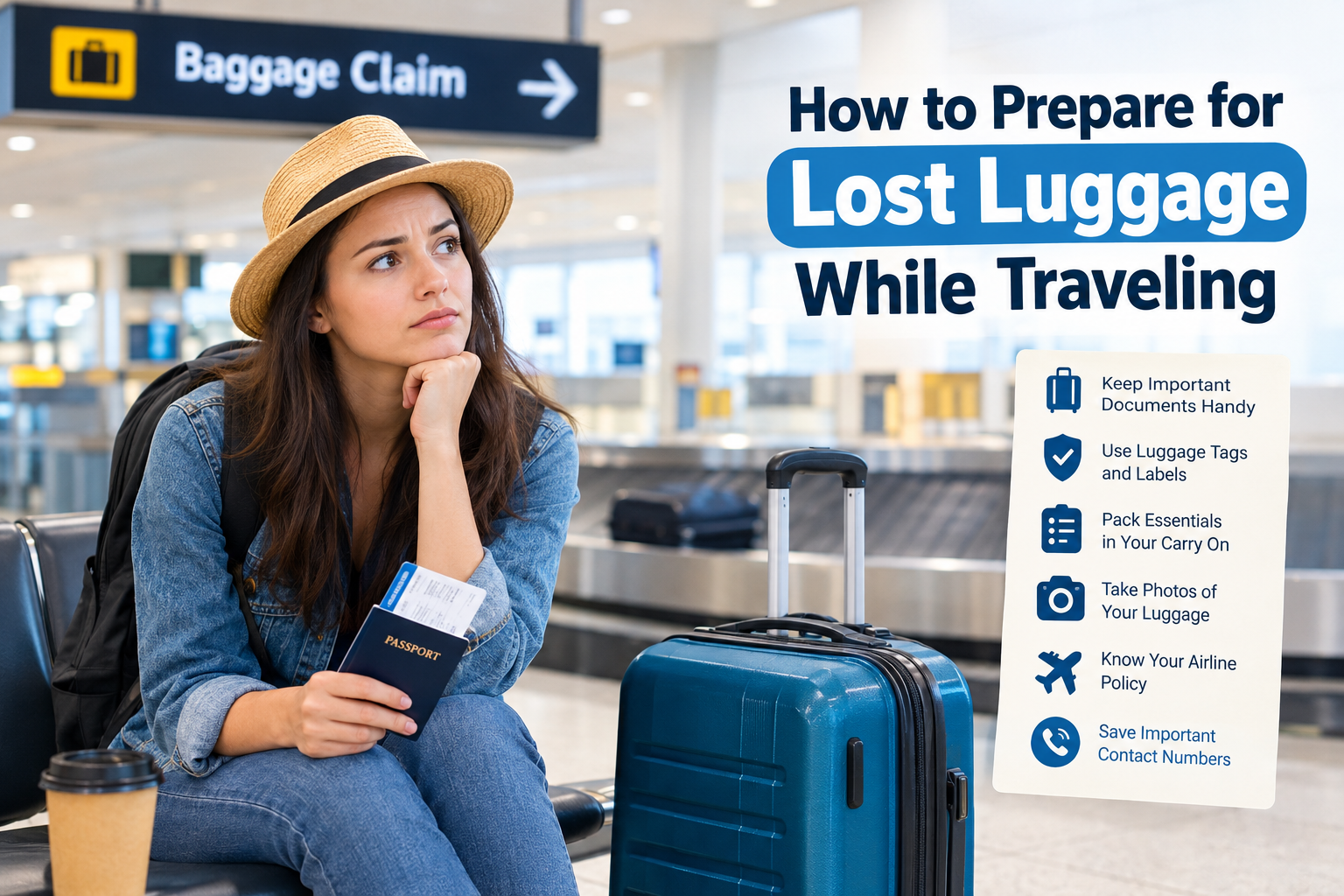
Keep Important Items in Your Carry On
One of the best ways to prepare for lost luggage is to keep essential items in your carry on bag. I never recommend putting everything important into checked luggage because you may need some of those items immediately after reaching your destination.
Your carry on should contain your passport, travel documents, money, bank cards, phone, charger, medication, keys, and other essential personal items. If you wear glasses or contact lenses, keep those with you as well.
I also recommend packing a basic change of clothes in your carry on. Having a shirt, underwear, socks, and other basic clothing can be extremely useful if your checked bag is delayed for a day or two.
The goal is simple. Your checked luggage should contain items that are convenient to have, while your carry on should contain things that you cannot easily live without.
Use a Strong Luggage Tag
A clear luggage tag can make it easier for an airline to identify your suitcase. Put your name and a reliable contact method on the tag.
You can also include your destination address if appropriate, but avoid putting unnecessary personal information on the outside of your luggage.
I prefer using a luggage tag that is easy to read and securely attached. Before leaving home, I also check that the tag has not become loose.
A simple luggage tag can be surprisingly useful when several similar suitcases are traveling through the same airport.
Take Photos of Your Luggage
Taking photos of your suitcase before checking it in is another useful travel habit. I recommend taking clear pictures of the outside of your luggage from different angles.
Take a picture of the suitcase, its color, its size, unique markings, and any visible stickers or tags. You can also photograph the contents of your luggage before closing it.
These pictures can help you describe your luggage if you need to report it as missing. They can also help you remember exactly what was packed inside.
Keep these photos on your phone so they remain available even if the checked bag itself is missing.
Keep Your Baggage Claim Information
When you check your luggage at the airport, you usually receive a baggage receipt or baggage claim information. Do not throw it away after checking in.
I recommend keeping this information somewhere safe until you have collected your suitcase. It may contain a baggage identification number that can help the airline locate your bag.
If your luggage does not arrive, the baggage information can make the reporting process easier and faster.
I usually keep important travel documents together in one easily accessible place rather than placing them inside checked luggage.
Make a Simple Packing List
A packing list may seem unnecessary, but it can become very useful when luggage goes missing.
Before traveling, I like to make a simple list of the important things inside my suitcase. You do not need to write down every small item. Focus on clothing, electronics, personal items, and anything valuable.
A packing list can help you explain what is inside your luggage if you need to make a claim. It can also help you remember what you need to replace if your luggage is delayed.
For expensive belongings, keeping receipts or other proof of purchase can also be helpful.
Avoid Packing Valuable Items in Checked Luggage
I believe valuable items should stay with you whenever possible. Important electronics, jewelry, cash, passports, sensitive documents, and other valuable belongings should generally not be placed in checked luggage.
Keep these items in your carry on and make sure your carry on remains with you according to the airline’s rules.
This approach reduces the risk of losing something extremely important if your checked bag is delayed or misplaced.
Label the Inside of Your Suitcase
Most travelers remember to label the outside of their luggage, but an inside label can also be useful.
Place a small card inside your suitcase with your name and contact information. If the outside luggage tag becomes damaged or falls off, the information inside may still help identify the owner.
You can also place a copy of your itinerary inside the suitcase. Keep personal information limited to what is reasonably necessary.
Know Your Airline’s Lost Luggage Policy
Before flying, I recommend checking your airline’s baggage policy. Different airlines can have different procedures for delayed, damaged, or missing luggage.
Knowing the basic process in advance can save time if something goes wrong. Check how the airline asks passengers to report delayed baggage and what information may be required.
It is also useful to know whether the airline provides any assistance for essential purchases when checked baggage is delayed. Rules and reimbursement conditions can vary, so reading the current policy before your trip is a smart idea.
Keep Essential Medication With You
Medication is one of the most important things to keep in your carry on. If your checked suitcase disappears, you do not want to discover that your necessary medication is inside it.
Keep medication in its appropriate packaging and carry any relevant documentation that you may need during your journey.
The same idea applies to other essential personal items. Anything that you may urgently need should stay accessible rather than being placed in checked luggage.
Prepare for the First Twenty Four Hours
One of my favorite travel preparation tips is to think about what you would need during the first twenty four hours without your suitcase.
Imagine arriving at your hotel and having no access to your checked luggage. What would you need?
For most travelers, the answer includes basic clothing, toiletries, a phone charger, medication, travel documents, and personal essentials.
Packing these items in your carry on gives you a small safety net. Even if your suitcase is delayed, you can shower, change clothes, contact the airline, and continue with your plans.
Keep Digital Copies of Important Information
I also recommend keeping digital copies of important travel information on your phone or another secure device.
You can keep copies of your passport information, travel booking details, baggage information, insurance documents, and important contact numbers.
Make sure you can access these documents without needing your checked luggage. If you use cloud storage, make sure the files are available when you need them.
Digital organization can make a stressful situation much easier to manage.
What to Do If Your Luggage Does Not Arrive
If your suitcase does not appear on the baggage carousel, do not immediately leave the airport.
First, check the carousel information and make sure you are waiting at the correct baggage collection area. Sometimes luggage is moved to another location or arrives on a different belt.
If your luggage is genuinely missing, visit the airline’s baggage service desk. Explain the situation clearly and provide your baggage information.
Give the staff your luggage description and any identification details they request. Make sure you receive a reference number or confirmation for your delayed baggage report.
Keep this information because you may need it for future communication with the airline.
Stay Calm and Track Updates
It is completely normal to feel frustrated when luggage goes missing, especially after a long journey. However, staying organized can help you handle the situation more effectively.
Keep your baggage reference information available and monitor updates from the airline. If you are staying at a hotel, provide the correct hotel contact details so the airline knows where to deliver the luggage if it is located.
Do not assume that missing luggage means permanently lost luggage. Many delayed bags are eventually reunited with their owners.
Consider Travel Insurance
Depending on your trip, travel insurance may provide additional protection for baggage problems. Policies can differ significantly, so I recommend reading the coverage details before purchasing one.
Pay attention to baggage delay coverage, baggage loss coverage, exclusions, documentation requirements, and claim procedures.
Insurance should not replace good preparation, but it can provide another layer of financial protection during an unexpected travel problem.
Final Thoughts
Preparing for lost luggage while traveling does not require complicated planning. A few simple habits can make a major difference.
Keep essential items in your carry on, use clear luggage identification, take pictures of your suitcase, save your baggage information, create a basic packing list, and learn your airline’s baggage procedures before your trip.
I also believe the most important thing is to prepare for the possibility without allowing it to make you nervous about traveling. Luggage problems can happen, but being prepared gives you more control over the situation.
When I travel, I try to think ahead about the things I would need if my checked suitcase were delayed. That small amount of preparation gives me peace of mind and helps me focus on enjoying the journey.
With the right preparation, even a lost or delayed suitcase can become a manageable inconvenience rather than something that ruins your entire trip.