Packing for a trip can sometimes feel more difficult than planning the trip itself. I have found that the biggest problem is usually not knowing what to take and what to leave at home. Without a proper plan, it is easy to pack too much, forget important items, or fill your luggage with things you never use.
In my experience, the easiest way to avoid these problems is to create a simple packing list before you start putting things into your suitcase. A good travel packing list gives you a clear idea of what you need and helps you stay organized from the beginning.
The good thing is that you do not need a complicated system. You can make a simple packing checklist that works for almost any type of trip. You only need to adjust it according to your destination, trip length, weather, and planned activities.
Start With Your Trip Details
Before making a packing list, I always think about the type of trip I am taking. Every trip is different, so using exactly the same packing list every time may not be practical.
Start by considering how many days you will be away. A one night trip requires very few clothes compared with a two week vacation. You should also think about the destination and the weather.
For example, a beach vacation may require swimwear, sunglasses, sandals, and light clothing. A cold destination may require sweaters, warm socks, a jacket, and other cold weather clothing.
Your transportation also matters. If you are flying with only carry on luggage, you need to be more careful about the number and size of items you pack.
Divide Your Packing List Into Categories
One of the simplest ways to create a travel packing list is to divide everything into categories. This makes the list easier to understand and reduces the chance of forgetting something important.
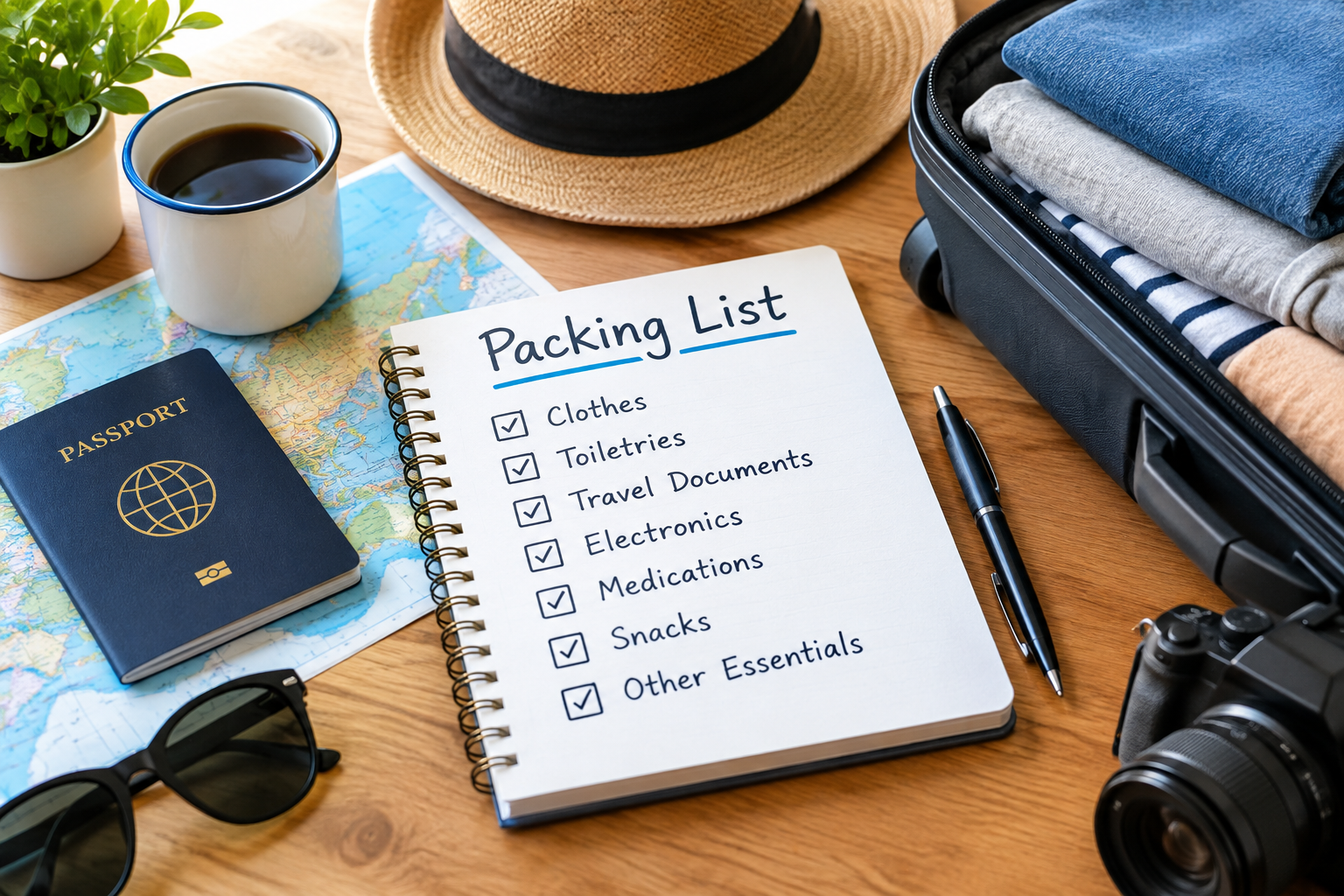
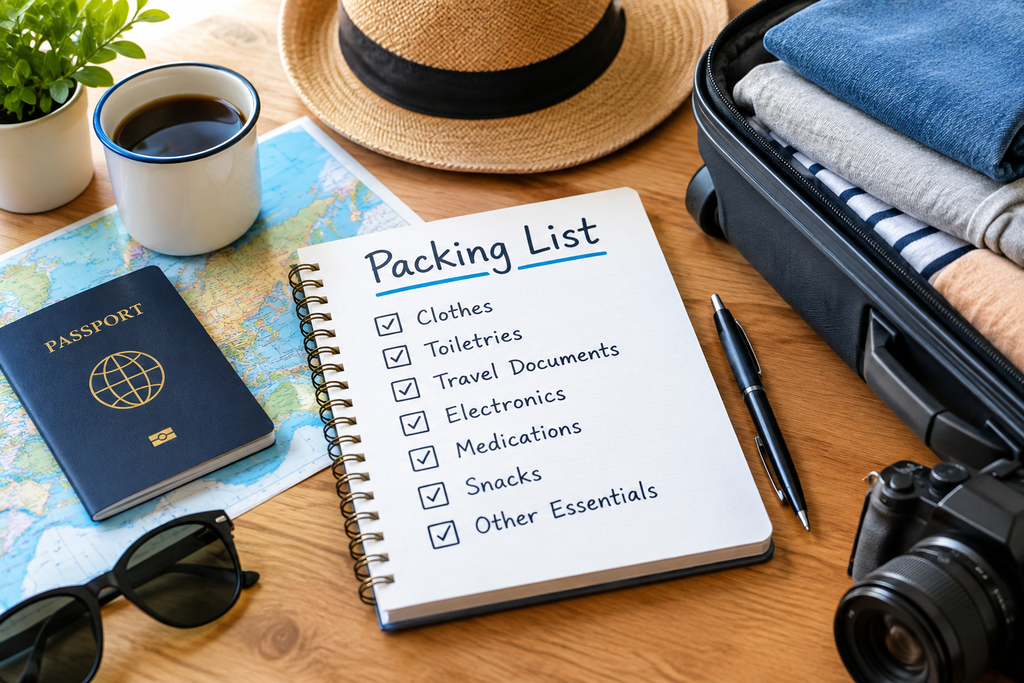
I usually recommend creating categories such as clothing, toiletries, travel documents, electronics, health essentials, and miscellaneous items.
Instead of writing twenty or thirty items in one long list, organize them under these headings. When you finish packing one category, you can move to the next one.
This method also makes your packing checklist useful for different trips because you can add or remove items from each category depending on your needs.
Create a Clothing Checklist
Clothing is usually the largest part of any packing list. However, this is also where many people pack too much.
I believe it is better to choose clothing based on the number of days you will actually spend at your destination. Think about what you are likely to wear rather than packing every outfit you own.
A basic clothing checklist can include shirts, trousers, underwear, socks, sleepwear, comfortable shoes, and a light jacket when necessary.
For a longer trip, you may also want to consider laundry facilities. If you can wash your clothes during the trip, you may not need to bring a separate outfit for every day.
Try to choose clothes that can be combined easily. Neutral colors and simple pieces can give you more outfit options without making your suitcase heavy.
Check the Weather Before Packing
Checking the weather is one of the easiest ways to improve your packing list. I always think it is better to know what conditions to expect before deciding what clothing to take.
Look at the expected temperatures and consider whether rain, strong sunlight, wind, or cold conditions are possible.
If rain is expected, you might need a compact umbrella or rain jacket. If the weather is hot, breathable clothes and sun protection can be useful.
Weather information can also help you avoid carrying unnecessary clothing. There is no reason to fill your suitcase with heavy sweaters if warm weather is expected throughout your trip.
Make a Toiletries List
Toiletries are another important part of a simple packing list. These items are easy to forget because many of them are used every day at home.
Your toiletries checklist might include a toothbrush, toothpaste, shampoo, soap, deodorant, hairbrush, skincare products, and any other personal care items you regularly use.
If you are staying at a hotel, check whether basic toiletries are provided. You may be able to leave some items at home.
For air travel, remember to check the current liquid restrictions that apply to your journey. Carrying travel size containers can also save valuable space.
Do Not Forget Travel Documents
Travel documents should receive special attention because forgetting an important document can create serious problems.
Depending on your trip, your packing list may include your passport, identification, tickets, hotel information, travel insurance details, driving license, and any required visas or permits.
I recommend keeping important documents somewhere easy to access rather than placing them deep inside your suitcase.
It is also useful to keep digital copies of important documents in a secure location. This gives you another way to access essential information if a physical document is lost.
Add Electronics to Your Checklist
Modern travel often involves several electronic devices. Your packing list might include a smartphone, charging cable, power adapter, headphones, camera, laptop, tablet, or power bank.
The important thing is to pack only what you actually expect to use.
Before leaving home, check that your devices are charged and that you have the correct cables. There is nothing more frustrating than reaching your destination and realizing that you brought the device but forgot its charger.
If you are traveling internationally, check whether you need a plug adapter for your destination.
Include Health and Personal Essentials
Your travel packing checklist should also include items that you personally need during the trip.
If you regularly use prescribed medication, make sure you have enough for the entire journey and follow the applicable travel rules for carrying it.
You may also want to include basic personal care items such as sunscreen, glasses, contact lens supplies, hand sanitizer, or other everyday essentials.
The exact items will depend on your personal needs, so this section of your packing list should be customized rather than copied from someone else’s checklist.
Think About Your Activities
One mistake I often see when people pack is choosing clothes without considering what they will actually do at the destination.
Before packing, think about your planned activities.
If you plan to visit restaurants, you may want one smart outfit. If you plan to hike, comfortable walking shoes may be more important. A beach vacation may require swimwear, while a business trip may require professional clothing.
Your activities should directly influence your packing decisions. This simple step can help you avoid taking unnecessary items while making sure you have what you need.
Pack According to Trip Length
The length of your trip should have a major influence on your packing list.
For a short weekend trip, you can usually keep your luggage very simple. A few outfits, basic toiletries, essential electronics, and travel documents may be enough.
For a longer vacation, you will need to think more carefully about clothing, laundry, toiletries, and other supplies.
However, a longer trip does not always mean you need a huge suitcase. Planning your outfits and choosing versatile clothing can help you pack efficiently.
Create a Carry On Checklist
Even if you are checking a suitcase, I recommend creating a separate carry on packing list.
Your carry on should contain the things you may need during your journey or items that would be difficult to replace.
This can include your travel documents, phone, wallet, charger, headphones, medication, and other essential personal items.
If your checked luggage is delayed, having important essentials with you can make the situation much easier to handle.
Use a Packing Checklist Before Leaving
Once you have created your packing list, use it while packing instead of simply keeping it as a reference.
I like to check each item after placing it in my luggage. This gives me a clear indication of what has already been packed and what still needs attention.
Do another review before leaving home. Check your bathroom, bedroom, desk, charging area, and other places where you normally keep travel items.
This final check can catch small but important things that were forgotten during the main packing process.
Avoid Packing Things You Do Not Need
A simple packing list should not become a list of everything you own.
One of the biggest benefits of creating a checklist is that it encourages you to think before packing. Ask yourself whether you will actually use an item during the trip.
If the answer is probably not, consider leaving it at home.
Packing fewer unnecessary items can make your journey more comfortable. Your luggage will be easier to carry, easier to organize, and easier to unpack when you arrive.
Keep Your Packing List for Future Trips
Once you create a useful travel packing list, do not throw it away after your trip.
Save it somewhere convenient so you can use it again. You can create a general packing checklist and then make small changes for each trip.
Over time, you will learn which items you regularly use and which items you repeatedly pack without touching.
This makes future travel preparation much faster. Instead of starting from an empty page every time, you can simply review your existing list and adjust it.
Simple Packing List for Any Trip
Here is a basic checklist that can work as a starting point for many travelers:
Clothing
Shirts
Trousers or shorts
Underwear
Socks
Sleepwear
Comfortable shoes
Jacket or sweater
Toiletries
Toothbrush
Toothpaste
Deodorant
Shampoo
Soap
Hairbrush
Personal care products
Travel Documents
Passport or identification
Tickets
Hotel details
Travel insurance information
Driving license if required
Required visas or permits
Electronics
Smartphone
Charger
Power bank
Headphones
Camera if needed
Travel adapter if required
Personal Essentials
Medication
Glasses
Sunglasses
Sunscreen
Hand sanitizer
Other personal necessities
Extra Items
Reusable water bottle
Small bag
Travel snacks
Umbrella
Entertainment for the journey
You do not necessarily need everything on this list. Use it as a starting point and remove anything that does not apply to your trip.
Final Thoughts
Making a simple packing list for any trip does not have to be complicated. In my opinion, the best packing list is one that is practical, organized, and based on the actual trip you are taking.
Start by looking at your destination, trip length, weather, transportation, and planned activities. Then divide your items into categories such as clothing, toiletries, documents, electronics, and personal essentials.
Most importantly, avoid packing simply because you think you might need something. Think about what you are realistically going to use.
A well planned travel packing list can save time, reduce stress, and make the entire travel experience more comfortable. Once you create a system that works for you, packing becomes much easier. Instead of worrying about what you might have forgotten, you can leave home feeling organized and ready to enjoy your trip.