Introduction
Traveling is one of my favorite ways to discover new places, experience different cultures, taste new food, and create memories that stay with me for years. However, I have also learned that traveling can become expensive very quickly when I do not keep track of my spending. A few extra meals, unnecessary shopping, expensive transportation, and unplanned activities can easily change the entire travel budget.
That is why I believe creating a daily travel spending plan is one of the simplest things a traveler can do before and during a trip. A daily travel budget does not mean that I have to stop enjoying myself. Instead, it helps me understand where my money is going and allows me to spend more confidently.
In this article, I will explain how I create a daily travel spending plan, how I divide my travel money, and how I keep my expenses under control without making my trip stressful.
Understand Your Total Travel Budget
The first step I take when creating a daily travel spending plan is deciding how much money I can actually spend on the trip.
For example, if I have $1,200 available for a ten day trip, I do not consider the entire amount as my daily spending money. Some of that money may already be needed for flights, accommodation, travel insurance, transportation between cities, or other bookings.
I first separate my fixed travel expenses from my flexible expenses. Fixed expenses are costs that I usually pay before or during the trip and cannot easily change. Flexible expenses include food, local transportation, activities, shopping, and entertainment.
Once I know my total available spending money, I have a much clearer idea of what I can afford each day.
Calculate Your Daily Travel Budget
After understanding my total budget, I divide the amount available for daily expenses by the number of travel days.
For example, suppose I have $600 available for daily expenses during a ten day trip. My basic daily travel spending limit would be $60.
This does not mean I have to spend exactly $60 every day. Some days may cost less, while other days may cost more. The important thing is to have an average target.
I personally find it useful to keep a small amount of flexibility in my daily budget. If my target is $60 per day, I might try to spend around $50 to $55 on normal days. This gives me some extra money for an expensive activity or unexpected expense later.
Divide Your Daily Budget Into Categories
A daily travel spending plan becomes much easier when I divide my money into different categories.
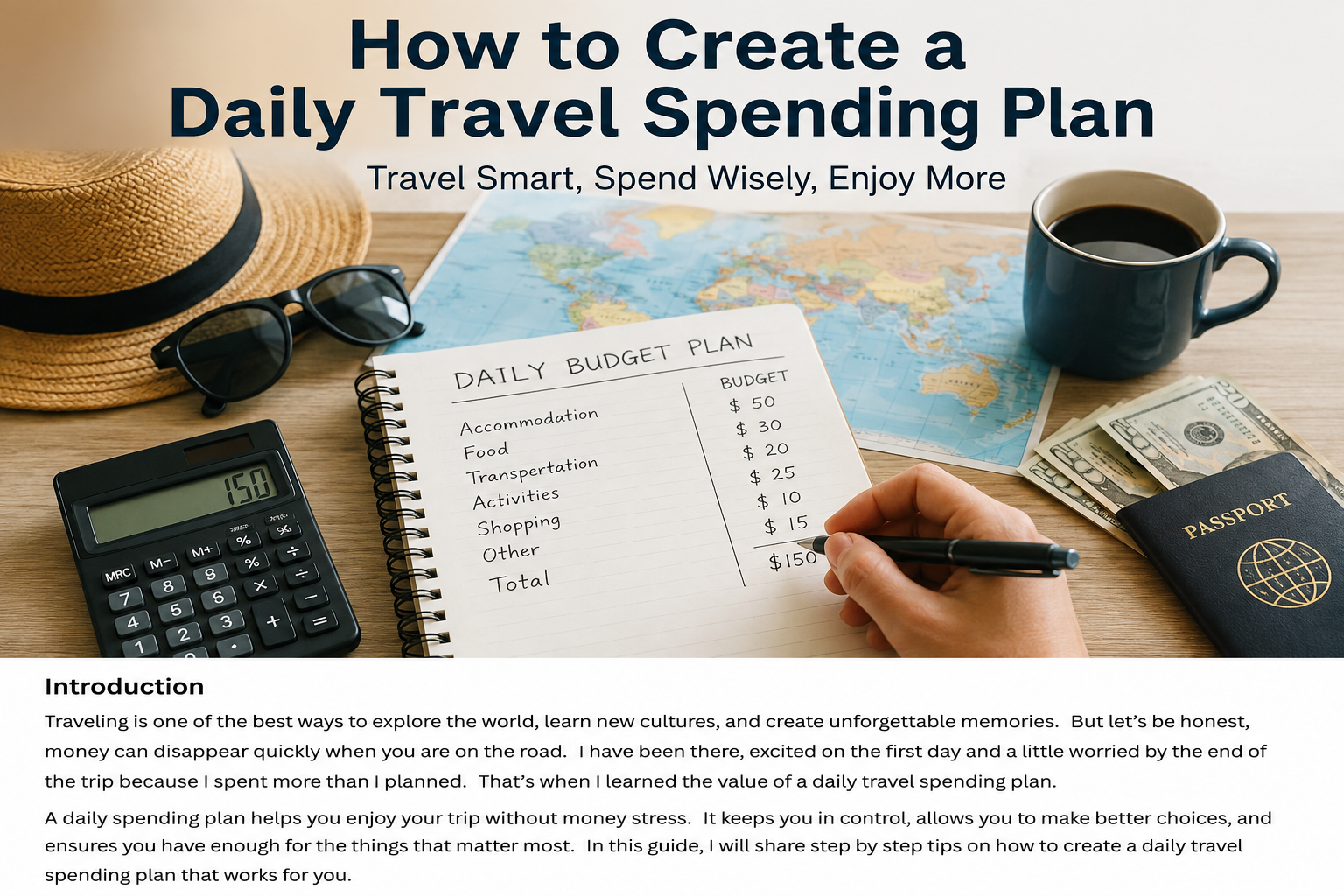
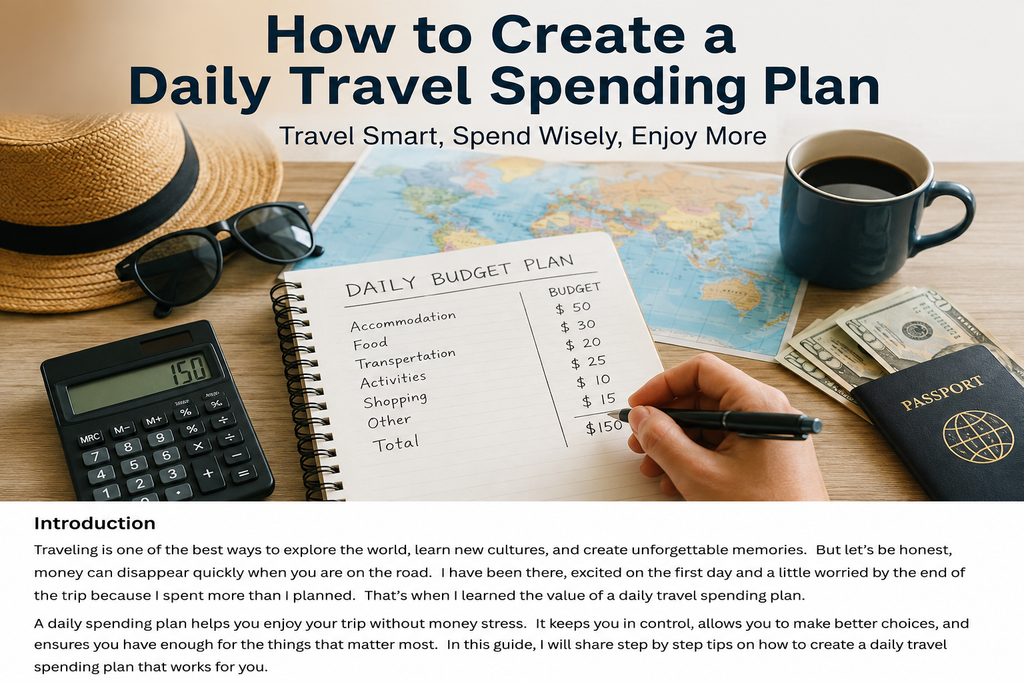
The categories I normally consider are food, transportation, activities, shopping, and miscellaneous expenses.
For example, with a $60 daily budget, I might plan approximately $20 for food, $10 for local transportation, $20 for activities, and $10 for miscellaneous expenses.
These amounts are only examples. Every destination is different, so I adjust them according to local prices and my travel style.
If accommodation is not already paid for, I also include accommodation in my daily travel budget. This is particularly important because hotel costs can represent a large part of a travel budget.
Research Prices Before Your Trip
One mistake I try to avoid is creating a travel budget based entirely on guesswork. Before visiting a destination, I spend some time researching typical prices.
I check the approximate cost of local transportation, meals, attractions, groceries, and other activities I am interested in.
This research helps me create a realistic daily travel spending plan.
For example, if I discover that a normal restaurant meal costs much more than I expected, I know that I need to increase my food budget or find affordable alternatives.
I also look at free attractions and low cost activities because they can help reduce my average daily travel expenses.
Plan Your Food Spending
Food is one of the easiest travel expenses to lose control of because eating is something I have to do every day.
I usually decide how much I want to spend on breakfast, lunch, dinner, and snacks. I do not necessarily eat at expensive restaurants for every meal.
Sometimes I choose a local cafe, market, grocery store, or affordable restaurant. This allows me to experience local food without spending too much.
I also try to avoid buying snacks and drinks every time I see them. Small purchases may seem unimportant, but several small expenses can become a surprisingly large amount by the end of the day.
A simple food budget can therefore make a big difference to my overall travel spending.
Include Transportation Costs
Transportation should always be included in a daily spending plan. Depending on the destination, transportation can be one of the biggest daily expenses.
Before traveling, I research public transportation options, walking routes, local buses, trains, and other affordable choices.
If I know that I will use public transportation several times a day, I check whether a daily or weekly transportation pass could save money.
I also consider walking when the distance is reasonable. Walking can reduce transportation costs while giving me an opportunity to see more of the destination.
Set Aside Money for Activities
One reason I travel is to experience new things, so I do not want my budget to prevent me from enjoying activities.
Instead of avoiding activities completely, I decide which experiences are most important to me.
For example, I might choose one major paid attraction and combine it with several free activities such as walking through historic areas, visiting public parks, exploring local markets, or enjoying scenic locations.
This approach helps me spend money on experiences that I genuinely value rather than paying for every attraction simply because it is available.
Create a Separate Shopping Budget
Shopping can quickly become a problem for travelers who do not plan for it.
I prefer to create a separate shopping allowance instead of taking money from my food or activity budget.
For example, I might decide that I can spend $50 on souvenirs during the entire trip. Once that amount is used, I stop buying unnecessary items.
I also ask myself whether I genuinely want something or whether I am simply buying it because I am excited to be in a new place.
This small habit has helped me avoid many unnecessary travel expenses.
Keep an Emergency Amount
I always believe that a travel budget should include some emergency money.
Unexpected expenses can happen during any trip. A transportation problem, replacement item, last minute booking, or other unexpected situation can require extra money.
I therefore avoid planning every single dollar of my budget. Keeping an emergency amount gives me peace of mind.
This money should ideally be treated as a backup rather than part of my normal daily spending allowance.
Track Your Expenses Every Day
Creating a travel budget is only half of the process. I also need to track what I actually spend.
At the end of each day, I take a few minutes to review my expenses. I write down how much I spent on food, transportation, activities, shopping, and other items.
I do not need a complicated system. A simple note on my phone can be enough.
Tracking my expenses helps me see whether I am staying within my daily travel budget. If I spend $70 one day instead of $60, I can reduce my spending slightly the next day.
This makes my budget flexible instead of restrictive.
Do Not Treat Every Day the Same
I have learned that every travel day does not need to have exactly the same spending limit.
Some days are naturally more expensive. For example, a day that includes a popular attraction, special dinner, and long distance transportation may cost more.
Other days can be much cheaper.
Instead of worrying about every individual day, I look at my spending across the entire trip. If I spend less than planned on one day, I can use some of that money later.
This approach makes a daily travel spending plan much more realistic.
Avoid Unnecessary Travel Expenses
Another important part of managing travel money is learning to recognize unnecessary expenses.
I try to avoid expensive convenience purchases when affordable alternatives are available. For example, buying bottled drinks repeatedly from tourist areas can cost much more than purchasing them from a regular supermarket.
I also compare transportation prices instead of automatically choosing the most expensive option.
The goal is not to spend as little as possible. My goal is to spend money where it adds value to my trip.
Review Your Budget Each Evening
One habit I find particularly useful is reviewing my budget every evening.
I check how much I planned to spend and how much I actually spent. If I am under budget, I know I have some extra flexibility.
If I am over budget, I look at the reason. Maybe I paid for an activity I had not planned for or spent more on transportation.
This quick review helps me make better decisions for the following day.
Use a Simple Daily Spending Formula
A simple formula can make travel budgeting easier.
I take my total flexible travel budget and divide it by the number of days. Then I subtract any money I want to keep as an emergency reserve.
For example, if I have $800 for twelve days and want to keep $80 for emergencies, I have $720 for regular spending.
Dividing $720 by twelve gives me an average daily budget of $60.
I can then divide that amount between food, transportation, activities, shopping, and miscellaneous expenses.
Give Yourself Some Flexibility
The most important lesson I have learned about travel budgeting is that a budget should help me enjoy my trip, not make me feel stressed.
If I create an extremely strict spending plan, I may become worried about every small purchase. That can take away from the experience.
Instead, I use my daily travel budget as a guide.
Some days I spend less. Some days I spend more. What matters is keeping my overall spending under control.
Final Thoughts
Creating a daily travel spending plan is one of the easiest ways to make a trip more affordable and enjoyable. I start by understanding my total travel budget, separating fixed expenses from flexible expenses, and calculating a realistic daily spending target.
Then I divide my money into categories such as food, transportation, activities, shopping, and miscellaneous expenses. I research prices before traveling, track my actual spending, keep emergency money aside, and review my budget regularly.
For me, the best travel budget is not about avoiding every expense. It is about knowing where my money is going and making intentional choices.
When I have a clear daily travel spending plan, I feel more confident during my trip. I can enjoy local food, visit interesting places, and buy meaningful souvenirs without constantly worrying about running out of money.
A little planning before and during a trip can make a big difference. With a realistic travel budget and simple daily expense tracking, I can enjoy more of the journey while keeping my finances under control.