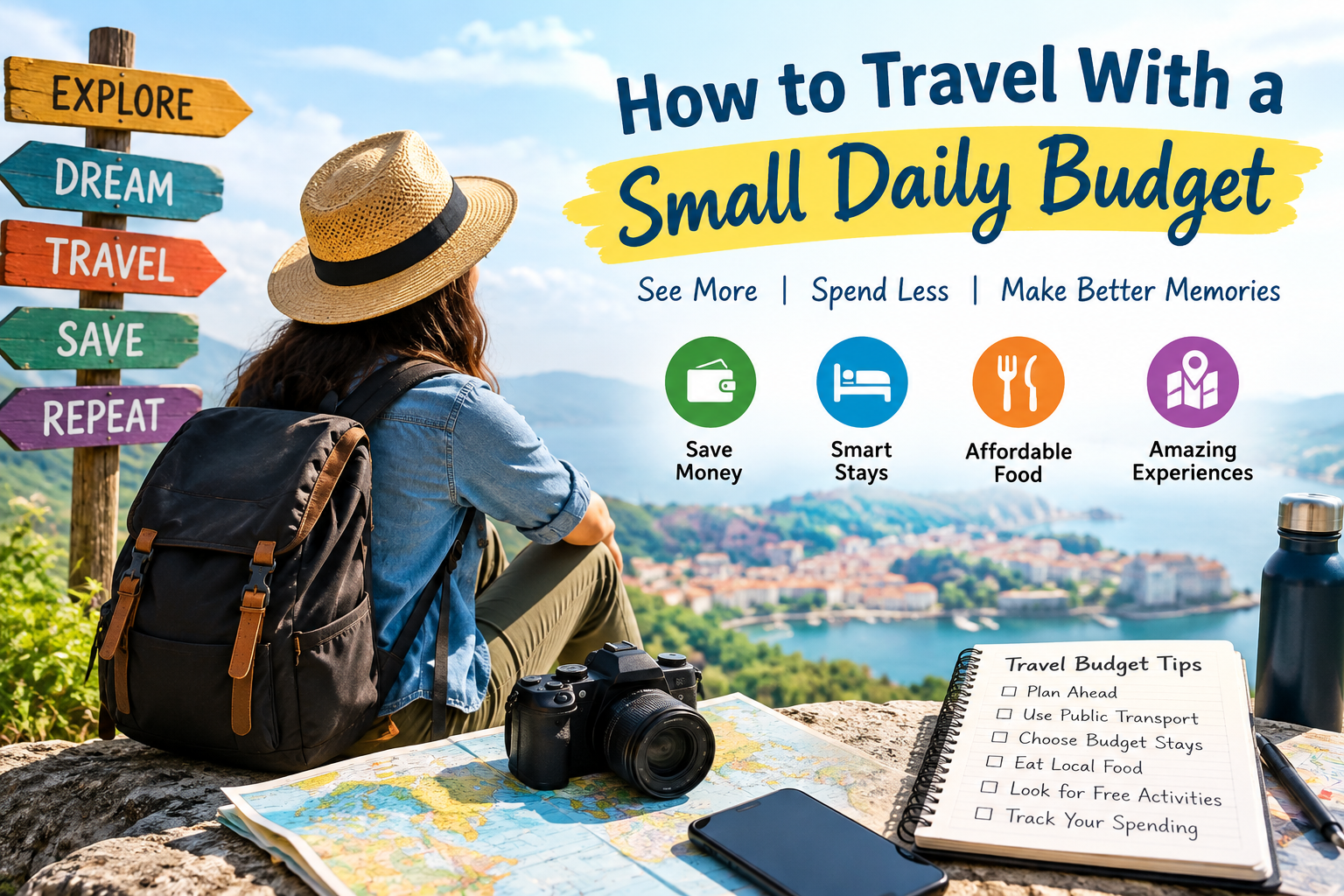
Traveling does not always require a large amount of money. In my experience, the biggest difference comes from how you manage your money each day. A small daily travel budget can still give you the opportunity to explore new places, try local food, meet interesting people, and create memorable experiences. The key is to plan your spending before you leave and make smart choices while you are away.
Many travelers think that traveling on a small budget means missing out on everything enjoyable. I do not agree with that idea. Budget travel is more about knowing where your money should go and avoiding expenses that do not add real value to your trip. When I travel with a limited budget, I focus on experiences rather than expensive comforts.
Set a Daily Travel Budget Before Leaving
The first step is to decide exactly how much you can spend each day. Your daily travel budget should cover food, transportation, activities, small purchases, and other regular expenses.
For example, if you have $40 available for daily spending, you can divide it into different categories. You might keep $15 for food, $10 for transportation, $10 for activities, and $5 for unexpected expenses.
The exact amounts will depend on the destination. Some cities are naturally more affordable than others, so research average local prices before your trip.
I also recommend keeping a small emergency amount separate from your daily budget. This money should only be used when something unexpected happens.
Choose Affordable Accommodation
Accommodation can take a large part of a travel budget, especially in popular destinations. If you want to travel with a small daily budget, choosing an affordable place to stay is important.
Instead of automatically choosing the most expensive hotel, compare different options. Hostels, guesthouses, budget hotels, and simple private rooms can sometimes provide everything you actually need.
I personally believe that accommodation should be comfortable and safe, but it does not always need to be luxurious. If I am going to spend most of my day exploring, I would rather save money on a room and use that money for experiences.
Booking early can also help you find better prices, especially during busy travel periods.
Use Public Transportation
Transportation can quietly consume your travel money. Taking taxis frequently may seem convenient, but several small rides can become a large expense by the end of the day.
Public transportation is often a better choice for budget travelers. Buses, trains, metro systems, and shared transportation can help you move around a destination for much less money.
Walking is another excellent option when places are close together. I enjoy walking in new cities because it allows me to discover streets, small shops, local markets, and interesting places that I might miss while sitting inside a vehicle.
Of course, safety and distance should always come first. If walking is not practical, choose affordable transportation instead.
Eat Like a Local
Food is one of my favorite parts of traveling, but eating at expensive tourist restaurants every day can quickly damage a small travel budget.
Local restaurants, street food markets, small cafés, and family owned food businesses can often provide delicious meals at reasonable prices. These places may also give you a more authentic experience.
I usually avoid eating every meal in areas directly beside major tourist attractions. Prices in these locations can be higher because of the large number of visitors.
Another useful habit is to buy simple breakfast items from a local grocery store or bakery. A filling breakfast can help you avoid unnecessary spending later in the morning.
Carry Water With You
Buying bottled drinks several times a day can become an unnecessary expense. When it is safe to do so, carrying a reusable water bottle can help reduce daily spending.
Before traveling, check whether tap water is safe to drink at your destination. If it is not, look for affordable refill options or larger water containers rather than buying many small bottles.
This is a simple habit, but small savings can make a meaningful difference over several days.
Look for Free Activities
One of the best ways to travel with a small daily budget is to search for free things to do.
Many destinations offer free walking areas, public parks, beaches, viewpoints, markets, museums on selected days, cultural events, historic neighborhoods, and outdoor spaces.
You do not have to pay for an expensive attraction every day to enjoy a destination.
Before visiting a city, I like to make a list of free activities. This gives me options when I want to enjoy the day without spending much money.
Sometimes the simplest experiences become the most memorable parts of a trip.
Limit Unplanned Shopping
Shopping is another area where a small travel budget can disappear quickly. When you are surrounded by attractive souvenirs and local products, it can be difficult to control spending.
I recommend deciding before your trip whether shopping is part of your budget. If it is, give yourself a specific amount.
For example, you might reserve $30 for souvenirs during a week long trip. Once that amount is used, you stop shopping.
I also ask myself one simple question before buying something: “Would I still want this when I get home?” This helps me avoid buying things simply because I am excited about being in a new place.
Plan Your Days Carefully
Good planning can save money without making your trip feel stressful.
If you visit attractions that are close to each other on the same day, you can reduce transportation costs. You can also plan your meals around areas where affordable restaurants are available.
I like to create a simple daily plan instead of trying to visit every attraction. A realistic schedule helps me enjoy the destination without constantly spending money to move from one place to another.
Leave some flexibility in your plan as well. Sometimes a free local event or inexpensive activity turns out to be better than something you originally planned.
Track Your Spending Every Day
Tracking expenses is one of the most useful habits for budget travel.
You do not need complicated software. A simple note on your phone can be enough. At the end of each day, record how much you spent on food, transportation, activities, shopping, and other expenses.
If you spend more than expected one day, you can adjust your plans the next day.
For example, if you spend $10 more than your daily budget because of an unexpected activity, you might choose a free activity and a cheaper meal the following day.
This approach gives you control over your money instead of wondering where it went.
Avoid Small Expenses That Add Up
Small purchases may not seem important individually, but they can become surprisingly expensive.
A coffee here, a snack there, an extra taxi ride, and an unnecessary souvenir can slowly reduce your travel money.
I am not saying you should avoid every small pleasure. That would make budget travel unnecessarily restrictive. Instead, choose the small expenses that genuinely make you happy.
If you love trying local desserts, include them in your budget. If you do not care about expensive coffee, save that money for something more meaningful.
Keep an Emergency Fund
Even when you have a carefully planned daily travel budget, unexpected costs can happen.
You might need additional transportation, replace something you lost, pay an unexpected fee, or deal with another situation.
That is why I recommend keeping emergency money separate from your regular spending money.
Knowing that you have a small backup fund can also make traveling less stressful. You can enjoy your trip while knowing that an unexpected expense will not completely destroy your budget.
Travel During Less Busy Periods
Traveling during the off season can sometimes make a major difference to your total costs.
Hotels, transportation, and activities may be cheaper when fewer tourists are visiting. You may also find that popular attractions are less crowded.
Of course, the best time depends on the destination. Weather, local events, school holidays, and seasonal conditions should all be considered.
If your schedule is flexible, compare prices across different travel dates before making a booking.
Focus on Experiences Instead of Luxury
For me, the most important lesson about budget travel is that you do not need luxury to have a great trip.
A beautiful sunset, a long walk through an old neighborhood, a conversation with a local person, a visit to a public park, or a simple local meal can become a special memory.
When I travel with a small daily budget, I try to spend money on experiences that I will remember rather than things that only provide temporary comfort.
This mindset makes affordable travel much easier.
Final Thoughts
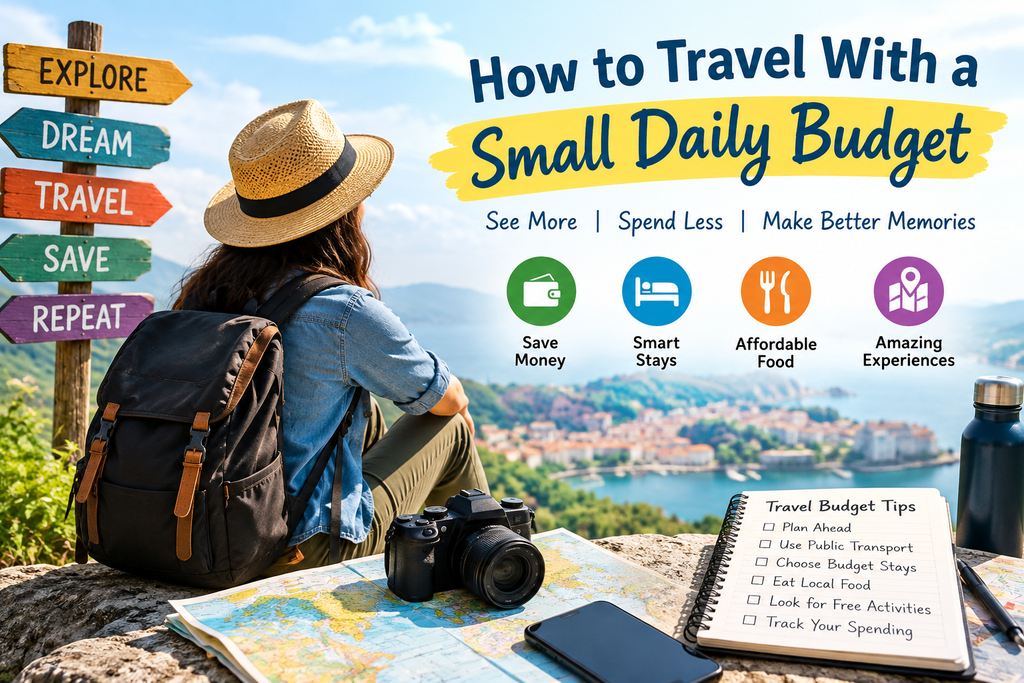
Learning how to travel with a small daily budget is mostly about making thoughtful decisions. Set your daily spending limit, choose affordable accommodation, use public transportation, eat local food, search for free activities, and keep track of every expense.
Most importantly, do not think of a small budget as a limitation. I believe it can actually encourage you to experience a destination in a more authentic way. Instead of spending money simply because you are traveling, you begin to think carefully about what is truly worth paying for.
With some preparation and discipline, a small daily travel budget can take you much further than you might expect. You can explore new places, enjoy local experiences, and make great memories without putting unnecessary pressure on your finances.