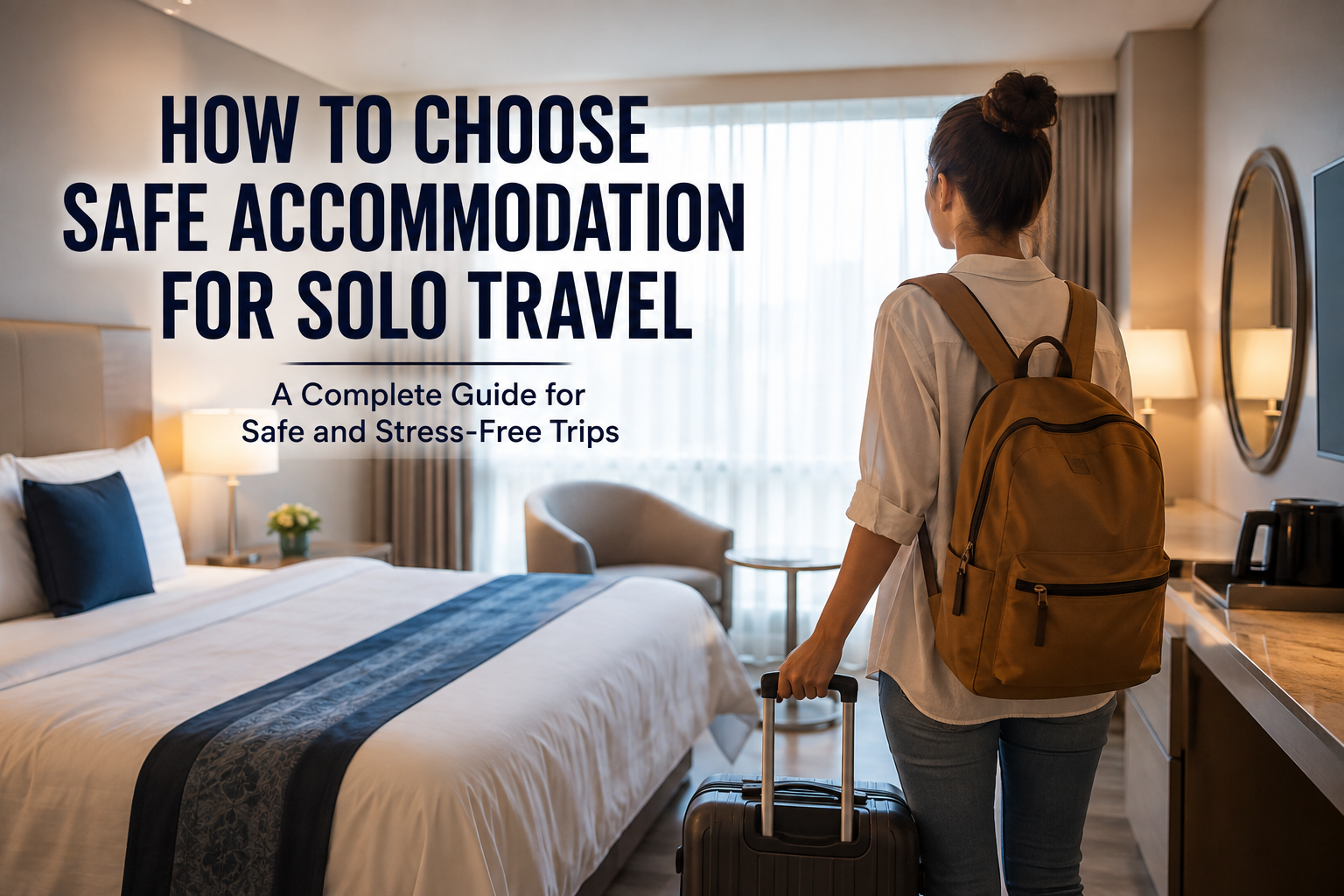
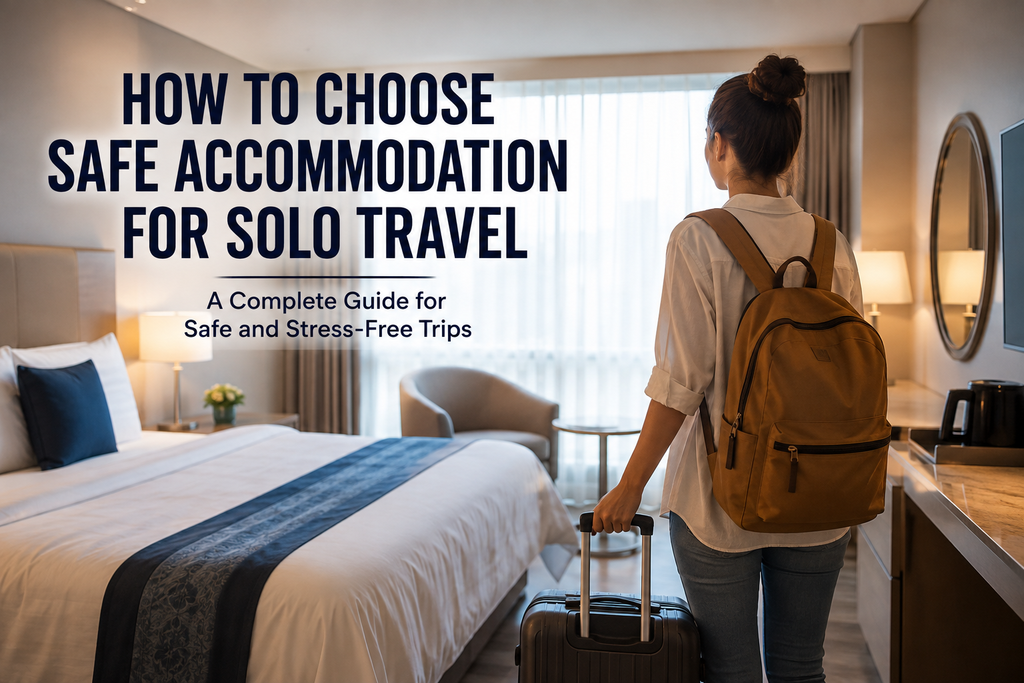
Traveling alone can be one of the most rewarding experiences in life. I personally believe that solo travel gives us the freedom to explore new places, make our own decisions, and understand ourselves better. However, when traveling alone, choosing the right place to stay becomes especially important. A good accommodation can make a trip comfortable and relaxing, while a poor choice can create unnecessary stress.
When I plan a solo trip, I do not choose accommodation only because it looks beautiful or has a low price. I look at several important factors, including location, reviews, security, transportation, cleanliness, and the reputation of the property. In my opinion, spending a little more time researching a hotel, hostel, guesthouse, or vacation rental before booking can make a big difference.
In this guide, I will share the things I consider when choosing safe accommodation for solo travel. These simple tips can help travelers make better decisions and enjoy their trips with greater confidence.
Why Safe Accommodation Matters During Solo Travel
When you travel with family or friends, you have other people around you who can help if something goes wrong. Solo travelers do not always have that advantage. This is why accommodation safety deserves extra attention.
Your accommodation is the place where you will return after spending the day exploring. You should feel comfortable entering the property, accessing your room, storing your belongings, and sleeping there at night.
For me, safety starts before I even make a reservation. I try to understand the neighborhood, read recent reviews, check the property’s facilities, and look for information about access and security. This preparation helps reduce unpleasant surprises after arrival.
Choose a Safe and Convenient Location
One of the most important factors in choosing safe accommodation for solo travel is location. A beautiful hotel is not necessarily a good choice if it is located far from useful transportation, restaurants, shops, or popular areas.
I usually prefer accommodation in a well established area where people are around during the day and evening. Being close to public transportation can also be useful because it makes it easier to move around without depending on expensive private transportation.
Before booking, I check the surrounding area on a map. I look at nearby streets, transportation options, restaurants, convenience stores, and major attractions.
I also consider how easy it will be to return to the accommodation after sunset. If reaching the property requires walking through isolated streets, I would usually look for another option.
Read Recent Guest Reviews
Guest reviews can provide useful information that property descriptions do not always mention. When I research accommodation, I pay particular attention to recent reviews rather than relying only on the overall rating.
I look for comments about cleanliness, staff behavior, room access, neighborhood conditions, noise, locks, and general security.
A few negative reviews do not automatically mean that a property is unsafe. Sometimes people have different expectations. However, if several recent guests mention similar safety concerns, I take those comments seriously.
I also prefer reviews that provide specific details instead of extremely short comments. Detailed reviews can give a better idea of what staying at the property is actually like.
Check the Property’s Security Features
Before booking accommodation, I like to check what security features are available. Depending on the type of property, useful features may include secure entrances, reception services, room locks, security cameras in appropriate common areas, controlled building access, and secure storage.
For solo travelers, a reliable door lock is particularly important. I also prefer properties where the entrance and common areas appear well maintained.
If I am staying in a hostel, I check whether lockers are provided and whether they are large enough for my important belongings.
The goal is not to become overly worried about every possible problem. It is simply about choosing a place where basic security appears to be taken seriously.
Consider Hotels, Hostels, and Guesthouses Carefully
Different types of accommodation can work well for solo travelers.
Hotels can provide privacy, reception services, and additional facilities. They may be a good choice for travelers who prefer a quiet and private environment.
Hostels can be useful for people who want to meet other travelers and save money. However, I recommend checking whether the hostel provides secure lockers, good access control, and clean shared facilities.
Guesthouses can offer a more personal experience, but it is important to research the property and its location carefully.
I do not believe that one accommodation type is automatically safer than another. What matters is the specific property, its management, its location, and the experiences of recent guests.
Do Not Choose Accommodation Based Only on Price
Saving money is important when traveling, but choosing the cheapest accommodation is not always the best decision.
Sometimes a very cheap property is located far from the main area, has poor transportation access, or receives repeated complaints from guests. A slightly more expensive property in a convenient and well regarded location may provide much better value.
When comparing prices, I consider the complete cost of staying there. Transportation, meals, additional fees, and convenience can all affect the actual cost.
In my opinion, it is better to stay somewhere that fits my budget while also providing reasonable comfort and security.
Check Transportation Options
Transportation is another important part of accommodation safety. Before booking, I check how I will reach the property from the airport, train station, bus station, or other arrival point.
I also check whether public transportation is available nearby and how easy it is to get back to the accommodation.
If I arrive late at night, I pay even more attention to this factor. An accommodation that is easy to reach can reduce unnecessary stress after a long journey.
I also save the accommodation address and directions on my phone before leaving for the property. Having this information available offline can be helpful if internet access is limited.
Look at the Neighborhood Before Booking
The accommodation itself may be excellent, but the surrounding neighborhood also matters.
I use online maps and available local information to understand the area before making a reservation. I look for major roads, public transportation, restaurants, stores, tourist areas, and other useful places nearby.
I also try to understand whether the area is generally active or isolated at the times when I expect to travel.
This does not mean judging an entire neighborhood based on one comment or photograph. Instead, I try to gather information from several sources and make a balanced decision.
Protect Your Personal Information
When staying at accommodation, I try to avoid sharing unnecessary personal information with strangers.
For example, I do not normally tell people I meet where my exact room is or discuss my complete travel schedule. I also avoid posting my room number or detailed accommodation information publicly on social media while I am still staying there.
If I share travel updates online, I prefer to do so without revealing information that could make it easy for strangers to know exactly where I am staying.
This is a simple privacy habit that can be useful for any traveler, especially someone traveling alone.
Keep Important Belongings Secure
Even in a highly rated accommodation, I do not leave valuable belongings lying around unnecessarily.
I keep my passport, money, identification documents, electronics, and other important items in a secure place. If the property provides a safe or locker, I consider using it for valuable items.
I also keep digital copies of important travel documents in a secure location. Having backup information can make things easier if an original document is lost.
Being organized with valuables does not take much effort, but it can provide peace of mind.
Trust Your First Impression
When I arrive at accommodation, I pay attention to how I feel about the place. A property may look perfect online, but the actual environment can sometimes feel different.
I look at the entrance, reception area, cleanliness, staff behavior, room condition, and general atmosphere.
If something feels seriously wrong or different from what was advertised, I do not ignore it. I believe travelers should take reasonable concerns seriously and ask questions when necessary.
Trusting your instincts does not mean being afraid of everything. It simply means paying attention to your surroundings.
Tell Someone Where You Are Staying
When traveling alone, I think it is useful to share basic accommodation information with someone you trust.
I can provide the property name, general location, booking details, and expected dates of stay. This gives someone at home a basic idea of where I am.
I also keep my phone charged and make sure I have access to important contact information.
This simple preparation can be valuable if plans change or an unexpected situation occurs.
Have a Backup Plan
Even after carefully choosing safe accommodation, I believe every solo traveler should have a backup plan.
I save the booking confirmation, accommodation address, transportation details, and important contact information on my phone. I also keep essential information available offline.
If the accommodation is not suitable when I arrive, having alternative options can make the situation easier to handle.
A backup plan does not mean expecting something bad to happen. It simply means being prepared.
Final Thoughts
Choosing safe accommodation for solo travel is one of the most important parts of planning a trip alone. In my experience, the best approach is to look beyond attractive photographs and cheap prices.
I pay attention to location, recent guest reviews, transportation, security features, privacy, cleanliness, and the overall reputation of the property. I also consider how easy it will be to return to the accommodation after a day of exploring.
Solo travel should feel exciting rather than stressful. Choosing the right place to stay can give you a comfortable base from which to explore a new destination.
My biggest advice is to research before booking, trust reliable information, protect your personal belongings, and listen to your instincts when something does not feel right. With a little preparation, choosing safe accommodation for solo travel can become a simple part of the travel planning process.
The right accommodation will not only give you a place to sleep. It can give you comfort, convenience, privacy, and peace of mind throughout your journey.