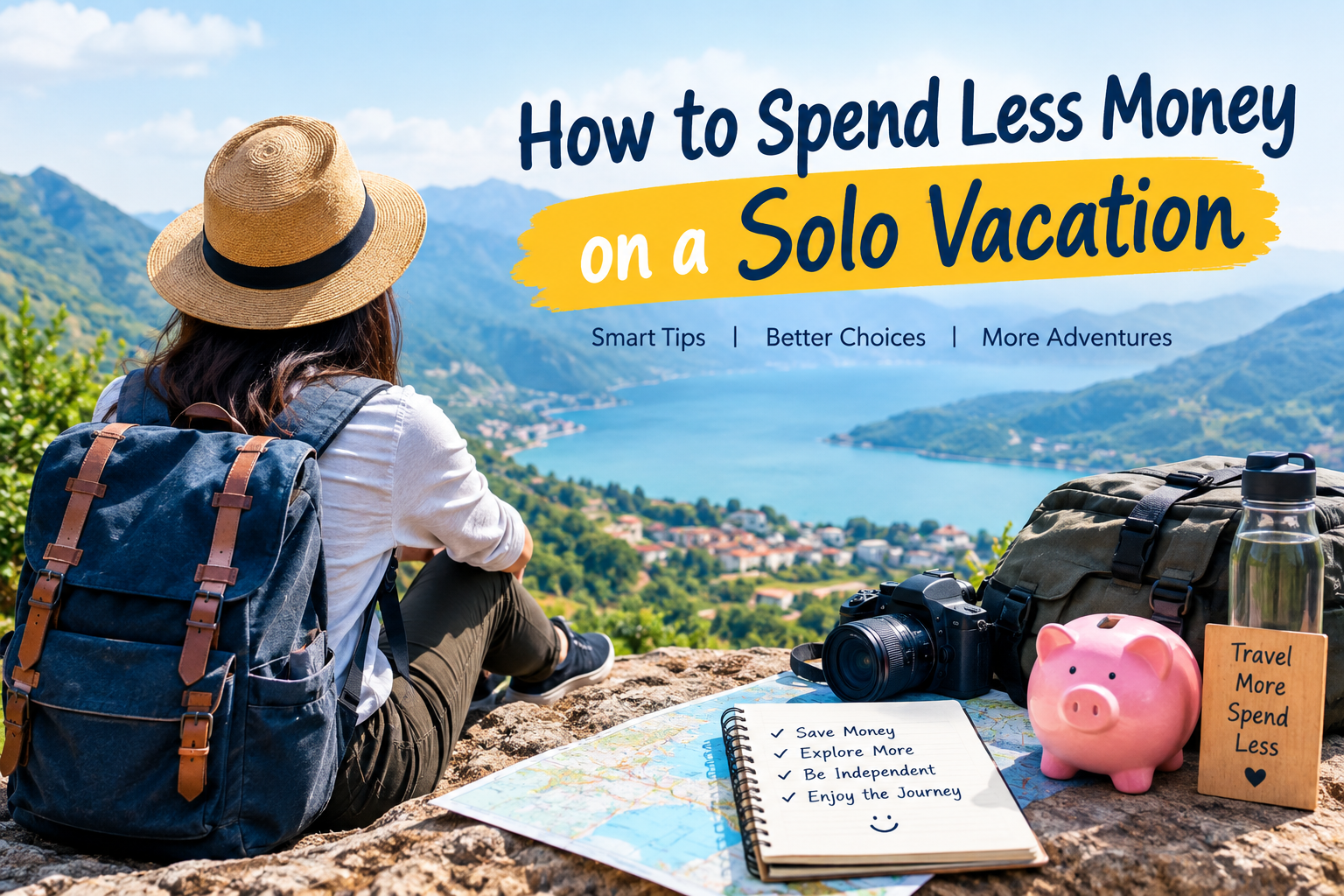
Traveling alone can be one of the most enjoyable experiences because you have complete freedom to decide where to go, what to eat, and how to spend your time. However, solo travel can sometimes feel expensive because you cannot split hotel rooms, transportation, or other costs with another person. The good news is that a solo vacation does not have to be expensive. With some planning and smart choices, I believe it is possible to enjoy a memorable trip while keeping your spending under control.
In my experience, saving money while traveling is not about avoiding every enjoyable activity. It is about knowing where your money is going and deciding which expenses are actually worth paying for. Here are some practical ways to spend less money on a solo vacation without making your trip boring or uncomfortable.
Create a Realistic Solo Travel Budget
The first thing I recommend is creating a travel budget before booking anything. A budget gives you a clear idea of how much you can comfortably spend on transportation, accommodation, food, activities, and unexpected expenses.
I usually divide the budget into different categories instead of keeping everything in one amount. For example, you can set separate amounts for your hotel, meals, local transportation, sightseeing, shopping, and emergency expenses.
It is also helpful to leave some extra money for unexpected situations. A delayed flight, additional transportation, or an unplanned activity can easily increase your expenses. Having a small emergency amount can prevent these situations from damaging your overall budget.
Travel During the Off Season
One of the easiest ways to save money on a solo vacation is to travel during the off season. Hotels and flights can become much more affordable when fewer tourists are visiting a destination.
Popular destinations are often most expensive during school holidays, major festivals, and peak summer months. If your schedule is flexible, consider traveling a few weeks before or after the busiest period.
I personally think traveling during quieter periods can offer another advantage. You may find fewer crowds, shorter lines, and a more relaxed atmosphere. This means you can sometimes have a better experience while spending less money.
Compare Transportation Prices
Transportation can take a large part of your travel budget, especially when traveling alone. Before booking a flight, train, or bus, compare different options carefully.
Sometimes a slightly different departure time can save a significant amount of money. You should also check nearby airports if they are practical for your trip.
For shorter journeys, buses and trains may be cheaper than flights. Within a city, public transportation can also be much less expensive than using taxis for every trip.
When I travel, I prefer to compare the total cost rather than simply looking at the ticket price. A cheap flight may not actually be cheaper if it involves expensive airport transfers and additional baggage fees.
Choose Affordable Accommodation
Accommodation is usually one of the biggest expenses on a solo vacation. Since you are paying for the entire room yourself, choosing the right place can make a major difference.
Hotels are convenient, but they are not always the cheapest option. Depending on the destination, hostels, guesthouses, budget hotels, and private rooms in shared properties may offer better value.
Location also matters. A hotel in the center of a major tourist area may cost much more than one located a little farther away. However, do not choose a very cheap hotel if you will then spend a lot of money on transportation every day.
I believe the best accommodation is not necessarily the cheapest one. It is the one that provides good value, a convenient location, and the basic facilities you actually need.
Stay Longer in One Place
Moving from one destination to another every day can become expensive. Every change may involve transportation, additional accommodation costs, baggage fees, and other small expenses.
For a budget friendly solo vacation, consider staying several nights in the same location. This allows you to explore the area at a slower pace and reduce transportation costs.
Staying longer can also help you discover inexpensive local restaurants, markets, parks, and free attractions instead of constantly paying tourist prices.
Eat Like a Local
Food is another area where solo travelers can easily overspend. Eating at expensive restaurants for every meal can quickly increase your vacation expenses.
I prefer mixing different types of meals. You can enjoy a nice restaurant occasionally while choosing local cafes, bakeries, markets, or affordable restaurants for other meals.
Local food is often less expensive than food in tourist areas, and it can also give you a better understanding of the destination.
Another simple habit is carrying a reusable water bottle when practical. Buying bottled drinks repeatedly may seem like a small expense, but these purchases can add up during a longer trip.
Take Advantage of Free Activities
You do not need to pay for an attraction every time you want to have fun. Many destinations have free activities that can make your solo vacation memorable.
Walking tours, public parks, beaches, local markets, historic neighborhoods, viewpoints, and some museums can be free or inexpensive.
I always recommend researching free things to do before visiting a destination. A simple walk through an interesting neighborhood can sometimes be more enjoyable than an expensive attraction.
You can also check whether museums or cultural attractions offer free entry on certain days or during specific hours.
Walk Whenever It Makes Sense
Walking is one of the best ways to reduce local transportation costs. If your accommodation is close to restaurants, shops, attractions, or public areas, walking can save money while allowing you to see more of the destination.
Of course, safety and distance should always come first. I would never recommend walking long distances simply to save a small amount of money if the route is unsafe or impractical.
When walking is not convenient, public transportation is often a better budget choice than taking taxis everywhere.
Avoid Unnecessary Tourist Purchases
Souvenirs can become surprisingly expensive. When traveling alone, it is easy to buy small items throughout the day without realizing how much you have spent.
Before buying something, I usually ask myself whether I genuinely want it or whether I simply like it because I am excited to be traveling.
Setting a small souvenir budget can help. Instead of buying many random things, choose one or two meaningful items that remind you of the trip.
The same approach works for shopping. A vacation does not need to become a shopping trip unless shopping is one of your main priorities.
Plan Your Daily Spending
A daily spending limit can make your vacation budget much easier to manage. For example, after paying for your accommodation and transportation, you can decide how much you want to spend each day on food, activities, and other expenses.
You do not have to follow the number perfectly. The purpose is simply to know when you are spending more than planned.
If you spend less on one day, you can use some of that money for a special activity later. This gives you flexibility without losing control of your overall budget.
Book Important Things Early
Booking important travel arrangements early can sometimes help you find better prices. Flights, trains, and accommodation can become more expensive as availability decreases.
However, I recommend comparing prices rather than booking the first deal you see. Look at different dates, locations, and booking options before making your final decision.
Always check the complete price, including taxes, baggage charges, cleaning fees, transportation costs, or other additional charges.
Avoid Traveling With Too Much Luggage
Extra luggage can increase travel costs, especially with airlines that charge for checked baggage. Traveling with fewer belongings can help you avoid these fees.
Packing light also makes solo travel easier. You do not have another person to watch your luggage while you move around, so carrying fewer bags can make transportation much more convenient.
Before leaving, make a simple packing list and take only what you are likely to use.
Be Careful With Foreign Transaction Fees
If you are traveling internationally, payment fees can quietly increase your expenses. Your bank or card provider may charge foreign transaction fees or currency conversion fees.
Before traveling, check the fees associated with your payment methods. It can also be useful to understand the local currency and keep track of exchange rates.
Avoid exchanging large amounts of money at places with poor rates simply because they are convenient. Taking a little time to compare your options can save money.
Do Not Try to See Everything
One mistake I think many travelers make is trying to visit every attraction in a short amount of time. This can lead to higher transportation costs, expensive entrance fees, and unnecessary stress.
A solo vacation should also give you time to relax. Choose the places that genuinely interest you instead of creating a huge list of attractions.
Sometimes sitting in a park, walking around a local neighborhood, or enjoying a scenic view costs almost nothing and becomes one of the best memories of the trip.
Keep a Small Emergency Fund
Saving money does not mean spending every available dollar. I strongly recommend keeping some money aside for emergencies.
Unexpected medical expenses, transportation problems, lost belongings, or changes to your travel plans can happen. Having an emergency fund gives you peace of mind and helps you deal with problems without destroying your vacation budget.
This is especially important when traveling alone because you may not have another traveler with you to share unexpected costs.
Final Thoughts
Spending less money on a solo vacation is mostly about making better decisions before and during your trip. You do not have to stay in the cheapest accommodation, eat inexpensive food every day, or avoid every paid attraction. Instead, focus your money on the experiences that matter most to you.
From my point of view, the best budget travel strategy is to reduce unnecessary expenses while protecting the things that make the trip enjoyable. Choose affordable accommodation, compare transportation, eat local food, use public transportation, enjoy free activities, and keep track of your daily spending.
A well planned solo vacation can be affordable, comfortable, and memorable at the same time. When you learn how to manage your money while traveling, you can take more trips without putting unnecessary pressure on your finances.