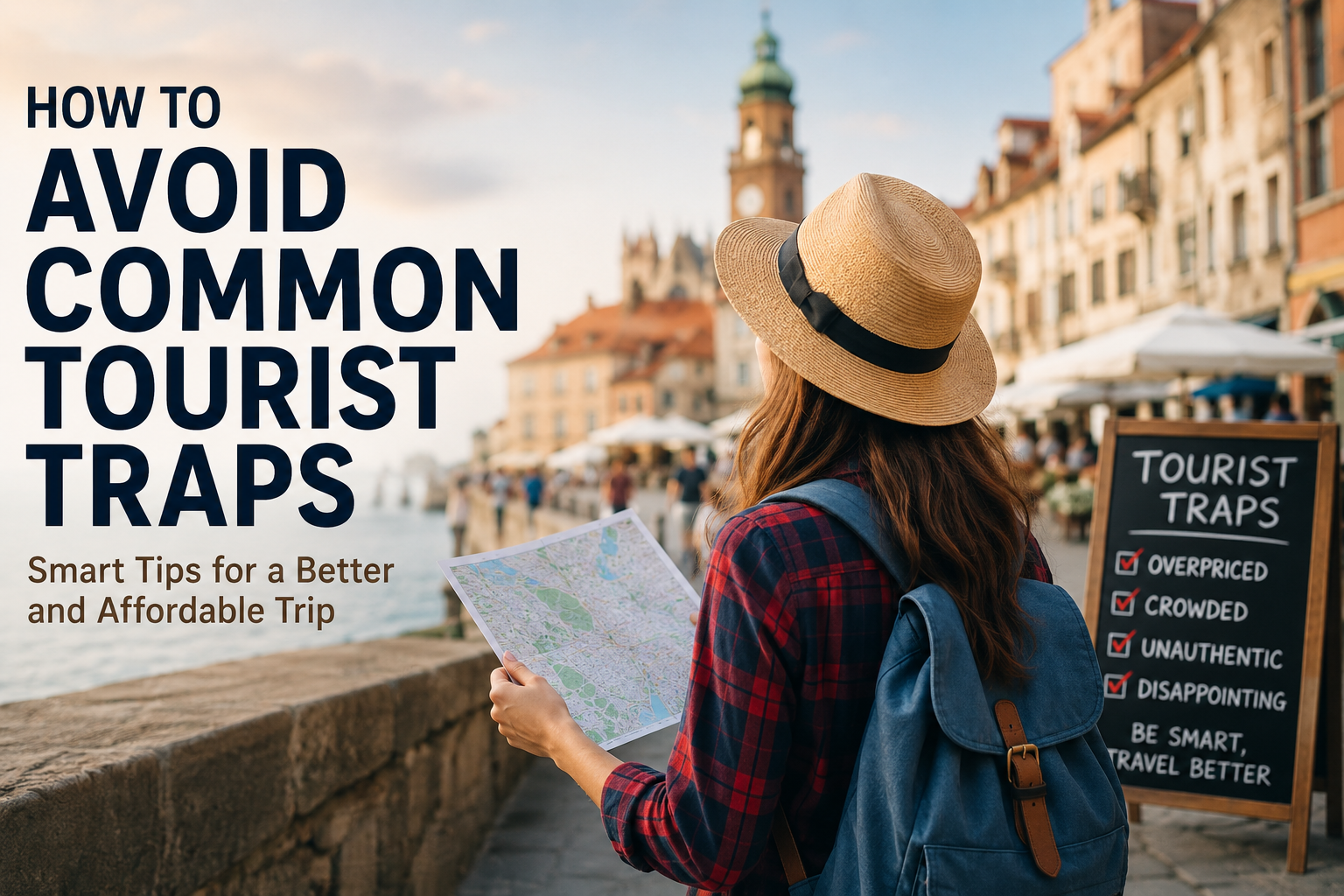
Traveling to a new place is one of the best ways to experience different cultures, meet interesting people, taste new food, and create memories that stay with you for years. However, every traveler can make mistakes, especially when visiting a destination for the first time. One of the most common problems is falling into tourist traps.
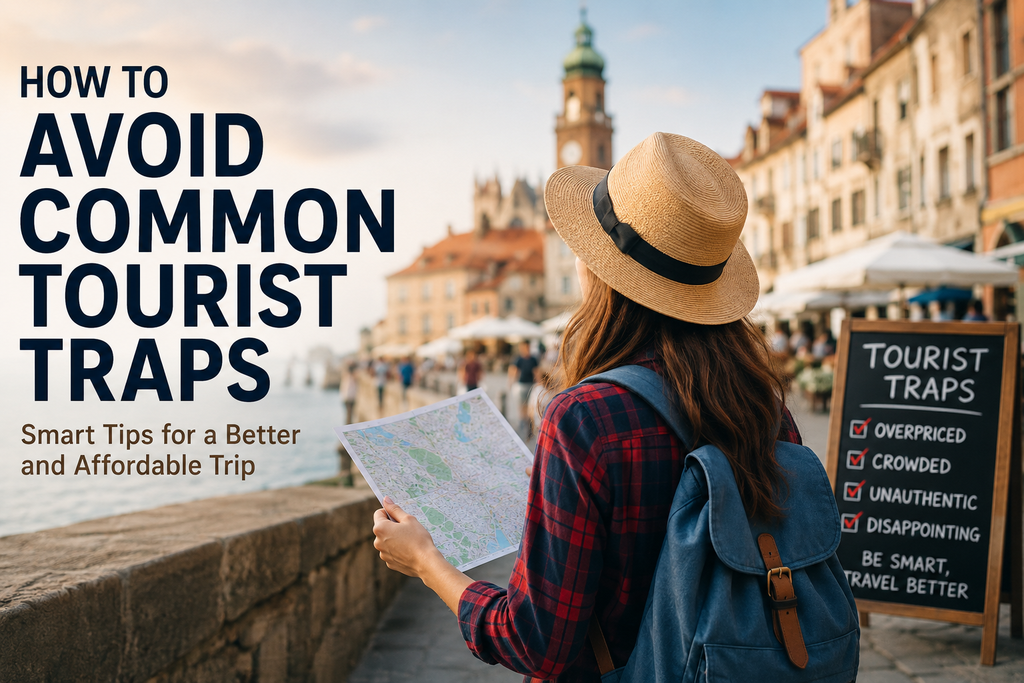
A tourist trap is usually a place, service, activity, or business that attracts visitors mainly because it is popular with tourists but may offer poor value, inflated prices, or an experience that does not feel authentic. From overpriced restaurants near famous landmarks to expensive souvenirs and unnecessary guided tours, tourist traps can quickly increase your travel expenses.
In my experience, avoiding tourist traps does not mean avoiding popular attractions. It simply means doing a little research, paying attention to your surroundings, and making thoughtful choices. Here are some practical ways I believe every traveler can use to avoid common tourist traps.
Research Your Destination Before Traveling
I believe good travel preparation starts before you leave home. Spending a little time researching your destination can save you from many expensive mistakes later.
Before traveling, I usually look at popular attractions, local restaurants, transportation options, average prices, and common scams in the area. I also check what other travelers say about different places.
Search for terms such as best local restaurants, average taxi prices, authentic food near me, and tourist traps in the destination. This can help you understand what is normal and what might be overpriced.
You do not need to research every single detail. Even basic knowledge about your destination can make a big difference.
Be Careful Around Major Tourist Attractions
Famous landmarks naturally attract large numbers of visitors. Restaurants, shops, tour operators, and other businesses around these attractions know that tourists are willing to spend money for convenience.
One simple rule I follow is to be careful when choosing restaurants directly beside major attractions. A restaurant with a perfect view may charge much more than a similar restaurant a few streets away.
This does not mean every business near a tourist attraction is bad. Some are excellent. However, it is worth checking menus, prices, and reviews before sitting down.
Walking a little farther from the busiest tourist area can often lead to better food, better prices, and a more relaxed experience.
Check Restaurant Prices Before Ordering
Food is an important part of any trip, but an expensive meal can quickly damage your travel budget.
I always recommend checking the menu and prices before entering a restaurant. If the menu is not clearly displayed outside, I consider that a reason to look somewhere else.
Pay attention to additional charges as well. Some restaurants may add service fees, table charges, or other costs that are not obvious at first.
Online reviews can also help, but I would not depend on ratings alone. Reading recent customer comments can give you a better idea about food quality, prices, service, and portion sizes.
Do Not Follow Random Restaurant Promoters
In busy tourist areas, you may see people standing outside restaurants inviting visitors inside. Sometimes they are simply trying to attract customers, but aggressive promotion can also be a warning sign.
I prefer choosing restaurants based on my own research rather than entering because someone convinced me to do so.
A friendly invitation does not automatically mean the restaurant is bad. Still, I believe travelers should take a moment to compare their options before making a decision.
Learn the Typical Local Prices
Understanding normal prices is one of the easiest ways to avoid tourist traps.
Before traveling, I like to learn the approximate cost of common things such as local transportation, meals, bottled water, entrance tickets, and small souvenirs.
You do not need exact prices for everything. Having a general idea is enough.
For example, if you know that a short local taxi ride usually costs a certain amount and someone suddenly asks for several times more, you will recognize the problem immediately.
Knowing typical prices also gives you confidence when negotiating in places where bargaining is common.
Be Careful With Taxi Services
Transportation is another area where tourists can sometimes pay more than necessary.
Before taking a taxi, I recommend checking whether the vehicle uses a meter or whether the fare should be agreed upon before starting the journey. If possible, use reputable transportation services or official taxi stands.
It is also useful to know the approximate distance between your hotel and your destination. A basic map can help you recognize if a driver is taking an unnecessarily long route.
I personally believe that being polite but confident is the best approach. You do not need to argue with a driver. If the price feels unreasonable, simply look for another legitimate option.
Avoid Unofficial Guides
Guided tours can be an excellent way to learn about a destination, but not every person offering a tour is trustworthy.
If you want a guide, research the company or individual before booking. Check reviews, prices, what is included, and how long the tour lasts.
Be especially careful when someone approaches you unexpectedly and offers an expensive private tour without clearly explaining what you will receive.
A good guide should be able to explain the service, price, meeting point, duration, and cancellation conditions clearly.
Do Not Buy Souvenirs Immediately
Souvenirs are a fun way to remember a trip, but buying something from the first shop you see is not always the best choice.
Popular tourist areas often have shops selling similar products at very different prices. I recommend looking around before making a purchase.
If you see an item you like, compare prices at a few different stores. You may discover that the same product costs much less a short distance away.
When bargaining is part of the local culture, remain respectful. Negotiating should be friendly rather than aggressive.
Be Careful With Free Offers
One of the oldest tricks used in tourist areas is offering something for free and then asking for money later.
A person might offer a flower, bracelet, photograph, small gift, or another item without clearly explaining the cost. Once you accept it, they may demand payment.
I believe the simplest solution is to politely decline anything you do not want. If someone says something is free, make sure you understand what that means before accepting it.
Being friendly does not mean you have to accept every offer.
Check Ticket Prices and Inclusions
Tourist attractions sometimes have different ticket options. A basic entrance ticket may be affordable, while special packages can become expensive.
Before purchasing a ticket, check exactly what is included. Look for information about entry fees, guided tours, transportation, meals, priority access, and additional activities.
This is especially important when booking online. A cheap advertised price may not include every fee.
Taking a few minutes to read the details can prevent an unpleasant surprise.
Do Not Assume Expensive Means Better
A common mistake among travelers is believing that higher prices automatically mean higher quality.
That is not always true.
An expensive restaurant may have a beautiful location but average food. A costly souvenir may be mass produced. An expensive tour may provide information that you could easily learn from a local museum or official guide.
Price should be considered together with quality, reputation, location, and what is actually included.
Talk to Local People
One of my favorite ways to discover better places is by talking to local people.
Hotel staff, shop owners, residents, and other trustworthy locals can often recommend restaurants, markets, cafés, and attractions that are not focused entirely on tourists.
Of course, not every recommendation will be perfect. People have different tastes. However, local suggestions can help you discover experiences that feel more genuine.
You may even find a small family restaurant or quiet attraction that becomes one of the best memories of your trip.
Read Recent Reviews
Online reviews are useful when trying to avoid tourist traps, but I recommend focusing on recent reviews.
A business can change significantly over time. Management, prices, food quality, and customer service may all change.
Look for repeated comments rather than focusing on one extremely positive or negative review. If many recent visitors complain about hidden fees, poor service, or misleading advertising, I would take those warnings seriously.
Photos posted by customers can also help you compare what a place actually looks like with its promotional images.
Trust Your Instincts
Sometimes the biggest warning sign is simply how a situation feels.
If someone is pressuring you to buy something immediately, refusing to explain the price, or making you uncomfortable, there is nothing wrong with walking away.
You do not have to make a purchase because someone has spent time talking to you. You also do not need to feel guilty about changing your mind.
Good businesses should allow customers to make decisions without unnecessary pressure.
Keep Your Travel Budget in Mind
A clear travel budget can also protect you from tourist traps.
When you know how much you plan to spend each day, you are less likely to make impulsive purchases.
I recommend dividing your budget into categories such as accommodation, food, transportation, activities, shopping, and emergencies. Keep some extra money available for unexpected expenses.
A budget does not mean you cannot enjoy yourself. It simply helps you spend money on experiences that matter to you.
Enjoy Popular Places Without Losing Your Judgment
Not every popular tourist attraction is a tourist trap. Many famous landmarks are famous because they are genuinely worth seeing.
The important thing is to separate the attraction itself from the businesses trying to profit from its popularity.
You can visit a famous landmark, take photographs, learn about its history, and enjoy the experience while still being careful about where you eat, shop, and book activities nearby.
For me, smart travel is not about avoiding everything popular. It is about knowing what I am paying for and making informed decisions.
Final Thoughts
Learning how to avoid common tourist traps can make a trip more enjoyable, affordable, and authentic. The best protection is simple preparation.
Research your destination, compare prices, read recent reviews, check menus before ordering, use reputable transportation, be careful with unsolicited offers, and do not allow anyone to pressure you into making a quick decision.
Most importantly, remember that you do not have to spend a lot of money to have a great travel experience. Some of the best memories can come from simple activities such as walking through a local neighborhood, eating at a small family restaurant, visiting a public market, or talking with local people.
In my opinion, smart travel is about being curious without being careless. When you take a little time to research your choices and trust your judgment, you can enjoy your destination without letting common tourist traps ruin your trip.
A successful trip is not necessarily the one where you spend the most money. It is the one where you return home with great memories, useful experiences, and the feeling that your money and time were well spent.