Planning a trip can be one of the most exciting parts of traveling, but it can also become confusing when there are too many bookings, dates, documents, and activities to remember. I have found that a well organized travel plan makes the whole journey easier and more enjoyable. Instead of constantly checking different messages, emails, and notes, I can keep everything in one place and quickly find what I need.
Whether you are planning a short weekend trip or a longer vacation, keeping your travel plans organized can save time, reduce stress, and help you enjoy your destination. In this article, I will share some simple travel planning tips that can help you organize your trip from the beginning to the end.
Start With a Clear Travel Plan
The first step I recommend is creating a basic travel plan before booking everything. Write down your destination, travel dates, estimated budget, and the main reason for your trip. This gives you a clear starting point.
For example, if I am planning a five day vacation, I first note the arrival date, departure date, hotel requirements, transportation needs, and places I would like to visit. I do not try to plan every minute at this stage. I simply create a basic structure.
Having this information written down makes the rest of the travel planning process much easier.
Keep All Travel Information in One Place
One of the biggest mistakes travelers can make is keeping important information in different places. Flight details may be in an email, hotel information may be in a message, and activity bookings may be saved in another application.
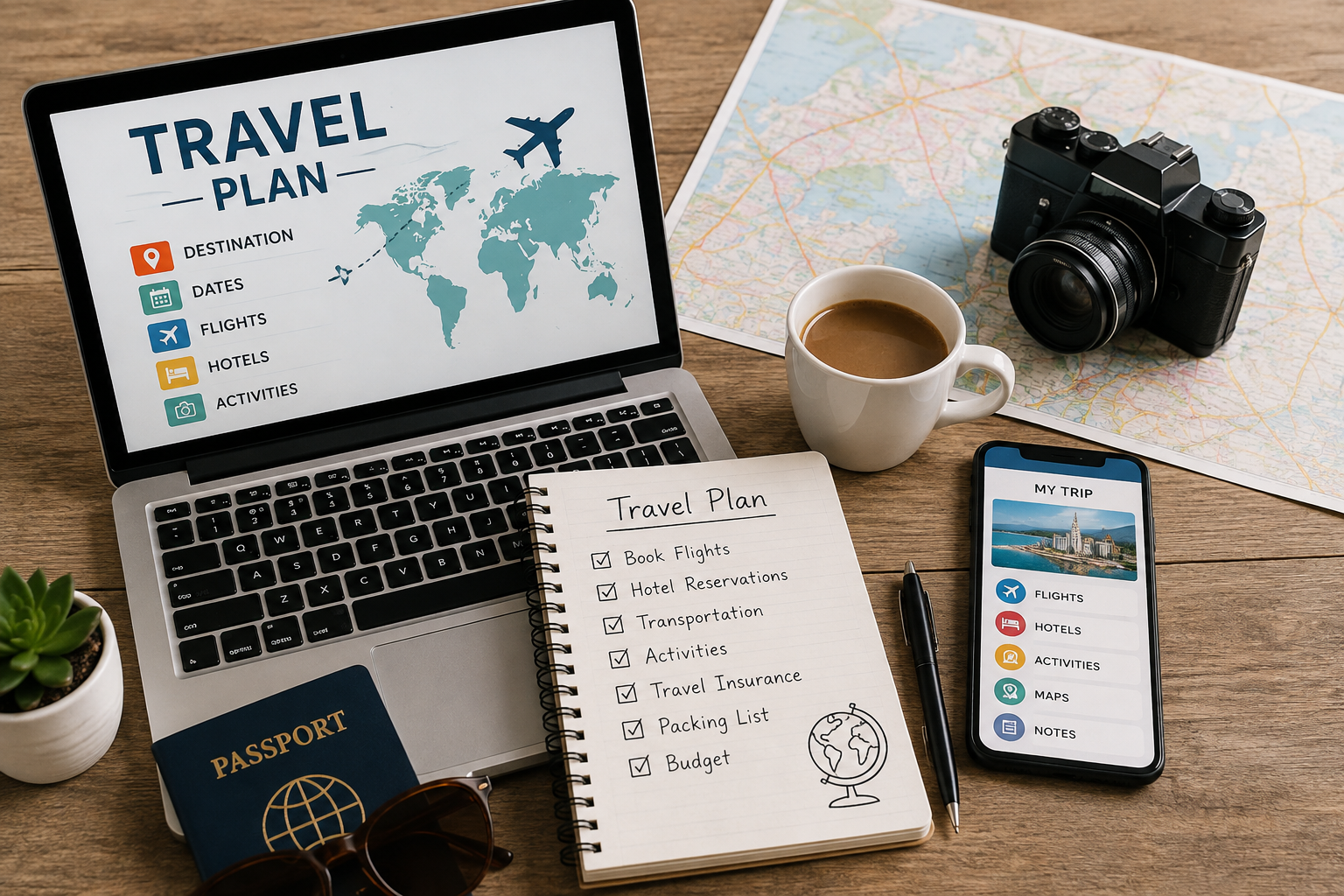
I prefer keeping all important travel information in one organized location. This can be a notebook, spreadsheet, notes application, or travel planning application.
I usually organize my information into sections such as flights, hotels, transportation, activities, documents, budget, and emergency information. This makes it much easier to find something when I need it.
Create a Simple Travel Itinerary
A travel itinerary is one of the most useful tools for keeping travel plans organized. It shows where you need to be and what you plan to do during your trip.
I recommend creating an itinerary for each day instead of making one large list. For example, you can write your morning activity, afternoon activity, evening plans, and important transportation details.
However, I believe a good itinerary should not be too crowded. Leave some free time because unexpected changes can happen. You may discover an interesting place, need extra rest, or experience a transportation delay.
A flexible travel itinerary gives you structure without making your vacation feel like a strict schedule.
Track Your Travel Bookings
Flights, hotels, trains, buses, and other reservations should be recorded carefully. For every booking, keep the confirmation number, date, time, location, and payment information together.
I also recommend checking your bookings before the trip. A small mistake in a travel date or departure time can cause unnecessary problems.
Create a simple booking section that includes:
Flight information
Hotel reservation
Transportation details
Activity reservations
Check in and check out times
Booking confirmation numbers
Having these details available can make your trip much smoother.
Organize Your Travel Documents
Travel documents are extremely important, so I always recommend giving them special attention. Depending on your destination, you may need identification documents, passports, visas, tickets, hotel confirmations, travel insurance information, or other documents.
Keep digital copies of important documents in a secure location. It can also be useful to have physical copies of documents that you may need during your journey.
Before leaving, check that your documents are valid and available. Do not wait until the last day to discover that an important document is missing or expired.
Use a Travel Budget
Money is another area that can become difficult to manage during a trip. A simple travel budget can help you understand how much you expect to spend.
I like to divide my estimated expenses into categories such as transportation, accommodation, food, activities, shopping, and emergency expenses.
You do not need a complicated spreadsheet. Even a simple list can help.
For example, you can write your expected spending for each category and compare it with your available budget. This helps prevent unnecessary spending and gives you a better idea of your total travel cost.
It is also a good idea to keep some extra money available for unexpected expenses.
Make a Packing List
A packing list is another simple way to keep your travel plans organized. Without a list, it is easy to forget something important, especially when you are preparing in a hurry.
I recommend creating your packing list several days before your trip. Divide it into categories such as clothing, personal items, electronics, documents, and other essentials.
You can then check each item as you pack it.
A packing list also prevents overpacking because you can see exactly what you actually need instead of putting random items into your luggage.
Save Important Addresses
Before traveling, save the addresses of your hotel, airport, train station, major attractions, and other important locations.
I find this especially useful when visiting a place for the first time. Having addresses available means I do not have to search for them repeatedly.
You can save locations on your phone and also keep the hotel address written somewhere offline. This can be helpful if you have limited internet access during your trip.
Plan Your Transportation
Transportation can have a major effect on your travel schedule. Before leaving, understand how you will travel from the airport or station to your accommodation and how you will move around the destination.
Research the available transportation options and note important departure times when necessary.
I also recommend checking how long transportation usually takes. A journey that looks short on a map can take much longer because of traffic, waiting times, or transfers.
Adding some extra time to your transportation plans can make the trip less stressful.
Keep Your Phone Organized
Your smartphone can become your most useful travel planning tool if you organize it properly.
Before traveling, I recommend creating a folder for travel related applications and saving important information where you can access it easily.
Useful items can include maps, booking applications, translation tools, notes, airline applications, and communication applications.
Make sure your important travel information is available even if you temporarily lose internet access. Offline maps and saved documents can be particularly useful.
Review Your Plans Before Traveling
I believe one of the best travel planning habits is reviewing everything before departure.
A few days before the trip, check your flight or transportation details, hotel reservation, documents, packing list, budget, and itinerary.
Look for changes in schedules or booking details. If something needs to be changed, handling it before the trip is usually easier than dealing with it while traveling.
A final review also gives you peace of mind because you know what has already been arranged.
Do Not Overplan Your Vacation
Being organized does not mean planning every single minute. In fact, I think overplanning can sometimes make a trip less enjoyable.
When every hour is filled with activities, there is no room for rest or unexpected experiences. I prefer creating a general plan while leaving some open time.
For example, instead of scheduling five attractions in one day, choose two or three important places and leave the rest of the day flexible.
This approach gives you direction while allowing you to enjoy the destination naturally.
Keep a Backup Plan
Travel does not always go according to plan. Flights can be delayed, weather can change, attractions can close, and transportation can become unavailable.
That is why I recommend having a basic backup plan.
Think about what you could do if your original activity is unavailable. You can also keep alternative transportation options and another activity in mind.
A backup plan does not need to be complicated. Simply knowing your alternatives can help you stay calm when something unexpected happens.
Keep Your Travel Plan Updated
Your travel plan should not be something you create once and forget. Update it whenever you make a new booking or change an existing plan.
For example, if your hotel changes, update the itinerary immediately. If you cancel an activity, remove it from your schedule.
Keeping information updated prevents confusion later.
I also recommend adding important notes immediately instead of telling yourself that you will remember them. Travel involves many small details, and writing them down is much more reliable than depending on memory.
Final Thoughts
Keeping your travel plans organized does not require complicated tools or advanced planning skills. A simple system can make a big difference. Start with a clear travel plan, keep your bookings together, organize your documents, create a flexible itinerary, manage your budget, and prepare a packing list.
From my point of view, the most important part of travel organization is making information easy to find. When everything has its own place, I spend less time worrying about details and more time enjoying the actual journey.
Good travel planning should make your trip easier, not more stressful. With a little preparation and an organized approach, you can travel with greater confidence and enjoy your vacation without constantly wondering what comes next.
The goal is not to create a perfect travel plan. The goal is to create a practical plan that gives you direction while leaving enough freedom to enjoy the experience.