
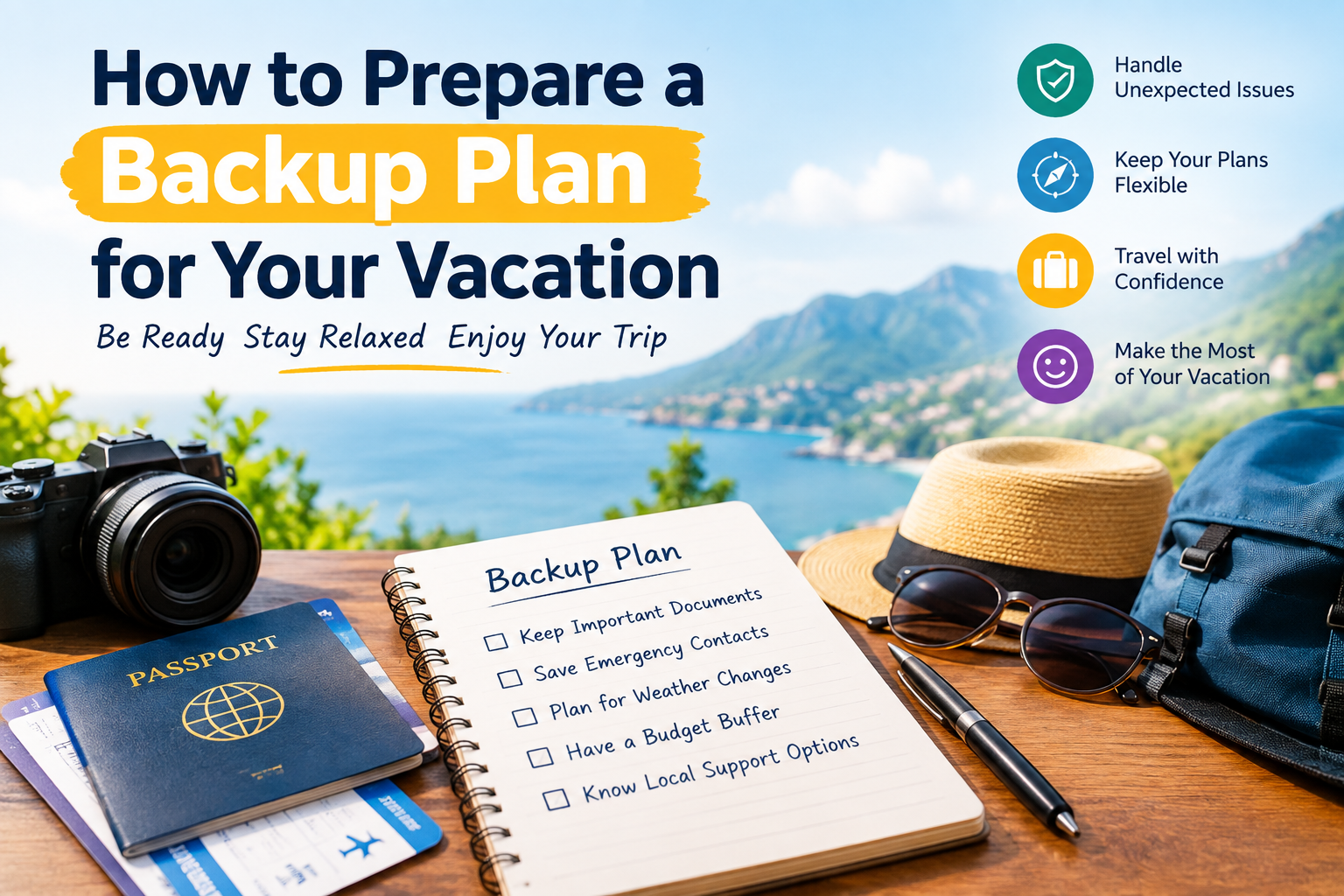
Planning a vacation is one of the most exciting parts of traveling. I personally enjoy deciding where to stay, what places to visit, what food to try, and how to organize my days. However, I have also learned that even the best travel plans can change unexpectedly. Flights can be delayed, hotels can have problems, weather can change, or an attraction can suddenly close.
This is why I believe every traveler should prepare a backup plan for a vacation. A backup plan does not mean expecting something bad to happen. It simply means being prepared so that a small problem does not turn into a major travel headache.
In this guide, I will share how I would prepare a practical vacation backup plan that is simple, flexible, and useful for different types of trips.
Why a Vacation Backup Plan Matters
When we plan a vacation, we often focus on the perfect schedule. We choose a hotel, book transportation, reserve activities, and create a list of attractions. The problem is that travel does not always follow our schedule.
For example, you may plan to visit an outdoor attraction, but heavy rain could make the visit uncomfortable. Your flight could arrive late, causing you to miss a planned activity. A restaurant might be fully booked, or public transportation could experience delays.
Having alternative options gives you peace of mind. Instead of spending hours trying to solve a problem, you already know what to do next.
In my opinion, a good backup plan should be simple rather than complicated. You do not need a second vacation itinerary for every possible situation. You just need alternatives for the most important parts of your trip.
Start With the Most Important Parts of Your Trip
The first step in preparing a travel backup plan is identifying the parts of your vacation that are most important.
Think about your transportation, accommodation, major activities, and important reservations. These are the areas where unexpected changes can affect your entire trip.
For example, if you are traveling to a city for five days, you might have one major sightseeing tour that you really want to experience. Find another activity that you would enjoy if the tour is canceled.
Similarly, if you are depending on one particular bus or train, check whether another transportation option is available.
I find this approach much easier than trying to prepare for every possible problem.
Have an Alternative Transportation Option
Transportation is one of the most important things to consider when creating a vacation backup plan.
If your main transportation becomes unavailable, you should already know what alternatives exist. Depending on your destination, these could include taxis, ride sharing services, buses, trains, rental cars, or local transportation.
Before leaving, check the transportation options available at your destination. Save important routes and transportation apps on your phone.
If you are traveling internationally, it can also be helpful to learn a few basic transportation terms in the local language.
Another useful idea is keeping some extra travel time in your schedule. I prefer not to plan activities immediately after arriving at a destination because delays can happen.
Choose a Backup Accommodation
Your hotel or accommodation is another important part of your vacation.
Most travelers carefully select their hotel before leaving, but many do not think about what they would do if the reservation became unavailable.
You do not necessarily need to book a second hotel. Instead, research two or three alternative accommodations in the same area. Save their names, locations, phone numbers, and approximate prices.
This can save valuable time if you suddenly need another place to stay.
I also recommend checking the cancellation policy of your accommodation before booking. Flexible reservations can provide additional peace of mind when your travel plans are uncertain.
Prepare for Bad Weather
Weather can completely change a vacation, especially when your itinerary includes outdoor activities.
Before your trip, check the typical weather conditions for your destination. During the vacation, continue checking the local forecast.
If you are planning a beach day, hiking trip, sightseeing tour, or outdoor event, have an indoor alternative ready.
For example, if rain prevents you from visiting a park, you could visit a museum, shopping area, cultural center, indoor attraction, or local restaurant instead.
This is one of the easiest ways to make a backup vacation itinerary without changing your entire trip.
Keep Important Documents Available
Losing important travel documents can create serious problems. That is why I recommend keeping copies of important documents in a secure location.
Depending on your trip, these may include your passport, identification, travel insurance information, hotel reservation, transportation bookings, and emergency contact information.
Keep digital copies where you can access them when needed. It is also sensible to have important information available offline because you may not always have reliable internet access.
At the same time, protect your documents and avoid sharing sensitive information unnecessarily.
Create an Emergency Contact List
Another useful part of a travel emergency plan is an emergency contact list.
Before traveling, save the phone numbers of your accommodation, transportation providers, travel insurance company if applicable, and important local emergency services.
You can also keep contact information for someone at home who knows your travel plans.
I recommend keeping these numbers in your phone and writing down essential information somewhere secure. Having multiple ways to access important contacts can be useful if your phone battery runs out or you experience technical problems.
Keep Extra Money for Unexpected Expenses
A vacation budget should include some room for unexpected expenses.
You might need to pay for alternative transportation, an additional hotel night, a last minute activity, or a meal because your original plans changed.
You do not need to carry a large amount of cash. A better approach is to have a small emergency budget that is separate from your normal daily spending.
When creating your vacation budget, I would always leave some extra money for situations that you cannot predict.
This small financial cushion can make unexpected changes much easier to handle.
Do Not Schedule Every Minute
One mistake I often see in travel planning is creating an extremely busy itinerary.
It may look efficient on paper, but it leaves little room for delays or unexpected changes.
Instead, leave some free time between major activities. If one activity takes longer than expected, you will have more flexibility.
Free time also makes a vacation more enjoyable. You may discover a beautiful street, interesting café, local market, or quiet viewpoint that was not part of your original plan.
A flexible itinerary is often better than a perfect but stressful schedule.
Download Useful Information Before Leaving
Internet access can be unreliable while traveling. You might experience weak mobile service, expensive data charges, or problems connecting to public Wi Fi.
For this reason, I recommend downloading useful information before your trip.
Save offline maps, hotel details, reservation information, transportation information, and important addresses whenever possible.
Taking screenshots of essential booking details can also be helpful.
This simple step can make your travel contingency plan much more practical.
Consider Travel Insurance
Travel insurance can be useful for certain types of vacations, particularly international trips or expensive journeys.
Depending on the policy, travel insurance may provide coverage for certain unexpected situations involving medical emergencies, trip interruptions, cancellations, baggage problems, or other travel issues.
However, policies are different, so I would never assume that everything is automatically covered. Read the terms carefully and understand the exclusions before purchasing a policy.
The goal is not to expect problems. It is to have additional protection if something goes wrong.
Make a Backup Plan for Activities
Your activities should also have alternatives.
Suppose you have planned three major activities during your trip. For each one, think of one alternative.
If your boat tour is canceled, perhaps you can visit a museum. If a hiking trail closes, you might explore a nearby town. If a popular attraction is too crowded, you could visit another interesting location.
The important thing is to choose alternatives that are realistic and reasonably close to your original plans.
This makes it easier to change your schedule without wasting an entire day.
Share Your Basic Travel Plan
If you are traveling alone, it is especially useful to let someone you trust know your general travel plans.
You can share your accommodation details, destination, transportation information, and approximate schedule.
You do not need to provide constant updates. The main purpose is to make sure someone knows where you are expected to be.
For group travel, make sure everyone knows the basic backup arrangements. This can prevent confusion when plans suddenly change.
Stay Calm When Plans Change
Perhaps the most important part of a vacation backup plan is your mindset.
Even with careful preparation, something unexpected may happen. Your flight may be delayed, your favorite restaurant may be closed, or the weather may completely change your schedule.
Instead of seeing the situation as a ruined vacation, try to see it as an opportunity to adjust your plans.
Travel is not always about following an itinerary perfectly. Some of the best travel memories can come from unexpected experiences.
A flexible attitude can be just as valuable as a detailed itinerary.
Final Thoughts
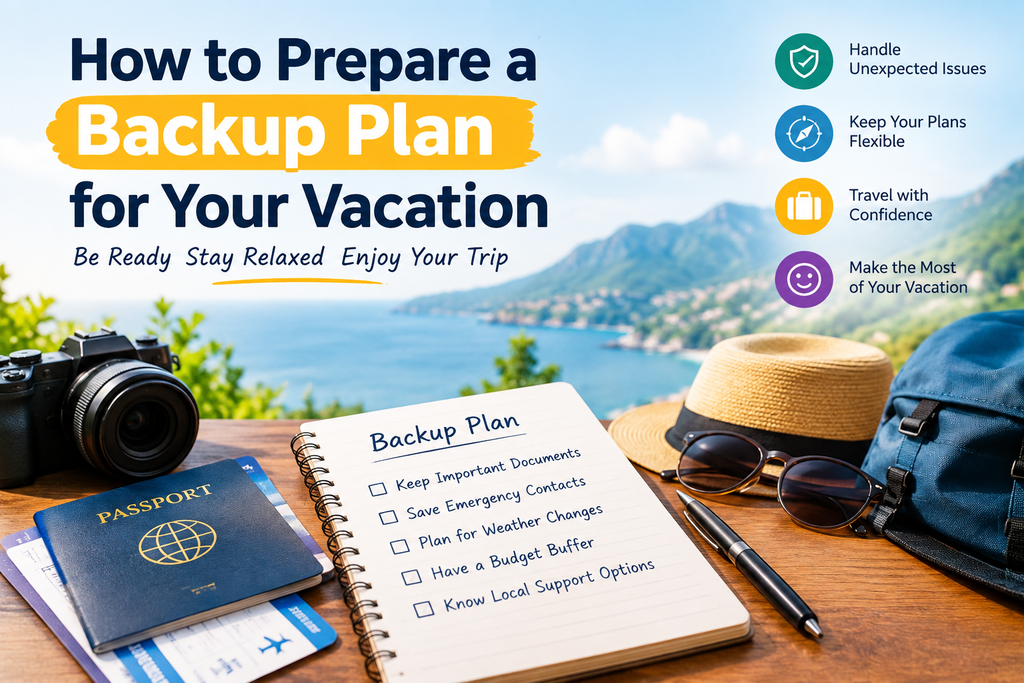
Preparing a backup plan for your vacation is one of the simplest ways to make travel less stressful. You do not need to plan for every possible emergency. Focus on the important areas such as transportation, accommodation, weather, activities, documents, communication, and money.
From my point of view, the best backup plan is one that gives you choices without making your vacation complicated. Research alternative options, keep important information accessible, leave some free time in your schedule, and maintain an emergency budget.
Most importantly, remember that unexpected changes are a normal part of traveling. When you have a backup plan, you can handle those changes with greater confidence and continue enjoying your vacation.
A good traveler is not someone whose plans never change. A good traveler is someone who knows how to adapt when they do.