Travel is one of the best ways to learn about new places, meet different people, and create unforgettable memories. However, even a well planned trip can sometimes face unexpected problems. A delayed flight, lost passport, sudden illness, severe weather, transportation problems, or an unfamiliar emergency can quickly change your plans. This is why I believe that preparing an emergency travel plan is just as important as booking a hotel or planning your daily activities.
An emergency travel plan does not mean expecting something bad to happen. For me, it simply means being prepared so that I can stay calm and make better decisions if something unexpected happens. A few simple preparations before leaving home can make a big difference during a difficult situation.
Understand the Possible Risks of Your Destination
The first step in preparing an emergency travel plan is understanding the risks associated with your destination. Every place has different conditions, so I prefer to learn about them before starting my journey.
For example, some destinations may experience earthquakes, floods, extreme heat, heavy rainfall, or storms. Other places may have transportation challenges, political demonstrations, or limited medical facilities in certain areas.
Before traveling, I recommend checking reliable information about the destination. Learn about local weather conditions, transportation systems, emergency services, and common safety concerns. This basic research helps you understand what kind of preparation you may need.
You do not need to worry about every possible situation. The goal is simply to know what could realistically happen and prepare accordingly.
Keep Important Emergency Contacts
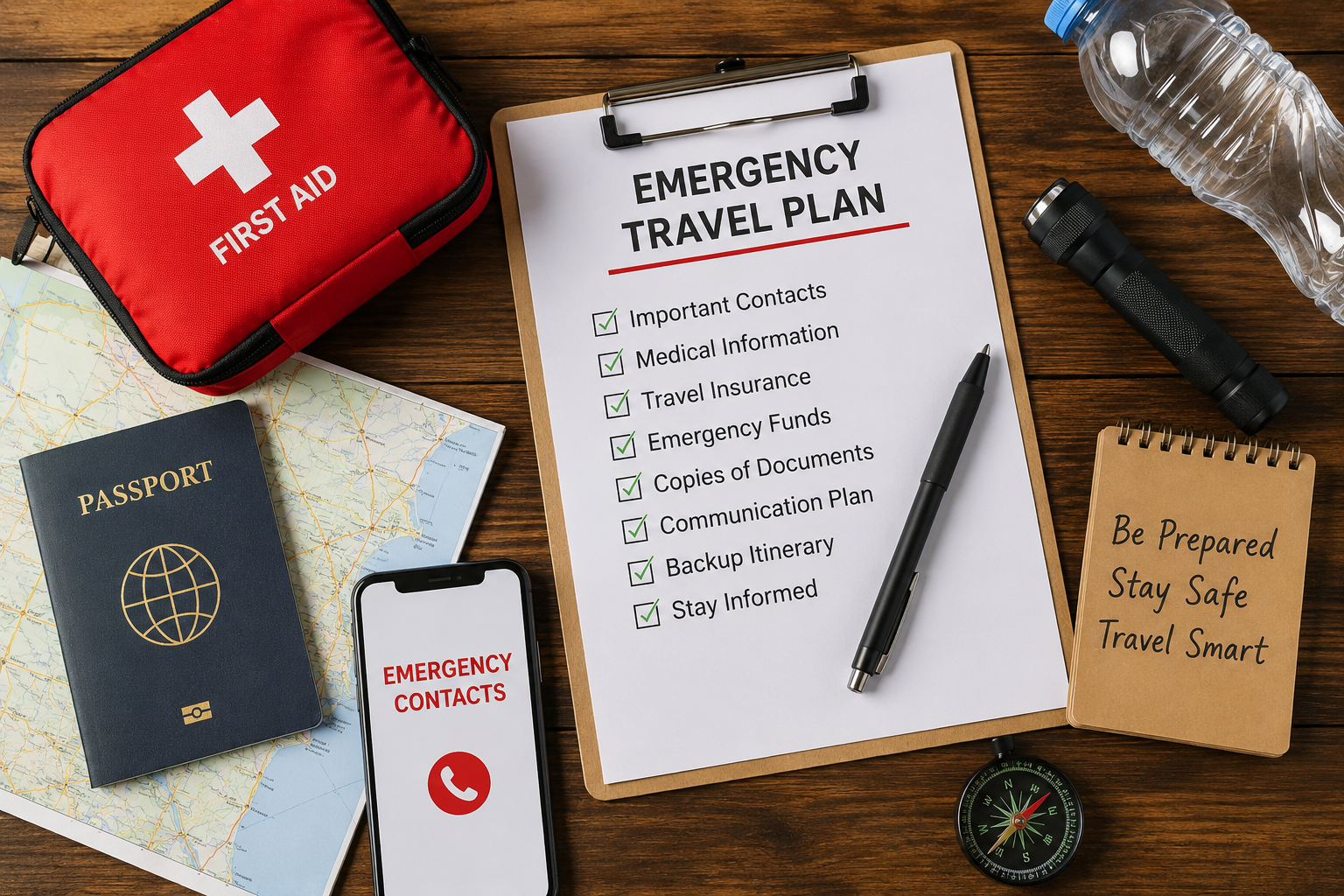
One of the most important parts of an emergency travel plan is having important contact information available. I never want to depend only on the contacts saved inside my phone because a phone can be lost, damaged, or run out of battery.
Create a small list of important numbers before your trip. This can include local emergency services, your accommodation, airline or transportation company, travel insurance provider, family members, and your country’s embassy or consulate if you are traveling internationally.
I also recommend keeping these details in more than one place. You can save them on your phone and keep a written copy inside your travel documents.
Having emergency contacts ready saves valuable time when you need help quickly.
Make Copies of Important Documents
Travel documents are extremely important, especially when traveling internationally. Losing a passport, visa, identification document, or travel booking information can create serious problems.
Before leaving, I recommend making copies of important documents. These may include your passport, visa, identification card, travel insurance details, hotel booking, flight information, and emergency contact information.
Keep physical copies separate from the original documents. You can also store secure digital copies where you can access them when necessary.
It is important to protect digital copies with strong account security. Avoid sharing sensitive documents with strangers or storing them in places that anyone can access.
Prepare an Emergency Fund
Money problems can become stressful during an emergency. A flight cancellation, unexpected hotel stay, medical expense, or transportation problem can cost more than expected.
For this reason, I always consider an emergency fund an important part of travel preparation. The amount depends on the destination, length of the trip, and personal circumstances.
Try to keep some emergency money separate from your normal travel budget. If possible, have more than one payment option available. For example, you might carry a small amount of local currency and have access to a secure bank card.
The purpose of an emergency fund is not to spend more. It is to give you flexibility when your original plans no longer work.
Check Your Travel Insurance
Travel insurance can be useful when unexpected problems occur during a trip. Depending on the policy, it may provide protection for situations such as certain medical emergencies, trip cancellations, lost baggage, or travel delays.
Before purchasing or relying on travel insurance, I recommend reading the policy carefully. Do not assume that every emergency is automatically covered.
Check the coverage limits, exclusions, claim requirements, and emergency assistance information. Keep your insurance details accessible during your trip.
Good preparation means knowing what support is available before you actually need it.
Create a Communication Plan
Communication becomes especially important during an emergency. If you are traveling with family or friends, everyone should know how to contact each other and what to do if the group becomes separated.
Before your trip, agree on a simple meeting point or communication method. You can also decide who should be contacted first if something serious happens.
If traveling alone, tell someone you trust about your general itinerary. Share your accommodation details and expected travel dates.
I find this especially useful because someone at home can know where I am supposed to be if I suddenly become unreachable.
Know Where to Get Medical Help
A medical emergency can happen anywhere, even during a short trip. Before traveling, identify hospitals, clinics, pharmacies, or other appropriate medical facilities near your accommodation.
You should also know how to contact local emergency medical services. If you take regular medication, carry enough for the trip and keep it properly stored according to its requirements.
It can also be helpful to keep relevant medical information available, especially if you have allergies or need specific medication. Only carry and share personal health information when necessary and with trusted people or professionals.
Being prepared does not mean expecting illness. It simply means knowing where to go if you need help.
Plan What to Do If Your Phone Stops Working
Modern travelers depend heavily on smartphones. We use them for maps, tickets, hotel reservations, translations, banking, and communication. However, a phone can be lost, stolen, damaged, or run out of power.
That is why I believe every emergency travel plan should include a backup for phone problems.
Keep important addresses and contact numbers written down. Carry a portable charger if practical, and know the location of your accommodation so you can ask for directions if necessary.
If you are traveling internationally, understand how you will access mobile data or Wi Fi. Having a backup communication method can make an emergency much easier to manage.
Keep Someone Updated About Your Itinerary
Sharing your travel itinerary with a trusted person is a simple but useful safety habit. You do not have to share every detail of your trip. Basic information can be enough.
Tell someone where you are staying, when you expect to arrive, and when you plan to move to another destination.
If your plans change significantly, update them. This creates a basic communication link between you and someone who knows your general location.
For solo travelers, this step can provide additional peace of mind.
Prepare a Small Emergency Travel Kit
A small emergency travel kit can be useful when normal services are unavailable. The contents depend on your destination and personal needs.
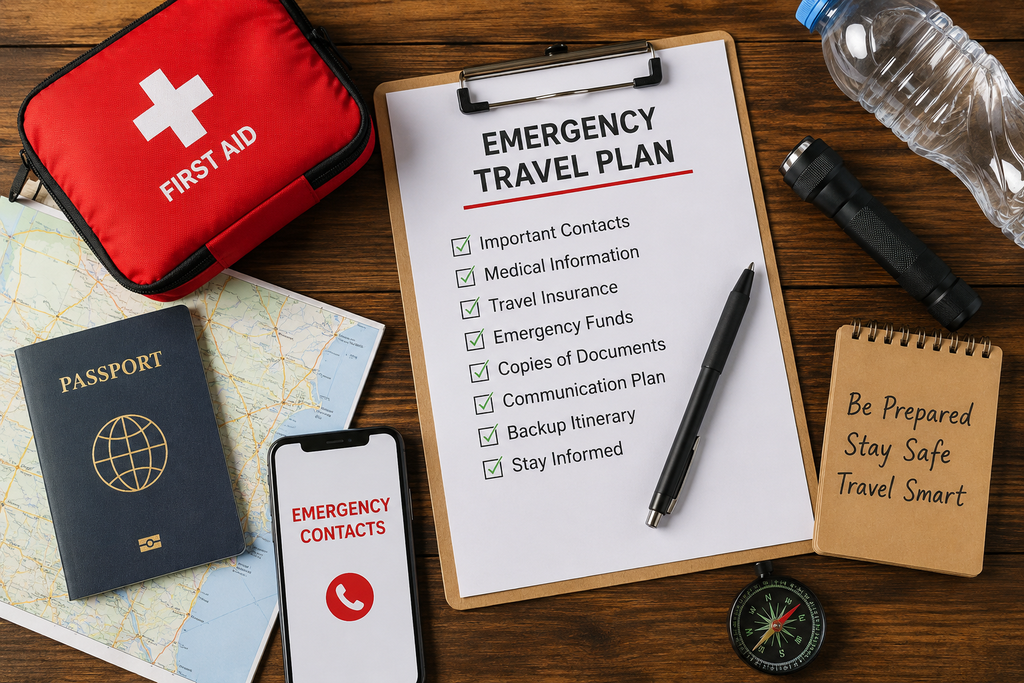
Some useful items can include a basic first aid kit, flashlight, portable charger, water, essential medications, copies of documents, and a small amount of emergency cash.
You do not need to carry a huge survival bag. The idea is to have practical items that can help you handle common travel problems.
Keep the kit somewhere easy to reach instead of placing everything at the bottom of a large suitcase.
Learn Basic Local Safety Information
Every destination has its own rules, customs, and emergency procedures. Before arriving, spend a little time learning basic local information.
Know the local emergency number and understand basic transportation options. Learn how to reach your accommodation and identify safe public areas nearby.
If you are traveling internationally, learn a few important local words or phrases related to emergencies. Even simple phrases for asking for help, finding a hospital, or contacting the police can be useful.
Respecting local laws and customs is also an important part of responsible travel.
Have a Backup Travel Plan
Sometimes the best emergency travel plan is simply having another option.
If your flight is canceled, know what alternative transportation may be available. If your hotel becomes unavailable, know where you could stay instead. If a road is closed, understand which alternative route might work.
You do not need to create a complicated backup plan for every possible situation. Focus on the major parts of your journey and think about what you would do if each one changed.
This simple habit can prevent panic when your original plan stops working.
Stay Informed During the Trip
Preparing an emergency travel plan is not something you do only before leaving home. You should also stay informed while traveling.
Check weather updates when appropriate and pay attention to official announcements. If local authorities provide safety instructions, take them seriously.
Avoid relying only on social media rumors during an emergency. Look for information from reliable official sources whenever possible.
Staying informed helps you react to real conditions instead of making decisions based on fear or incomplete information.
Stay Calm and Think Clearly
One of the most important parts of emergency travel preparation is mental preparation. An emergency can feel frightening, especially when you are far from home.
When something goes wrong, I believe the best approach is to pause, assess the situation, and focus on the next practical step.
Ask yourself what has happened, what immediate danger exists, who can help, and what information you need. Avoid making rushed decisions simply because you are scared.
A good emergency travel plan gives you a starting point, but staying calm helps you use that plan effectively.
Final Thoughts
Preparing an emergency travel plan is a simple way to make travel safer and less stressful. It does not require complicated equipment or hours of preparation. A little research, organized documents, emergency contacts, backup money, travel insurance information, and a communication plan can make a major difference when unexpected problems occur.
From my point of view, the best travel preparation is about being responsible without becoming overly worried. I want to enjoy my journey, but I also want to know what I will do if something does not go according to plan.
Before your next trip, take some time to prepare your own emergency travel plan. Check your documents, save important contacts, prepare a small emergency kit, share your itinerary with someone you trust, and think about a few realistic backup options.
You cannot predict every problem that may happen while traveling. However, you can control how prepared you are to handle it. Good preparation can give you confidence, help you stay calm, and allow you to focus on getting home safely when unexpected situations arise.