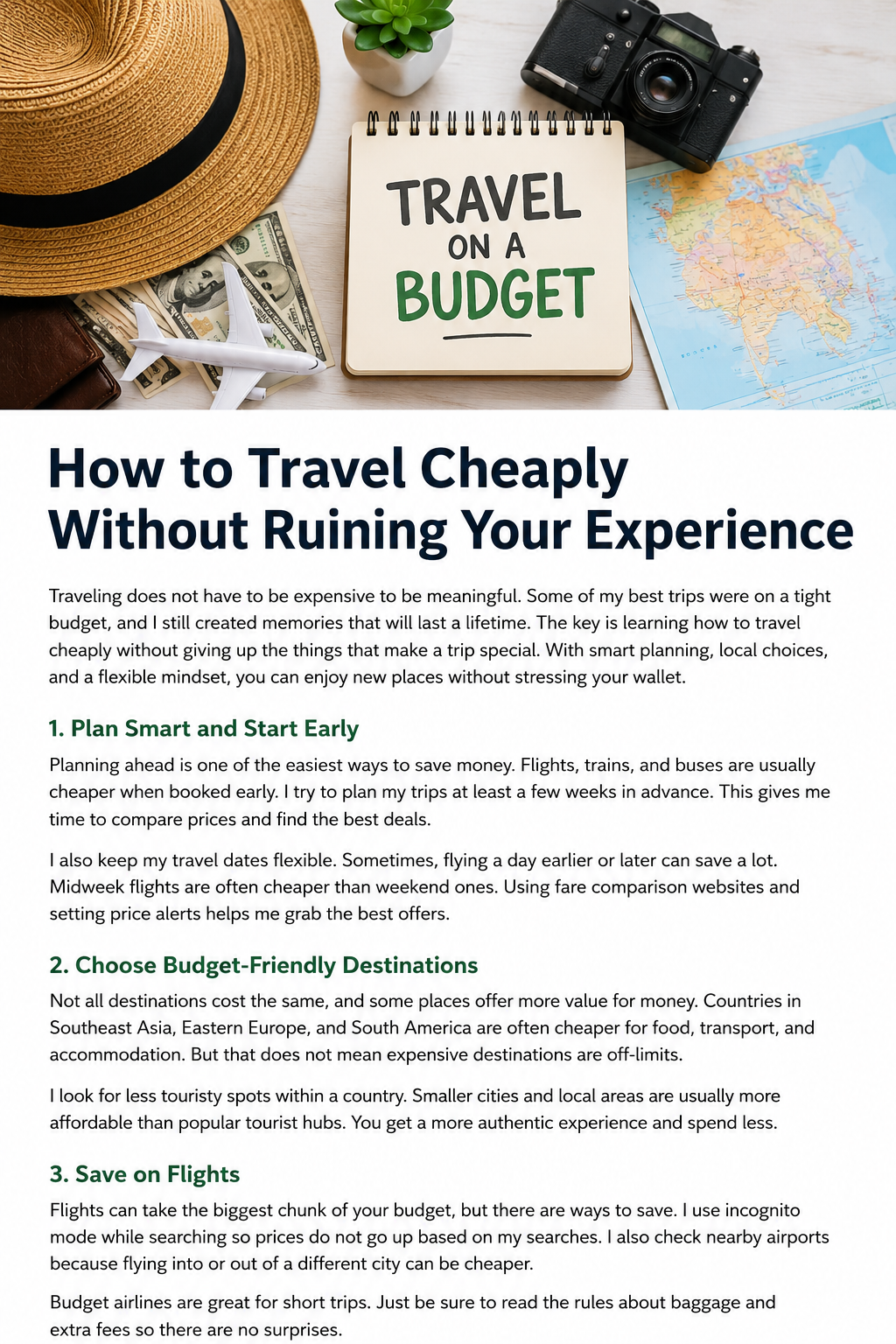
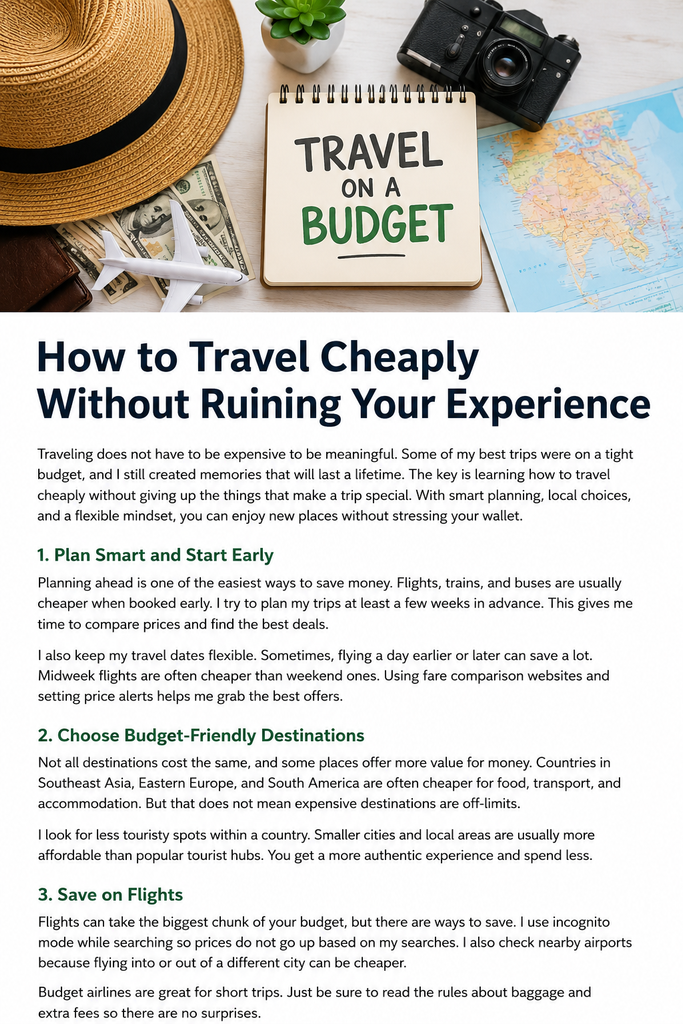
Traveling is one of the best ways to learn about the world, meet new people, discover different cultures, and create memories that stay with us for years. However, many people believe that traveling always requires a large budget. I used to think the same way, but over time I learned that you can enjoy a great trip without spending too much money. The secret is not to remove everything enjoyable from your trip. It is to spend your money carefully on the things that matter most to you.
If you are wondering how to travel cheaply without ruining your experience, you need a simple combination of planning, flexibility, and smart choices. Budget travel does not mean staying in uncomfortable places or avoiding everything interesting. It means understanding where your money is going and finding better value.
Set a Realistic Travel Budget
Before making any travel plans, I recommend deciding how much you can comfortably spend. A realistic travel budget gives you control and helps you avoid unnecessary stress during your trip.
I normally divide my budget into several categories such as transportation, accommodation, food, activities, shopping, and emergency expenses. This makes it easier to see where I can save money.
For example, if accommodation is expensive, I may choose a simple hotel or guesthouse and use the saved money for a local experience. If transportation is cheap, I may have more room in my budget for sightseeing.
It is also important to keep some extra money aside for unexpected expenses. A small emergency fund can make a big difference when prices change or something unexpected happens.
Choose Affordable Destinations
One of the easiest ways to travel cheaply is to choose your destination carefully. Some destinations are naturally more expensive than others because of high accommodation prices, transportation costs, and tourist demand.
This does not mean you have to avoid popular countries completely. Instead, look for cities and areas where your money can go further.
I often find that smaller cities can provide a better travel experience for less money. Popular tourist areas may have expensive restaurants and hotels, while nearby local neighborhoods can offer affordable food, comfortable accommodation, and a more authentic experience.
Before choosing a destination, I like to research the average cost of food, transportation, accommodation, and activities. This gives me a better idea of the total travel cost.
Be Flexible With Your Travel Dates
Traveling during peak seasons can make your trip much more expensive. Flights and hotels often cost more when large numbers of tourists are visiting.
If your schedule allows it, consider traveling during the shoulder season or off season. You may find cheaper flights, better accommodation prices, and fewer crowds.
Being flexible by even one or two days can sometimes make a noticeable difference. I always compare different travel dates before booking anything because the cheapest option is not always on the date I initially planned.
Another benefit of traveling during quieter periods is that you can enjoy attractions without dealing with extremely large crowds. For me, this can actually make the trip more enjoyable.
Save Money on Flights
Flights can take up a large part of a travel budget, so finding affordable airfare is important.
I recommend comparing prices from different airlines and checking several dates before booking. Nearby airports can also be worth considering if they offer significantly cheaper flights.
Budget airlines can sometimes provide excellent prices, especially for short trips. However, I always check baggage rules, seat charges, and other fees before booking. A cheap ticket can become expensive when several additional charges are added.
Another useful habit is to avoid booking the first flight you find. Take some time to compare options and look at the total cost rather than focusing only on the advertised ticket price.
Choose Affordable Accommodation
Accommodation does not have to be luxurious for you to enjoy a destination. A clean, safe, and comfortable place is often enough.
There are many accommodation options available today, including budget hotels, guesthouses, hostels, and private rooms. The best choice depends on your travel style and destination.
I prefer to read recent reviews before booking because the cheapest accommodation is not always the best value. Saving a little money is not worthwhile if the place is uncomfortable or located far away from everything.
Location is also important. Sometimes paying slightly more for a centrally located room can actually save money because you spend less on transportation.
Eat Like a Local
Food is one of my favorite parts of traveling, and I do not believe you need to stop enjoying local food to save money.
Instead of eating at restaurants designed mainly for tourists, try local cafes, markets, food stalls, and small family owned restaurants. These places can often provide delicious meals at much lower prices.
Eating locally also gives you a chance to understand the culture of the destination. Some of my favorite travel memories have come from simple local meals rather than expensive restaurants.
I also avoid eating every meal near major tourist attractions because prices in these areas can be much higher.
Use Public Transportation
Transportation costs can quickly increase if you depend on taxis or private rides throughout your trip.
Whenever it is safe and practical, I prefer public transportation. Buses, trains, metros, and shared transportation can be much cheaper than private options.
Walking is another excellent way to save money. If two attractions are close to each other, walking between them can save transportation costs while allowing you to see more of the local area.
Before arriving at a destination, I usually learn about its public transportation system. Knowing how to move around can make the trip easier and less expensive.
Focus on Experiences Instead of Luxury
One mistake people sometimes make when trying to travel on a budget is thinking that they must give up experiences. I believe the opposite can be true.
Instead of spending most of your money on luxury hotels, expensive meals, and premium services, focus on experiences that you will actually remember.
Visit local markets, explore neighborhoods, walk through historic areas, spend time in nature, visit free museums, or simply talk with local people.
Many memorable travel experiences cost very little or nothing at all.
For me, the value of a trip comes from what I experience rather than how expensive my hotel room was.
Look for Free Things to Do
Almost every destination has free activities if you know where to look.
Public parks, walking routes, beaches, local markets, historic streets, viewpoints, cultural events, and certain museums can provide hours of entertainment without a large expense.
Before traveling, I search for free things to do at my destination. This helps me create a balanced itinerary with both paid and free activities.
You do not need to visit every expensive attraction just because it is popular. Choose the experiences that genuinely interest you.
Avoid Unnecessary Shopping
Shopping can easily destroy a travel budget. When I travel, I try to decide in advance how much money I want to spend on souvenirs.
Instead of buying something from every tourist shop, I prefer to choose one or two meaningful items. This keeps my luggage lighter and my expenses under control.
If you want to buy souvenirs, local markets can sometimes offer better prices than shops in major tourist areas. Comparing prices before buying is always a good idea.
Travel With the Right People
Traveling with friends or family can reduce certain expenses because some costs can be shared. Accommodation, transportation, and even some meals can become more affordable when several people share them.
However, choosing travel companions carefully is important. Different people can have very different spending habits.
If one person wants luxury hotels while another wants budget accommodation, disagreements can happen. Before traveling together, I think it is helpful to discuss the budget, accommodation preferences, activities, and expectations.
A good travel companion can make a budget trip much more enjoyable.
Do Not Cut Costs Where Safety Matters
Saving money is important, but I never recommend sacrificing safety just to spend less.
Choose safe accommodation, use reliable transportation, protect your important documents, and keep emergency money available.
Sometimes the cheapest option is not worth the risk. A small saving should never come before your personal safety and peace of mind.
Budget travel should make your trip more enjoyable, not create unnecessary problems.
Travel Slowly When Possible
One of my favorite ways to reduce travel expenses is to stay longer in fewer places.
Moving between cities every day can increase transportation and accommodation costs. It can also make the trip exhausting.
When I stay in one place for several days, I can explore it at a relaxed pace, discover affordable local restaurants, use public transportation, and avoid constantly paying for transportation between destinations.
Slow travel can also give you a deeper connection with the place you are visiting.
Conclusion
Learning how to travel cheaply without ruining your experience is mostly about making smarter decisions rather than removing all the fun from your trip.
You can save money by choosing affordable destinations, traveling during less busy periods, comparing flights, selecting comfortable budget accommodation, eating local food, using public transportation, and looking for free activities.
At the same time, I believe you should spend money on the experiences that genuinely matter to you. If there is a particular activity you have always wanted to try, it may be worth adjusting another part of your budget to make room for it.
The goal of budget travel is not to spend as little as possible. The real goal is to get the most value from the money you have.
With a little planning and the right mindset, you can travel cheaply, enjoy meaningful experiences, and return home with great memories instead of unnecessary financial stress.