Planning a trip is exciting, but one thing I have learned from traveling is that a good trip starts with a realistic budget. It is easy to look at flight prices, hotel rooms, and a few activities and think that you know how much the trip will cost. In reality, many small expenses can add up quickly. Food, local transportation, entrance fees, tips, travel insurance, and unexpected purchases can all affect your final spending.
In my opinion, creating a travel budget before leaving home is one of the simplest ways to enjoy a trip without constantly worrying about money. A realistic travel budget does not mean avoiding everything you enjoy. It means knowing where your money is going and making smart choices before you travel.
Start With Your Total Travel Budget
The first step I recommend is deciding how much money you can comfortably spend on the entire trip. This amount should come from money that you can actually afford to use. I would never recommend planning a vacation around money that is needed for rent, bills, debt payments, or other important responsibilities.
Once you have a total amount in mind, write it down. For example, if you can spend $1,500 on a trip, consider that your starting travel budget.
However, I would not plan to spend the entire $1,500. I prefer to keep part of the money available for unexpected expenses. A small emergency fund can make a big difference if prices increase or something unexpected happens during the trip.
Decide How Long You Will Stay
The length of your trip has a major effect on your travel budget. A three day trip and a ten day trip can have completely different costs even when you visit the same destination.
Before calculating daily expenses, decide how many nights you will stay. Then estimate your accommodation, food, transportation, and activity costs based on the number of days.
For example, if you plan to spend $50 per day on food and local transportation, a seven day trip could require around $350 for those categories alone.
I find it much easier to create a realistic travel budget when I calculate costs according to the number of days instead of guessing one large amount.
Research Transportation Costs
Transportation is often one of the biggest parts of a travel budget. Depending on your destination, this may include flights, trains, buses, taxis, rental cars, airport transfers, and public transportation.
When checking transportation prices, do not look only at the basic ticket price. Additional baggage fees, seat selection, airport transportation, parking, and other charges can increase the total cost.
I recommend comparing several options before booking. Sometimes a slightly longer route can save a significant amount of money. At other times, paying a little more for a convenient flight can be worthwhile if it saves you from expensive transportation later.
The goal is not always to choose the cheapest option. The goal is to choose an option that provides good value while staying within your travel budget.
Estimate Accommodation Costs
Accommodation should be another major category in your budget. Hotels, hostels, guesthouses, vacation rentals, and other options can have very different prices.
When comparing accommodation, I always recommend looking at the total cost rather than focusing only on the advertised nightly price. Some properties may have additional taxes, service charges, cleaning fees, parking costs, or other expenses.
Location also matters. A cheaper hotel far from the main attractions may cost more overall if you need to pay for transportation every day.
Before booking, think about what is actually important to you. If you plan to spend most of your time exploring the destination, you may not need an expensive hotel with many extra features. A clean, comfortable, and well located place may be enough.
Create a Daily Food Budget
Food is one travel expense that is easy to underestimate. When I plan a trip, I prefer to create a daily food allowance instead of leaving food spending completely open.
Think about breakfast, lunch, dinner, drinks, snacks, and occasional treats. If you want to eat at restaurants every day, your food budget will need to be higher. If you are comfortable mixing restaurants with affordable local food, you may be able to spend less.
You should also consider whether your accommodation includes breakfast. A free breakfast can reduce your daily food costs.
I do not believe that saving money while traveling means refusing to enjoy local food. Instead, I think it is about balance. You can choose a few special meals while keeping other meals affordable.
Include Local Transportation
Many travelers remember the cost of reaching their destination but forget about transportation after they arrive.
Before your trip, research how you will move around. Check public transportation, taxi prices, rideshare services, rental cars, walking routes, and airport transfers.
If public transportation is reliable, it may be one of the easiest ways to control your travel expenses. In some destinations, daily or weekly transportation passes can also provide better value than buying individual tickets.
I also like to consider walking when the destination is suitable for it. Walking can save money and can sometimes be one of the best ways to discover a new place.
Budget for Activities and Attractions
Entertainment should have its own category in your travel budget. Make a list of the activities you genuinely want to experience and research their prices before your trip.
Include museum tickets, tours, amusement parks, historical attractions, outdoor activities, events, and other experiences.
You do not need to pay for every attraction. Many destinations have free parks, walking areas, markets, viewpoints, public spaces, and cultural experiences.
I usually recommend choosing the experiences that matter most to you first. Once those are included in the budget, you can decide how much extra money is available for additional activities.
Do Not Forget Travel Insurance
Travel insurance is another expense worth considering before your trip. The exact coverage you need depends on your destination, trip type, and personal circumstances.
Depending on the policy, travel insurance may help with certain unexpected situations involving medical expenses, cancellations, delays, lost baggage, or other travel problems.
The important thing is to understand the policy before purchasing it. Do not choose coverage based only on price.
Even if you decide not to purchase travel insurance, it is still useful to consider the potential cost of unexpected problems when creating your overall travel budget.
Add a Shopping and Souvenir Budget
Shopping can quickly change your travel spending if you do not set a limit. I recommend deciding in advance how much you are comfortable spending on souvenirs, clothing, gifts, or other purchases.
Having a separate shopping budget makes it easier to control impulse purchases. When you know you have a fixed amount available, you can choose the items you genuinely want instead of buying everything that catches your attention.
A souvenir does not have to be expensive to be meaningful. Sometimes a small local item can be a better memory than an expensive purchase.
Create an Emergency Fund
One of the most important parts of a realistic travel budget is an emergency fund.
Unexpected costs can happen during any trip. You could miss transportation, need an unexpected taxi, replace a lost item, experience a delay, or face a price increase.
For this reason, I prefer not to allocate every dollar of my budget to planned expenses. Keeping some money aside gives me more flexibility.
The amount you reserve depends on your trip, destination, and personal circumstances. The important thing is simply to have a separate amount available for situations that you did not plan for.
Track Everything Before You Leave
Once you have estimated your costs, put everything into one simple travel budget.
Your categories might include transportation, accommodation, food, local transportation, activities, insurance, shopping, and emergency funds.
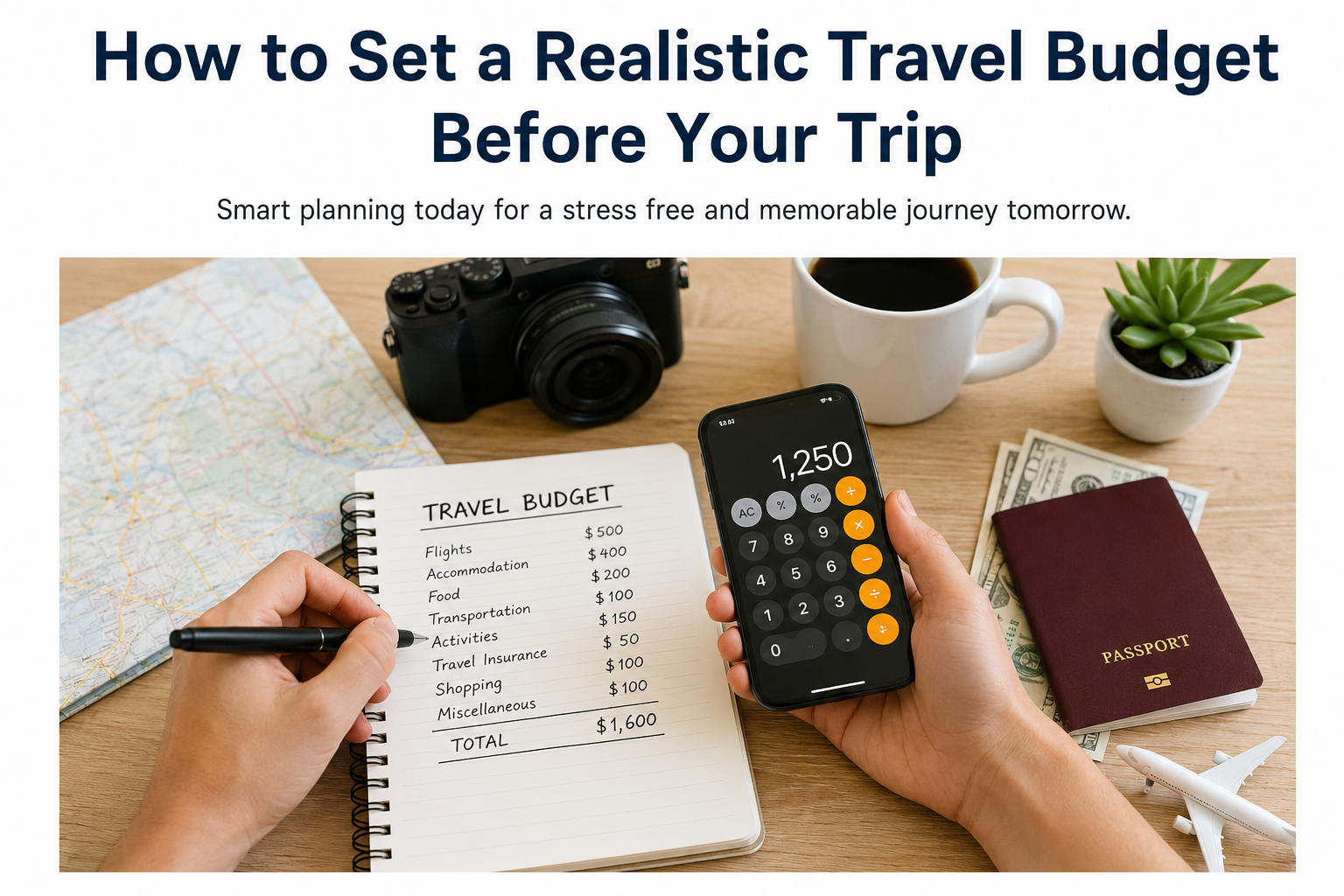
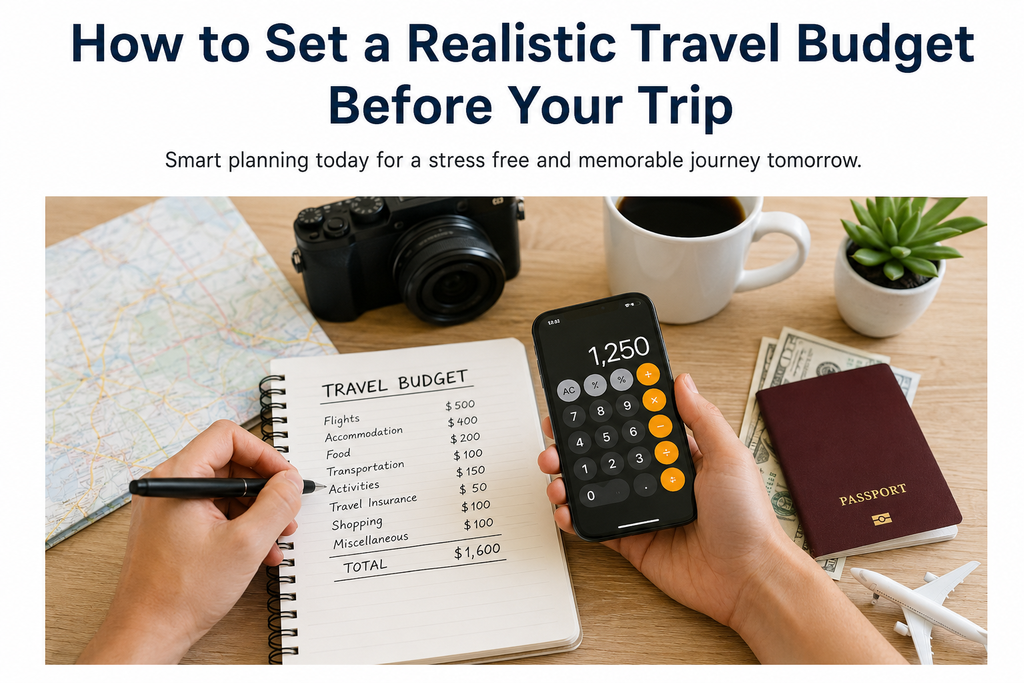
For example, if your total budget is $1,500, you might allocate $500 for transportation, $400 for accommodation, $200 for food, $100 for local transportation, $150 for activities, $50 for insurance, and $100 for miscellaneous expenses.
The exact numbers will depend on your destination and travel style. What matters is that the total stays within an amount you can comfortably afford.
Compare Your Budget With Your Actual Plans
After creating your first budget, compare it with your actual travel plans.
If your estimated expenses are higher than your available money, do not panic. This is exactly why creating the budget before the trip is useful.
Look for areas where you can make adjustments. You might choose a more affordable hotel, travel during a less expensive period, reduce the number of paid activities, use public transportation, or shorten the trip.
I believe it is better to make these decisions at home than to discover halfway through the trip that you are spending too much.
Leave Room for Fun
A travel budget should not feel like a punishment. One mistake I see people make is creating a budget that is so strict that they cannot enjoy their vacation.
Travel is about experiences, memories, and discovering new places. If you completely remove restaurants, activities, shopping, or other enjoyable experiences, you may save money but enjoy the trip much less.
Instead, give yourself a reasonable amount for fun. Knowing that this money is already included in your budget makes spending it much easier.
Review Your Budget Before Booking
Before making major bookings, review your entire travel budget one more time.
Add the actual flight price, accommodation price, transportation estimates, food allowance, activities, insurance, and emergency fund.
Also check whether your prices include taxes and additional fees. This final review can help you avoid unpleasant surprises.
If the numbers work, you can book with greater confidence. If they do not, adjust your plans before spending the money.
Final Thoughts
In my experience, setting a realistic travel budget before your trip makes traveling much easier. It gives you a clear idea of what you can afford and helps you make better decisions.
Start with your total budget, then divide it into important categories such as transportation, accommodation, food, local travel, activities, insurance, shopping, and emergencies. Research prices carefully and remember that the cheapest option is not always the best option.
Most importantly, leave some room for unexpected expenses and enjoyable experiences. A good travel budget should give you control without taking away the fun of traveling.
When I plan a trip, I see a budget as a travel tool rather than a restriction. It helps me spend money on the things that matter most while avoiding unnecessary financial stress. With a little research and preparation, you can create a travel budget that fits your plans, your priorities, and your available money.