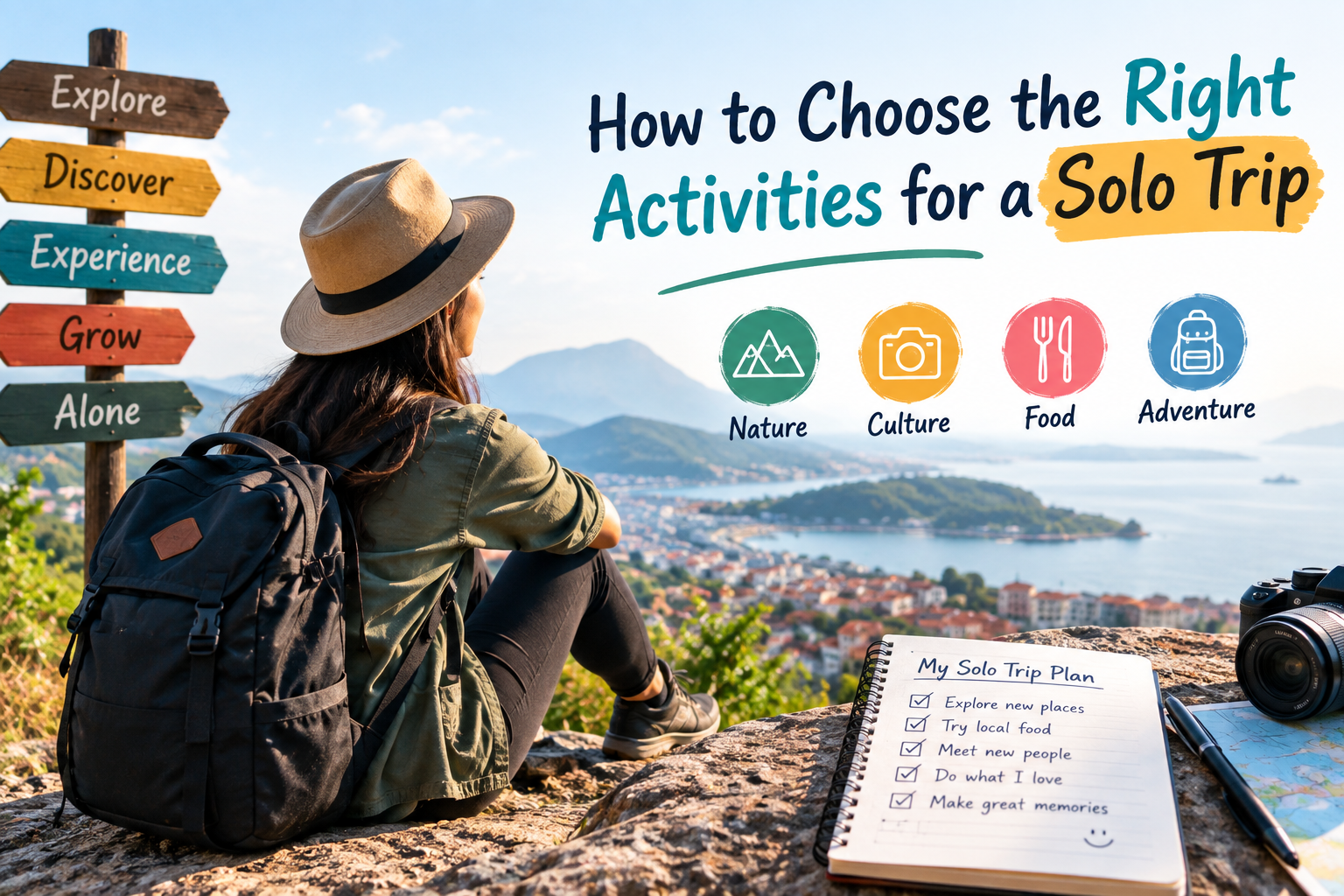
Traveling alone gives me a special kind of freedom. I can wake up when I want, visit places that interest me, change my plans, and spend my time exactly the way I like. However, one thing I have learned from solo travel is that choosing too many activities can make a trip stressful instead of enjoyable. The right activities should make me feel excited, comfortable, and connected with the destination.
When planning a solo trip, I believe the goal should not be to fill every hour. It is better to choose a few meaningful activities that match my interests, energy level, budget, and comfort zone. In this article, I will share how I choose the right activities for a solo trip and how other travelers can create a more enjoyable travel experience.
Think About What You Enjoy
The first step I take when choosing solo travel activities is thinking about my personal interests. There is no reason to choose an activity simply because it is popular with tourists. If I enjoy nature, I may prefer hiking, visiting gardens, walking along a beach, or exploring scenic areas. If I enjoy history, museums, historical buildings, and cultural tours may be better choices.
Solo travel is a great opportunity to focus on what I actually enjoy. I do not have to compromise with another person’s preferences. This makes it easier to create a travel itinerary that feels personal.
Consider Your Energy Level
Another important factor is my energy level. Some activities require several hours of walking, while others are more relaxed. If I plan a long city walk in the morning, I may choose a calm activity in the afternoon.
I have found that mixing active and relaxing activities creates a better balance. For example, I might spend the morning exploring a local market, take a break at a cafe, and visit a museum later. This approach prevents me from becoming exhausted.
A good solo travel itinerary should leave some space for rest. Being tired can reduce enjoyment and make it harder to stay alert while traveling alone.
Choose Activities That Match Your Budget
Budget is another major consideration when planning solo travel activities. Some experiences are expensive, while many enjoyable activities are free or affordable.
I usually divide activities into different categories. I may choose one special paid experience and combine it with free activities such as walking around a neighborhood, visiting a public park, exploring local streets, or enjoying a scenic viewpoint.
This approach helps me control travel expenses without making the trip boring. In my opinion, a memorable trip does not have to include expensive experiences. Sometimes the simplest activities become the best memories.
Check Safety Before Booking
Safety should always be considered when choosing activities for solo travel. Before booking an experience, I check basic information about the location, transportation, operating hours, and general safety conditions.
For outdoor activities, I pay attention to weather, difficulty level, available facilities, and whether the area is suitable for solo visitors. I also prefer activities that have clear information and reliable providers.
I believe solo travelers should be confident but not careless. An activity may look exciting online, but it is important to understand the practical risks before choosing it.
Include Local Experiences
One of my favorite ways to enjoy a solo trip is to include activities that help me experience local culture. Visiting popular attractions is useful, but local experiences can give a destination more personality.
Depending on the location, I might visit a local food market, try traditional food, attend a cultural event, explore a neighborhood, or take a beginner friendly cooking class.
These experiences can also make solo travel feel less lonely. Even when I am traveling alone, I can still have small conversations with local people or other travelers.
Try Something New
A solo trip can also be a good time to step outside my normal routine. I do not mean that I have to do something extreme. Trying a new activity can be as simple as taking a photography walk, joining a walking tour, learning a local craft, or trying a type of food I have never eaten before.
The key is choosing something that feels exciting without making me uncomfortable. I think the best travel experiences often happen when I try something slightly different while still respecting my personal limits.
Avoid Overplanning
One mistake I try to avoid is filling my itinerary with activities from morning until night. It may look productive on paper, but it can make solo travel tiring.
I prefer choosing a few important activities each day and leaving free time between them. This gives me the opportunity to discover something unexpected.
For example, I may plan to visit a museum and a famous viewpoint but leave the afternoon open. If I find an interesting cafe or local street, I can spend some time there without worrying about my schedule.
Flexibility is one of the biggest advantages of traveling alone, so I think it should be protected.
Consider the Length of Your Trip
The number of activities I choose also depends on how long I am staying. On a short weekend trip, I may focus on a small number of important experiences. On a longer trip, I have more time to explore slowly.
Trying to see everything in one day can create unnecessary pressure. Instead, I prefer choosing activities based on priority.
I usually ask myself which experiences I would regret missing. Those activities become the main part of my plan, while everything else remains optional.
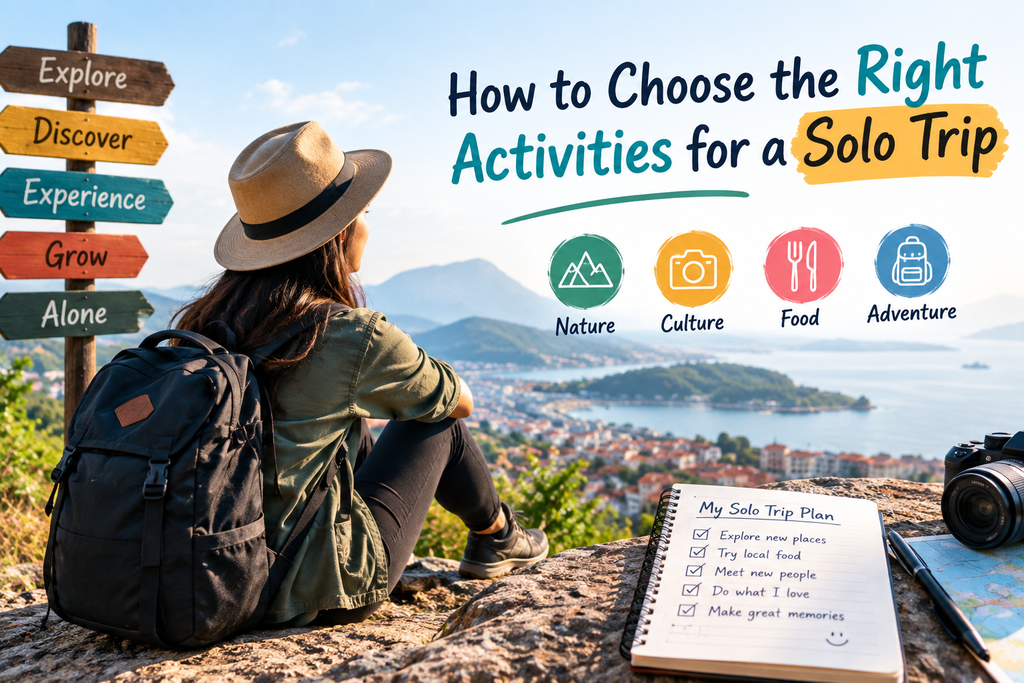
Choose Activities That Are Comfortable Alone
Not every activity feels the same when traveling alone. Some experiences are naturally enjoyable by yourself, such as photography, sightseeing, hiking on suitable routes, reading in a cafe, visiting museums, and exploring shops.
Other activities may feel more enjoyable with a group. That does not mean I should avoid them. I can join organized group tours, workshops, classes, or other social activities when I want some company.
The important thing is understanding how an activity feels when experienced alone before making a reservation.
Mix Popular Attractions With Hidden Spots
I think a good solo trip should include a mixture of famous attractions and less crowded places. Popular attractions can help me understand what makes a destination special, while quieter locations can provide a more relaxed experience.
For example, I might visit a famous landmark in the morning and spend the afternoon exploring a peaceful neighborhood. This gives me both the classic tourist experience and a chance to discover something more personal.
I also find that smaller local places can provide excellent opportunities for photography and observation.
Use Your Travel Goals
Before selecting activities, I like to think about what I want from the trip. My goal might be relaxation, adventure, learning, photography, food, culture, or simply getting away from my normal routine.
Once I know my goal, activity selection becomes easier.
If relaxation is my priority, I should not create an itinerary full of demanding adventures. If learning is my goal, museums, cultural centers, workshops, and guided tours may be more useful.
Choosing activities based on travel goals keeps the trip focused and meaningful.
Leave Room for Spontaneous Moments
One of the best parts of solo travel is being able to change plans. Sometimes I may discover a beautiful location that was not included in my original itinerary. Other times, I may simply want to sit somewhere and enjoy the atmosphere.
I believe these unplanned moments are an important part of traveling alone. Instead of treating free time as wasted time, I see it as an opportunity.
A flexible schedule gives me permission to follow my curiosity.
Think About Weather and Timing
Weather can have a major effect on activities. Outdoor plans may be enjoyable on a pleasant day but uncomfortable during heavy rain or extreme heat.
I try to keep alternative activities available. If the weather changes, I can visit a museum, cafe, library, shopping area, or cultural attraction instead.
Timing also matters. Some attractions are more enjoyable early in the day, while others may be better during the evening. Checking opening hours and expected crowds can help me make smarter decisions.
Listen to Yourself
Finally, I think the most important rule is to listen to myself. Solo travel gives me the freedom to decide what feels right.
If I am tired, I can rest. If I am excited about a particular activity, I can spend more time on it. If something feels unsafe or uncomfortable, I can skip it.
There is no perfect solo travel itinerary. The right activities are the ones that fit my interests, budget, energy, safety needs, and travel goals.
Final Thoughts
Choosing the right activities for a solo trip does not mean creating the busiest possible schedule. For me, it means finding a balance between exploration, relaxation, personal interests, safety, and flexibility.
I prefer activities that give me a reason to explore while still leaving enough time to enjoy the destination naturally. A good solo travel experience should not feel like a race from one attraction to another.
When I choose activities based on what I genuinely enjoy, I feel more relaxed and confident throughout the journey. Whether I am exploring nature, tasting local food, learning about history, taking photographs, or simply walking through a new neighborhood, the most important thing is that the experience feels meaningful to me.
Solo travel gives me the freedom to create my own adventure. By choosing activities carefully and leaving room for spontaneous experiences, I can enjoy a trip that feels personal, comfortable, and memorable.