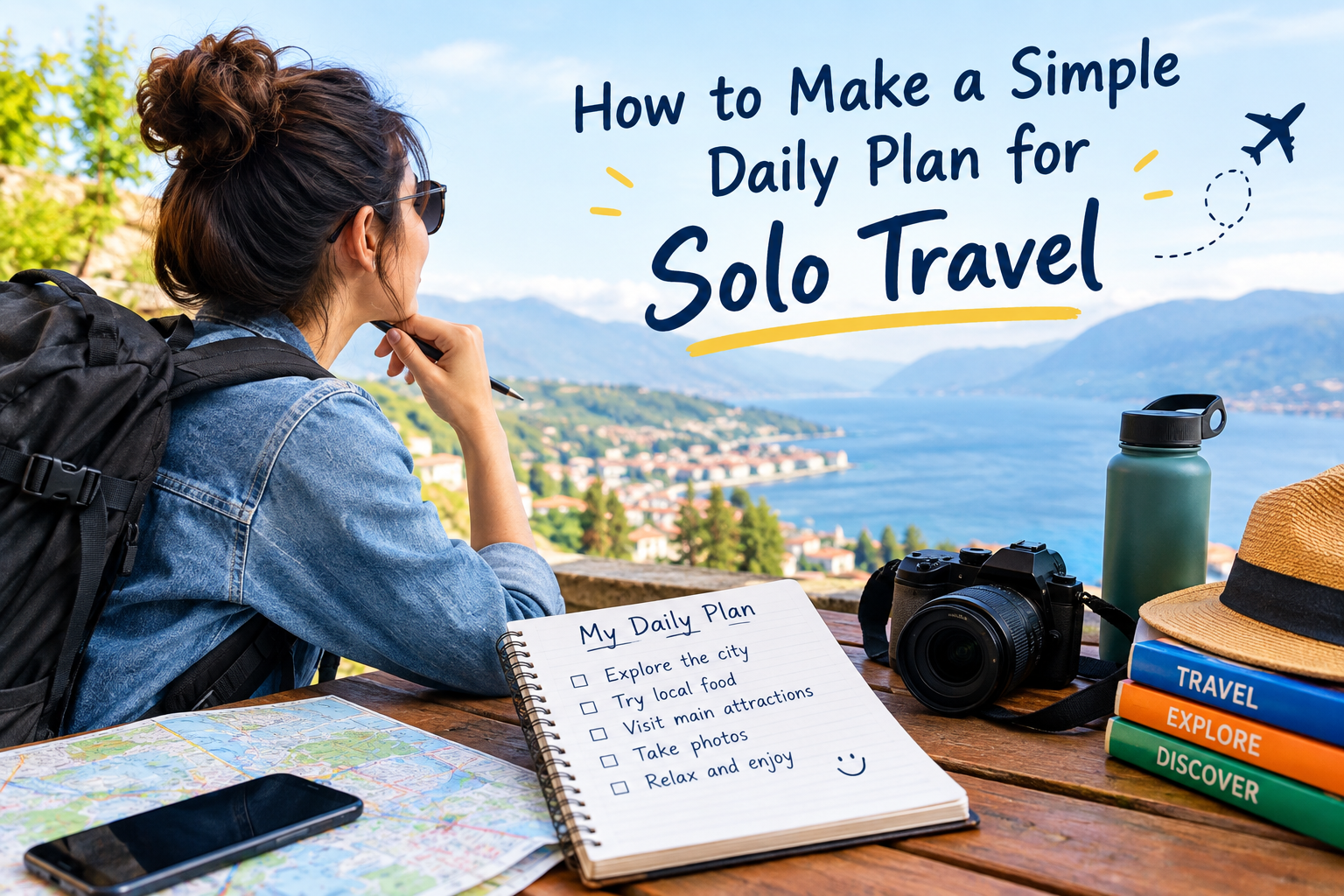
Solo travel can be one of the most enjoyable ways to explore a new place. When I travel alone, I like having the freedom to decide where I want to go, what I want to eat, and how much time I want to spend at each place. At the same time, I have learned that having a simple daily travel plan makes the whole experience easier and more enjoyable.
A daily plan does not mean that every minute of the trip needs to be scheduled. In my opinion, a good solo travel plan should give you direction while still leaving enough room for unexpected experiences. You should know your main activities, transportation options, meal times, and important safety details without making your day feel like a strict timetable.
In this article, I will explain how I create a simple daily plan for solo travel and how you can use the same approach for your next trip.
Start With Your Main Goal for the Day
The first thing I recommend is deciding what you really want to accomplish each day. Instead of writing a long list of attractions, choose one or two main goals.
For example, your goal might be visiting a famous historical site, exploring a local market, spending time at the beach, or discovering a particular neighborhood.
When traveling alone, I find that keeping the list short makes the day more comfortable. You have to manage your transportation, food, belongings, and timing yourself. A realistic plan gives you more freedom and less pressure.
I usually ask myself one simple question before planning my day: What is the one thing I would be disappointed to miss today?
Once I know the answer, I build the rest of the day around it.
Check the Location of Each Activity
One common mistake in travel planning is choosing several places without checking how far apart they are. This can waste hours, especially in a large city.
Before finalizing my daily travel plan, I check where each attraction is located. I try to group places that are close to each other on the same day.
For example, if a museum, local market, park, and restaurant are all in the same area, it makes sense to visit them together. This saves transportation time and can also reduce travel expenses.
I believe simple planning is more useful than creating a complicated itinerary. Knowing the general area you want to explore is often enough.
Choose a Comfortable Starting Time
Your daily travel plan should also include a reasonable starting time. You do not have to wake up extremely early every morning just because you are traveling.
If you enjoy quiet mornings, starting early can be a great choice. You may find fewer crowds at popular attractions. However, if you prefer slow mornings, you can start later and plan fewer activities.
When I travel solo, I try to balance sightseeing with rest. A day that starts too early and continues until late at night can become exhausting.
Choose a starting time that matches your energy level and the activities you want to do.
Plan Around Your Most Important Activity
Once you have selected your main activity, place it at a time that makes sense.
Some attractions are better in the morning because they become crowded later. Some outdoor activities are more enjoyable in the afternoon. Certain places may have specific opening hours.
This is why I prefer checking basic details before leaving my accommodation.
For example, if a museum closes early, I would visit it earlier in the day. If I want to watch the sunset from a scenic location, I would plan my transportation so that I arrive before sunset.
The important thing is to give your main activity enough time instead of trying to squeeze it between too many other plans.
Leave Extra Time Between Activities
I always recommend leaving some free time between activities. This is especially important when you are traveling alone.
Transportation can take longer than expected. You may get lost, wait for a bus, spend extra time taking photographs, or discover a small café that you want to visit.
If your schedule says that you must leave one location at exactly 2:00 PM and arrive somewhere else at 2:20 PM, even a small delay can affect your entire day.
Instead, I prefer using flexible time blocks. For example, I might plan sightseeing for the morning, lunch around midday, another activity in the afternoon, and a relaxed evening.
This type of plan gives me direction without making me constantly check the clock.
Include Meal Times in Your Plan
Food is an important part of travel, but it is easy to forget about meals when you are busy exploring.
I usually make a simple plan for breakfast, lunch, and dinner. I do not necessarily choose a restaurant for every meal, but I like to know where I can eat in the area.
When traveling alone, I also consider how comfortable the restaurant or café feels for solo visitors. A casual café can sometimes be easier than a very formal restaurant.
Planning meals can also help you manage your travel budget. Instead of buying food whenever you become hungry, you can look at affordable options near your planned activities.
Keep Transportation Simple
Transportation should be one of the most important parts of a solo travel plan.
Before leaving, I check how I will get from one major location to another. Depending on the destination, this might involve walking, public transportation, a taxi, or a rideshare service.
I also like knowing the approximate travel time. I do not need an exact minute by minute schedule, but having a general idea helps me decide how many activities are realistic.
If I am unfamiliar with a city, I avoid creating a plan that requires too many complicated transfers. Simple transportation can make solo travel less stressful.
Add Some Free Time
One of my favorite parts of solo travel is having free time.
You may discover a beautiful street, interesting shop, peaceful park, or local café that was not included in your original plan. If your entire day is scheduled, you may feel forced to skip these unexpected experiences.
That is why I usually leave at least part of the afternoon or evening flexible.
Free time also gives you an opportunity to rest. You can return to your accommodation, take a short break, organize your photographs, or simply sit somewhere and watch everyday life around you.
A good daily travel plan should include both activities and empty space.
Think About Safety Before Leaving
Solo travel requires some basic safety planning. Before heading out, I make sure I know where I am going and how I will return to my accommodation.
I keep important information available on my phone and avoid depending entirely on one device. It is also useful to know the name and location of your accommodation.
When exploring an unfamiliar place, I pay attention to my surroundings and avoid taking unnecessary risks. I prefer well populated areas when possible, particularly after dark.
It is also a good idea to let someone you trust know your general plans for the day.
Safety does not need to make your trip stressful. A few simple preparations can give you more confidence.
Prepare Your Daily Essentials
Before starting the day, I like to check that I have the things I actually need.
Depending on the destination, this might include my phone, wallet, identification, accommodation information, charger or power bank, water, sunscreen, and any necessary travel documents.
I try not to carry unnecessary items because a heavy bag can become uncomfortable after several hours of walking.
I also check the weather before leaving. Knowing whether I need an umbrella, jacket, comfortable shoes, or extra water can make a big difference.
Create a Simple Morning Checklist
A short morning checklist can make your day much easier.
My basic checklist would include checking the weather, charging my phone, reviewing the day’s main activity, checking transportation, carrying essential items, and making sure I have enough money or a suitable payment method.
This only takes a few minutes.
The advantage is that you start your day feeling prepared rather than trying to solve everything while you are already outside.
Use a Simple Daily Travel Template
You can create a basic template and use it throughout your trip.
For example:
Morning: Breakfast and main attraction
Late morning: Walk around the nearby area
Afternoon: Lunch and one relaxed activity
Late afternoon: Free time or optional sightseeing
Evening: Dinner and a safe activity nearby
Night: Return to accommodation and prepare for tomorrow
This type of schedule is simple enough to change when necessary.
Do Not Try to See Everything
One lesson I have learned from travel is that you cannot see everything in one visit.
Trying to visit every famous attraction can turn a relaxing trip into a race. When traveling alone, there is no need to prove how many places you can visit in one day.
I would rather experience three places properly than rush through eight attractions.
Choose the experiences that matter most to you. You can always return to the destination another time.
Review Your Plan Each Evening
I like spending a few minutes reviewing the next day before going to sleep.
I check what I have already completed, what I still want to see, and whether anything needs to change.
Sometimes an attraction may have taken longer than expected. Sometimes I may feel tired and decide to remove an activity. This is completely normal.
A daily plan should help you, not control you.
Final Thoughts
Making a simple daily plan for solo travel is one of the easiest ways to make your trip more comfortable and organized. You do not need a complicated spreadsheet or a schedule covering every minute.
In my view, the best solo travel plan includes a few important activities, realistic transportation times, meal breaks, free time, and basic safety preparation.
The biggest benefit of planning is that you can enjoy your freedom without constantly wondering what to do next. At the same time, you still have enough flexibility to change your plans when something interesting comes along.
For me, solo travel is about finding the right balance between preparation and freedom. Plan the important parts, leave room for unexpected moments, and give yourself enough time to enjoy the destination. That simple approach can make your solo trip feel more relaxed, memorable, and enjoyable.